


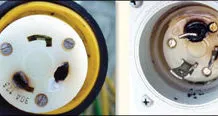
Shore-Power Boat Fire Protection
With the increased demand to have all the electrically powered comforts of home onboard, it should come as no surprise to boaters that the majority of AC-related electrical fires involve overheated shore-power plugs and receptacles. Prime Technology, aims to change all that with the introduction of its Shore Power Inlet Protector (ShIP for short), a monitoring and alarm device that automatically disconnects AC shore power when excessive heat is detected at the power inlet connector. We reviewed the ShIP 110 designed for use with a 110-volt, 30-amp system. The company also offers a similar unit (the ShIP 220) for use with 220-volt, 50-amp service. Charred plugs and receptacles are the result of resistance build-up (due to loose or corroded connections), which generates heat and the potential for fire, a problem especially prevalent among vessels that continually run high energy loads such as water heaters and air-conditioning units. In addition to monitoring the temperature of your vessels shore-power inlet plug and its wiring, the ShIP system automatically disconnects AC shore power when an unsafe temperature is detected, providing visual and audible alarms. (The audible alarm shuts down after five minutes to avoid prolonged disturbance to surrounding boats.)
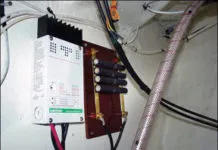
New Air Breeze Wind Generator Field Tested
As sailors, wind energy is at the forefront of our lives. The Practical Sailor wind generator test in March 2007 included a prototype of the Air Breeze from Southwest Windpower. Last year, the company debuted the Air Breeze in the alternative energy market for recreational boaters; it is distributed through retail giant West Marine. Using the same criteria as our 2007 test, Practical Sailor tested the Air Breeze for several months under a variety of conditions, using it to charge the ships batteries aboard a Union 36. The wind generators body is cast aluminum, and its blades are made of glass-filled polypropylene. Testers found it quiet, easy to mount, and reasonably priced at $900.

Marine Refrigeration: Traditional Thermostats vs. Digital Thermostats
Modern galley refrigeration moved far beyond simple holding-plate refrigeration systems, and now competes with the more easily installed evaporative refrigeration systems. One key to efficiency in any refrigeration system is an accurate thermostat. Practical Sailor compares a more expensive digital thermostat to a traditional, less expensive mechanical capillary thermostat. Refrigerator and freezer tests pitted the Grunert Marine Air Systems mechanical capillary refrigeration thermostats against the Scad Technologies SensiStat digital thermostat. Mechanical thermostats are valued for their simplicity and reliability, but a digital thermostat may outperform mechanical thermostats when it comes to maximizing marine refrigeration performance.
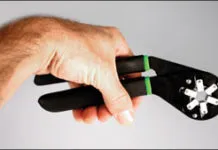
Next Best Thing
While world leaders and presumed financial wizards set to work trying to right the global economy with some very expensive bailers and sponges, Practical Sailor has taken the time this month to dig through our recent collection of Chandlery submissions to see if we can find anything more useful. Given sailors capacities for innovation (aka "jury rigging"), were holding out hope that the next great invention-the ultimate stimulus package-lies somewhere in our growing stockpile of Chandlery items.
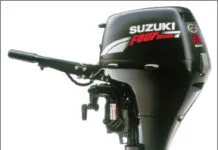
Four-Stroke, 9.9-hp Outboard Motors Test 2009
Practical Sailor last tested four-stroke, 9.9-horsepower outboards in the June 2007 issue, with the Mercury 9.9 coming out the clear winner. These engines are well-sized for large, rigid dinghies or as auxiliary power for smaller keelboats, but their weight can be an issue. This report compares the Suzuki 9.9-outboard and the Yamaha 9.9 to the Mercury. Both the Suzuki and the Yamaha are carbureted, water-cooled engines. On-the-water engine performance tests found the Suzuki to be the loudest and the heaviest 9.9 we tested. The Yamaha is more compact, but at 91 pounds, it is no lightweight.

Practical Sailor LED Lightbulb Test
In this LED cabin light test, Practical Sailor looks at 17 light bulbs from seven manufacturers. The LEDs were tested to see which was the most worthy replacement for a 20-watt xenon bulb in a bulkhead-mounted reading light. Testers measure LED beam angles and intensity, LED power consumption, LED color temperature, LED radio frequency interference, and LED reading and cabin illumination. The LED lights tested include: Alpenglow TR LED complete brass fixture; three lights from Cruising Solutions; three lights from Doctor LED; four from Imtra; two from Opto Technology, two from Daniel R. Smith & Associates (DRSA) manufactured by Mast Products; two of Scad Technologies (Sailors Solutions) Sensibulbs; and one LED light from West Marine.
Practical Sailor Sea-trials 1,000-watt Honda Gas Generator
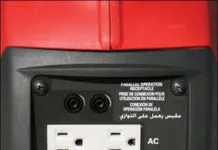
Bluewater voyagers and Practical Sailor contributors Evans Starzinger and Beth Leonard put the Honda EU1001 gas-powered generator, Hondas smallest super quiet four-stroke generator, through its paces during an extended cruise of Southern Chile. They report that the 1,000-watt generator is well engineered and essentially maintenance free. Wanting to go months without running the engine and unable to depend on wind and solar power in Chiles Beagle Channel, the couple chose the lightweight generator to feed their onboard battery-charging needs. The Honda will run for approximately eight hours on less than a gallon of gas, and its noise level was measured at a mere 59 decibels, quieter than normal conversation.
Best Ethanol Fuel Treatment for Boat Engines
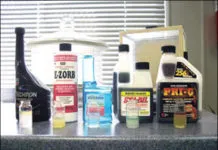
Since the introduction of ethanol fuels at dockside pumps, weve had a slew of reader inquires about the effects of E-10 on fuel lines, fuel tanks, two-stroke engines, and four-stroke engines. We recently tested some products designed to address these issues, specifically those that claim to combat the problems associated with phase separation in E-10. Practical Sailor tested: E-Zorb from Marine Development Research Corp. (MDR), Sta-bil Marine Formula Ethanol Treatment from Gold Eagle, PRI-G from Power Research Inc., Star Tron from Star brite, and Techron from Chevron. The claims of each product varied, but the test products fell into one of these general categories: conventional fuel storage additives, ethanol fuel storage additives, and restorative gas additives. Our tests looked at whether the additive itself would leave ash deposits, gum deposits, or residue that might cause contaminated lubrication oil; whether an additive had a tendency to emulsify, suspend, or absorb free water; and whether the additives could delay the onset of cooling-induced phase separation.
The Hunt is on for a Quality, Well-placed Emergency Tiller
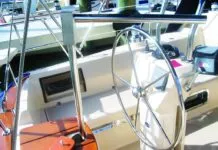
A decade ago, Practical Sailor editors began scouring boat shows for the perfect emergency tiller and an ideal stowage system for it. Little more than a simple lever arm that attaches to the head of the rudder stock, the emergency tiller is the device a sailor relies on in the event a steering cable parts or theres some other steering system failure. Our seemingly simple search turned out to be a nearly fruitless enterprise. Boat after boat fell far short of delivering even an average emergency tiller. Heres a look at our favorites and favorite offenders as well as our criteria for a good emergency tiller and where to keep it.

Wanted: A DC-DC Converter
Ive created a 24-volt system by connecting two 200-amp-hour 12-volt batteries in series to drive an electric outboard as auxiliary power for our 25-foot sailboat. The 24-volt bank will be charged using a 24-volt charger on shore power and by a 24-volt series of solar panels when mooring. I would like to eliminate the 12-volt batteries. I bought a 24- to 12-volt converter to stand in place of the 12-volt batteries, but I learned that the converter is not compatible with driving any kind of motor due to the back-voltage created by the collapsing field when the motor stops. I have a freshwater pump and a motorized outboard-motor bracket, so this particular converter is out of the question. Do you have any suggestions? Must I maintain a 12-volt battery for all the 12-volt equipment or is there a step-down technique?

Lithium Batteries on Sailboats: The 3 Mistakes Everyone Makes
Lithium batteries are one of the most popular sailboat upgrades today—but they’re also one of the most misunderstood. In this Practical Sailor Saturday episode,...



Latest Sailboat Review

Island Packet Estero Used Boat Review
Florida-based Island Packet targets a relatively narrow niche, so the toughest competitors to its new boats are often older Island Packets. Introduced in 2010, the 36-foot, shoal-draft Estero is the company’s latest attempt to introduce a distinctive model that doesn’t stray too far from the company’s proven formula for success: moderate displacement, full-keel cruisers designed to be lived on, sailed far and in comfort, and endure the bumps, scrapes, and storms that cruising boats inevitably encounter. After sailing the Estero on Florida’s Sarasota Bay and inspecting its interior, construction, and systems, Practical Sailor testers noted that the shoal-water cruiser will appeal strongest to Island Packet fans who’ve been waiting for a shoal-draft, easy-to-sail boat that compares to the IP37 in terms of interior space. These strengths will be most apparent on intracoastal or riverine adventures like the Great Loop.