

Off season sailing, and even sailing and kayaking in cold water climates, presents the very real risk of hypothermia. Some MOBs experience a gasp reflex, gulping water. Even with a PFD they are in immediate peril, and without a PFD they may not even resurface. At best they will remain functional for only 15 minutes and perish within one to two hours, even with a PFD and foul weather gear. Immersion suits are required on commercial vessels working in cold waters—these are ungainly, one-size-fits-most creations that give you the look and grace of a B movie creature. Although minimum function standards require that you can walk and swim, you can’t work the boat in them, so they’re donned only when the boat is heading down, perhaps too late if the sinking is sudden. They’re no help at all when you just fall off. Therefore, they are not of much use in the real world.
Full explanation of policy is found here. February
September
Dry Suits
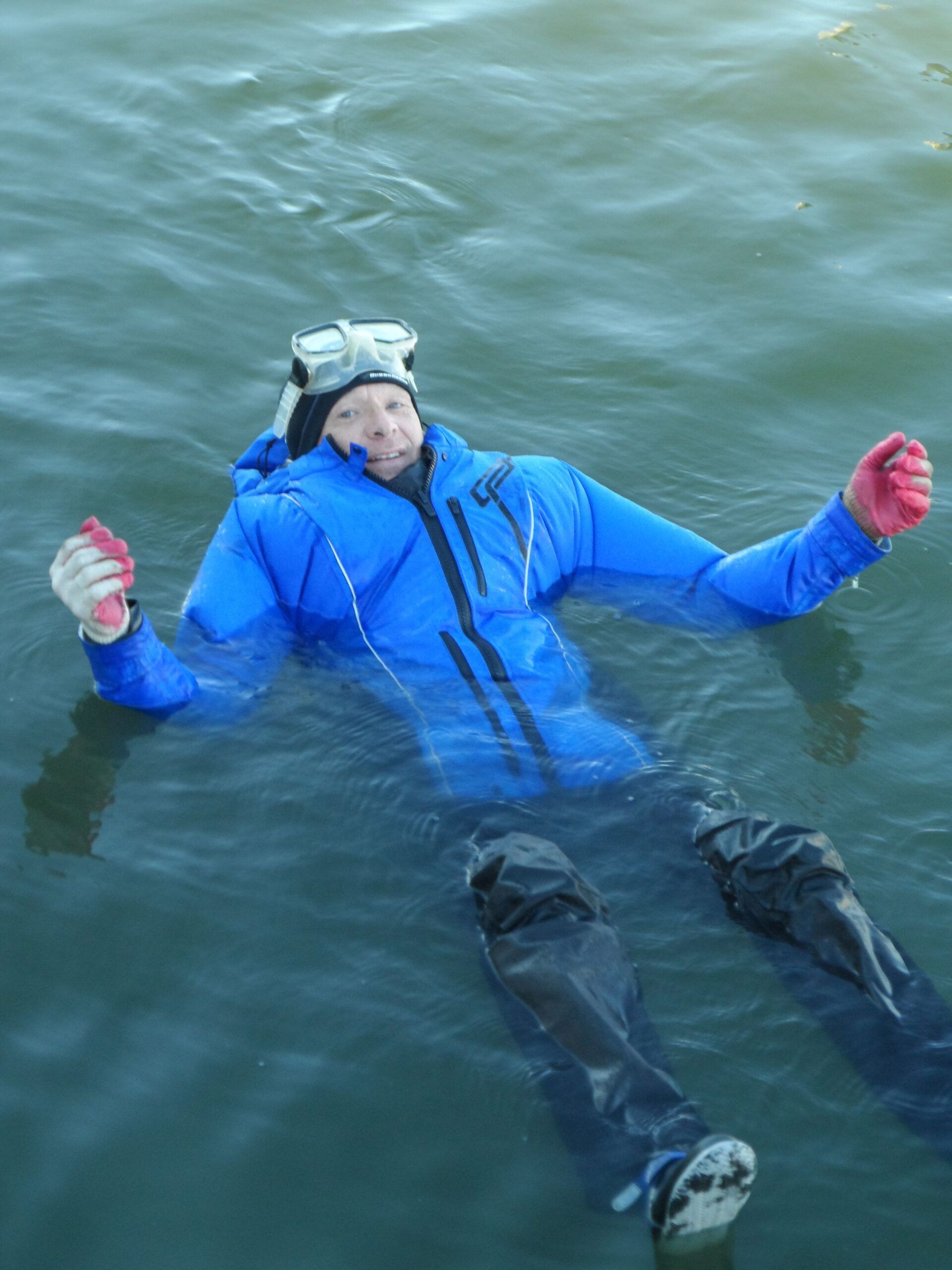
A dry suit, on the other hand, is multi-purpose clothing, useful to the cruiser for a variety of tasks—foul weather gear in severe conditions; diving to inspect for underwater damage or to untangle a line, kayaking, or assisting in MOB recovery—all with full agility. It’s a versatile bit of gear that every cold water sailor should own and use. Furthermore, the cold water protection seems quite comparable to an immersion suit—better because you are more likely to be wearing it.
Dry suits have long been the gear of choice for frostbite dinghy sailors, allowing them to compete safely and in relative comfort while drenched by cold water. They are standard issue for racers in the southern oceans, who must endure long shifts on decks swept by freezing water. However, as with all safety gear, we must be certain before making broad claims against the status quo.
Test Suit
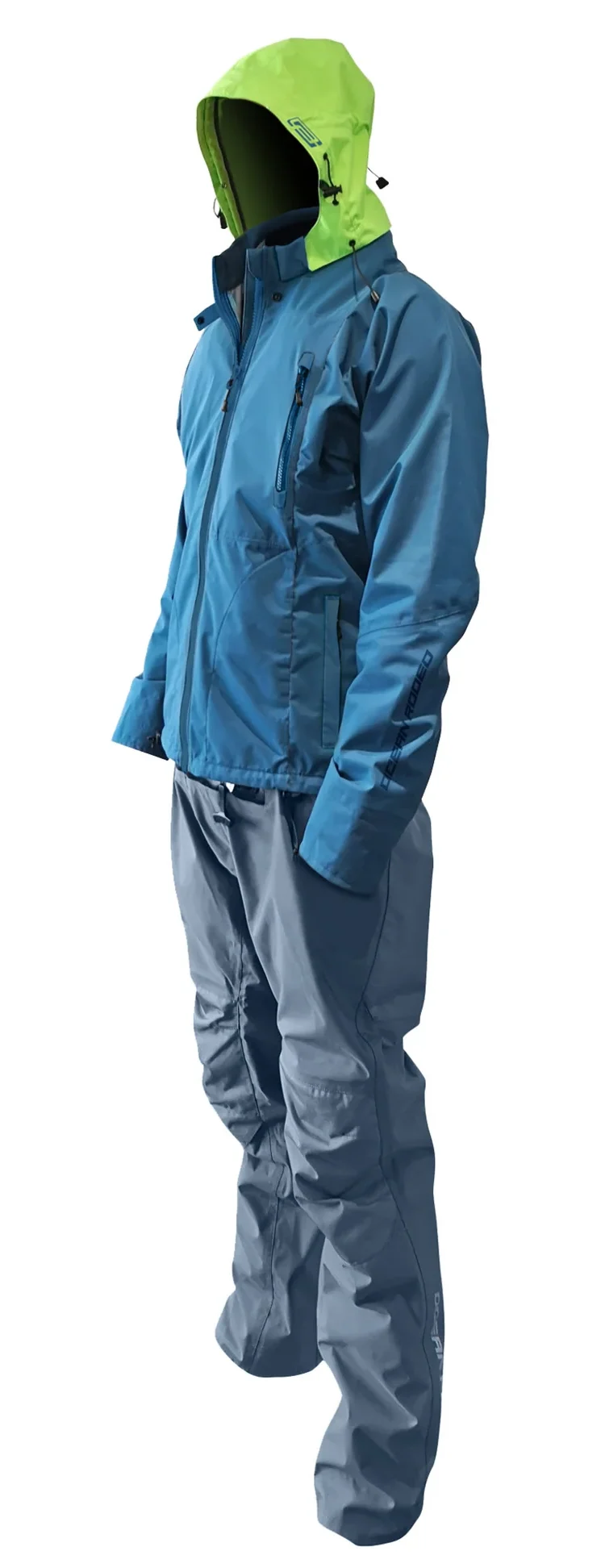
A line-by-line comparison with Coast Guard requirements (67 CFR 160.171) seems in order. Although I didn’t have a bright orange, tricked out ocean racing suit available to test, I did have a very rugged Ocean Rodeo Soul, designed for the rigors of windsurfing. I’ve been using this suit every winter for 11 years, and no leaks yet. I jumped in the water with it today, after a few hours of paddling, just to test for leaks—there were none.
How We Tested
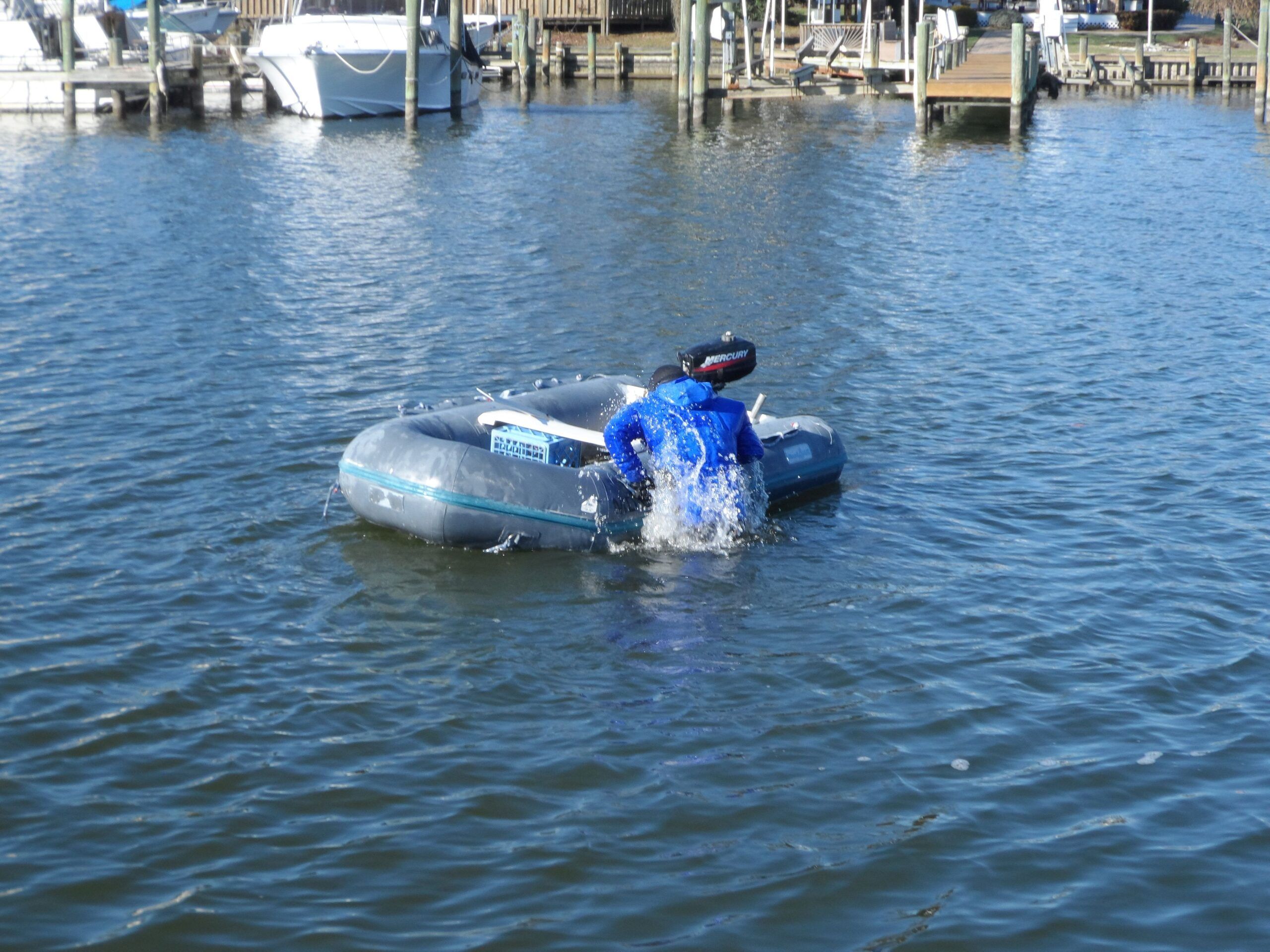
Comparing the dry suit to the immersion suit construction specification, line by line, it is apparent a few requirements deserve an allowance; there is no need for one-size-fits-all—each crewmember can have their own. I skipped the tests for fire and diesel resistance; they didn’t feel applicable for sailing use.
Some tests include in-water activities (jump from a height, self-righting/air movement within the suit); for these I added a 5 mm/7 mm neoprene dry suit hood and 5 mm neoprene gloves, essential accessories for diving or cold water survival. I performed all of the required tests for agility and in-water performance. We chose a lovely 35 F day with thin ice on the water (the standard requires that the water temperature must be <35.6 F, and the air temperature between 14 F and 68 F—it was colder than that), which provided rigorous testing conditions. My crew took refuge in the heated cabin, checking on me as needed (between movies).
Breathable vs. Non-Breathable Materials
A word of explanation regarding dry suits. Although there are many variations, most are made of either waterproof breathable material like Gore-Tex or coated nylon. While divers are fine with coated material (no material can breathe underwater), breathable materials are far more suited to sailors and paddlers who will be working out of the water. The suits block all water entry by means of snug latex seals around the neck and wrist.
Bare Feet
While dry suits for surfers leave the feet bare, I like warm toes and prefer suits with attached feet. They eliminate the need for bulky seaboots, since an ordinary deck shoe will work (go up one size—you will want thick fleece socks too). While the neck seal may be slightly uncomfortable, there is zero chance of a cold dribble down the neck or down the arm when you raise your hands. In a suit designed for sailing, internal suspenders keep everything in place.
Waterproof Zipper
The suit is entered by means of a special waterproof zipper. The Ocean Rodeo Soul has a unique feature of special value to sailors; because the suit includes a built-in jacket and hood and because the closure is by a zipper across the shoulders, it is practical to work in what Ocean Rodeo calls stand-by mode with good ventilation through the shoulders and neck while maintaining the protection of standard foul weather gear.
(The full text of the Coast Guard construction and testing requirements can be found in the Code of Federal Regulations, 67 CFR 160.171.)
Construction
General
The code requires immersion suits be made of closed-cell foam for insulation and flotation. While dry suits are made of tough fabric, they remain vulnerable to catastrophic failure if torn. However, the suit will still hold the water in place where it can warm, providing some level of protection.
I intentionally opened a zipper a few inches and flooded a suit in 50 F water just to see the effect. While quite unpleasant, it was certainly better than foul weather gear and more like a wet suit; the water was better trapped and warmed within a few minutes. Swimming was more difficult, as the suit became progressively heavier. However, unless the neck seal fails, air is still retained in the upper portions of the suit providing buoyancy.
On the other hand, leakage seems less likely in a dry suit you wear regularly than in an immersion suit that has been hiding in the bottom of a locker for years. Dry suits fail strict compliance because of lack of foam floation and would be a little cold if flooded, but so would an immersion suit and they are tolerable when wet if you are wearing proper fleece layers under them. Flotation will be supplemented by the PFD you are wearing.
Impact Resistance
Must be able to jump 4.5 meters without damage or excessive water intrusion. I jumped from 3 meters 3 times and had no damage, significant shifting or water ingress. Given that the suit has endured 12 years of seasonal but vigorous use, this is a pass.
Seams
Though we did not pull seams apart, we did pull-test equivalent to the standard without damage. I have been kayaking and sailing in this suit for 11 years. Pretty rugged so far. Pass.
Closures
Same as the jump test as above, no problem passing.
Hardware and Metal Parts
Must be compatible with seawater. These are built for windsurfing. Do remember to lube the zipper periodically to help keep it watertight. Just a tiny dab in the socket and the pull will spread it.
Suit Exterior
Must be orange. Some drysuits are bright colors, some aren’t. Mine was available in red, but I bought a blue floor model at a boat show discount. Reflective panels required; given that mine is blue, I added those.
Buoyant Materials
Requires that buoyancy not be dependent on inflated compartments. However, we found it very comfortable when worn with a PFD.
Hand and Arm Construction
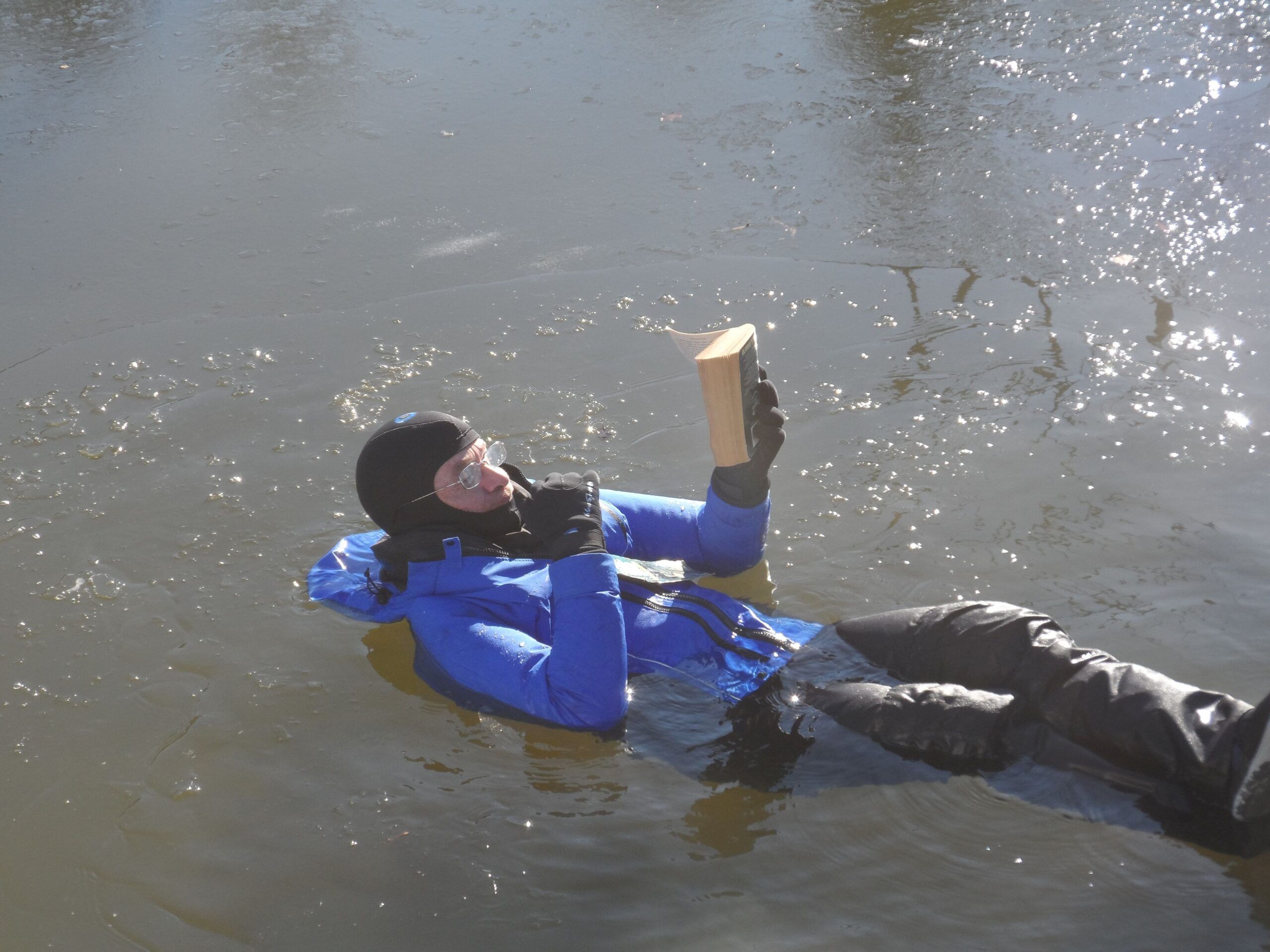
The regulation requires that gloves are integral (attached) and that the user can pick up a pencil. The cruiser will need to buy separate warm gloves if the intention is for use as a survival suit. We wore 5 mm neoprene gloves in the coldest weather, which easily passes the tests for both warmth and dexterity; we were able to read a book, turn the pages, clip carabiners, operate Fastex buckles and untie knots. We also used the suit while sailing in all conditions, wearing sailing gloves of different types according to the conditions. Neoprene gloves could be carried in a pocket.
Leg Construction
Must allow air to move freely upwards (to prevent chronic inversion). A dry suit does not trap air in the legs.
Foot Construction
The regulation requires integral (attached) feet with non-skid soles. Dry suits have attached waterproof socks and assume that you will wear either deck shoes (up one size) or wet suit shoes. We have used both and found them to be agile and all-day comfortable. Fleece socks are a must in cold weather anyway, and I wore two pairs during testing. Nice and warm.
Size
An immersion suit must be one-size-fits most, from 110 lb. to 330 lb. A dry suit, on the other hand, must be fit to the individual. You can’t just buy them large; the wrist and neck seals will leak. Ideally, each crewmember will have their own.
Soul Dry Suit by Ocean Rodeo: 11-year Test Report My introduction to winter sailing as a beach cat sailor involved chattering teeth and a 3/16-in. neoprene suit that made cold water safe, but not pleasant. I bought the Ocean Rodeo Soul (described in Practical Sailor October 2012, November 2014) at the 2013 Annapolis Boat show, and winters have been much better. Compared to foul weather gear, the layers worn under a dry suit are fewer, but must be highly breathable and without cotton. For active use in 35-50 F temps and the occasional dunking, a pair of fleece pants, light fleece pullover, fleece socks, and wet suit boots or deck shoes (one size larger) seem about right. For extended work in freezing water add one more layer, and neoprene gloves and dive hood (5mm) for hull cleaning and under-boat work, and a neoprene beanie is a good compromise for a quick dunking or rain. Perspiration management has proven very good during vigorous kayaking, the Goretex breathing well at lower temperatures, and the stand-by mode helping in warmer temperatures. Wrist and neck seals must be trimmed to suit the user; an over-tight neck seal can dangerously restrict blood flow and it’s painful when the Adam’s apple is not free to move up and down when breathing hard. For small adjustments, cram 16-ounce bottles in the wrists and a 2-liter bottle in the neck openings for a few days. Failing that, trim the seals smoothly using a very sharp pair of scissors (any nick becomes a potential tear site), following the molded rings provided for guidance, removing no more than two rings at a time. The hood is poor. Intended to provide minimal protection for windsurfers and paddlers, it is not suitable for long wet days (we wore a ball cap underneath so it would turn with our head). There is no storm collar, but there is no possibility of water down the neck. No wear, leaks, or tears have developed. $759.00 from Ocean Rodeo. On nasty days the Soul delivered much of the safety of a survival suit (Practical Sailor Blog January 15, 2015) in something we enjoyed wearing. For off-shore racing there are purpose-built models by Ocean Rodeo (Ignite, Boss) and others.
Clothing Layers
Fitting the Seals
Hood
Bottom Line
Performance
Buoyancy
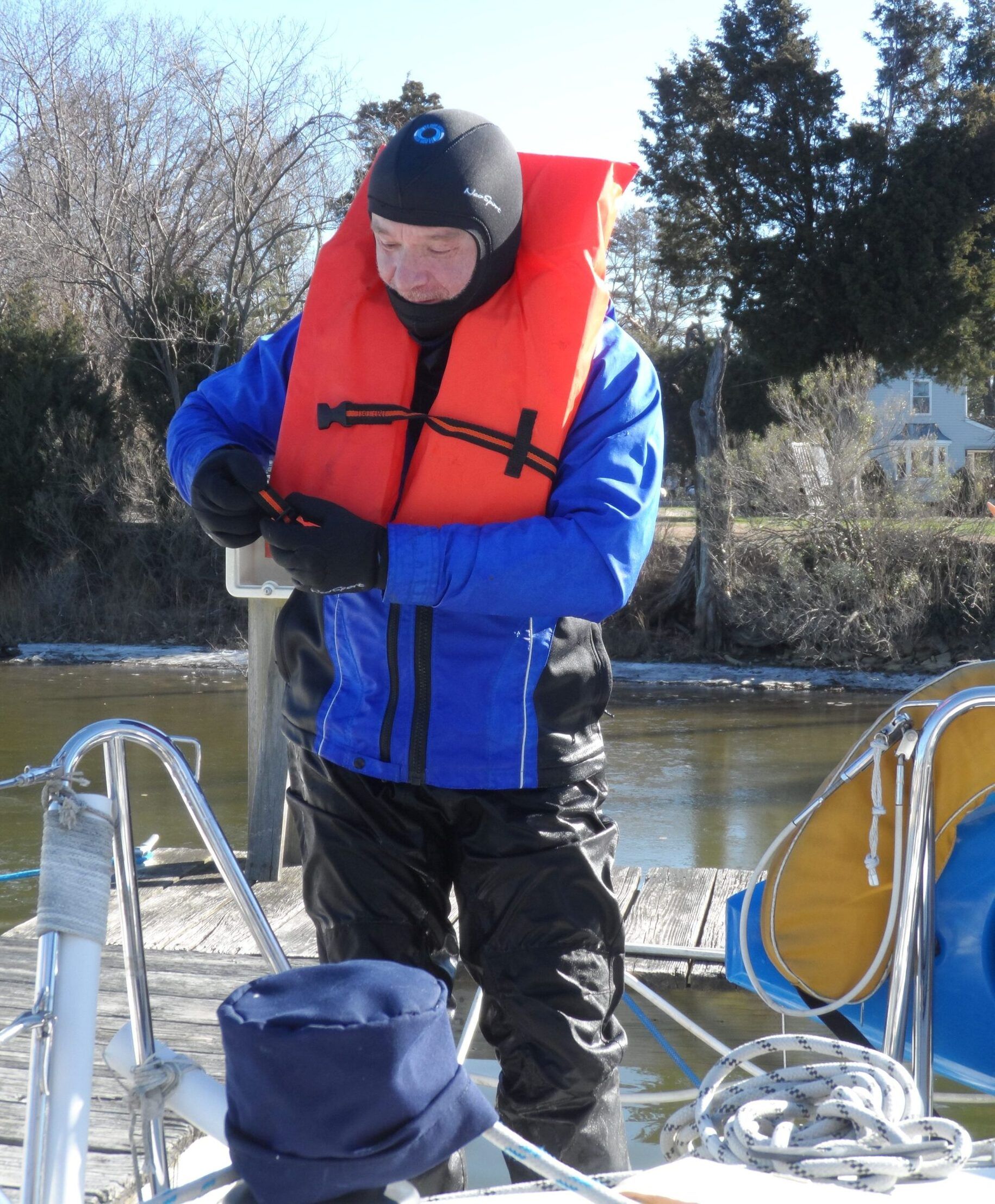
The regulation requires 22 lb. I grabbed steel dumbbells off the transom until the floatation level was the same as in a swim suit, water at my chin, head back. Forty pounds were required if no special effort was made to burp air from the suit. Although this easily exceeds the standard, a PFD is required to pass the requirements for head support and self-righting. It is also possible that the suit could suffer a leak.
Righting
The regulation requires self-righting. The air moves around in a dry suit such that the swimmer is stable both face up and face down. This can be greatly reduced by removing most of the air during the donning process (before sealing the zipper the last inch, squat down into a ball and squeeze—this is normal practice). With an inflatable or other type of “face-up” PFD, righting is fast and resting is quite comfortable.
Thermal Protection
The body temperature must not drop more than 3.6 F in six hours. Moderate activity with a pulse of up to 140 BPM is permitted for the first hour, and 120 BPM maximum thereafter. I spent a portion of the time performing in-water swimming and boarding tests, a portion enjoying a swim around the harbor, and a portion as quiet time toward the end, reading a book. I eventually called the test at six hours on account of boredom, by which time my core body temperature had actually risen 0.4 degrees.
My little fingers were slightly cold (57 F compared to standard requirement of 50 F—no worse than shoveling snow), but these warmed if we swam a few strokes, which helped redistribute warm water (palms read 65-70 F). My feet stayed comfortably warm (62 F at the toes, 80 F at the arch), and my legs and torso were very comfortable, so long as I rolled over every five to ten minutes to redistribute warm air within the suit, which I did while reading a book, keeping it dry.
However, I did wear more clothes than stated in the test procedure (long underwear, fleece top and bottom, and two pairs fleece socks versus street clothes in Coast Guard standard). Since these are the clothes I typically wear sailing in freezing conditions, it seemed fair. A neoprene diver’s hood (3 mm/5 mm) and gloves (5 mm) are required and were worn during testing (these could be carried in a pocket and donned in the water).
Water Penetration
The suit must not leak more than 100 ml during the first two minutes and 500 ml in one hour. Because of difficulties weighing a person to the nearest 0.2 lb., I weighed the clothes before and after. The weight gain after two hours was 0.25 lb., well below the 1.1-lb. limit for one hour, and this included jump testing, which would ordinarily be a separate test. I believe that all of the gain was perspiration and inadvertent drips while removing the dry suit. I was quite dry and not at all clammy.
Donning Time
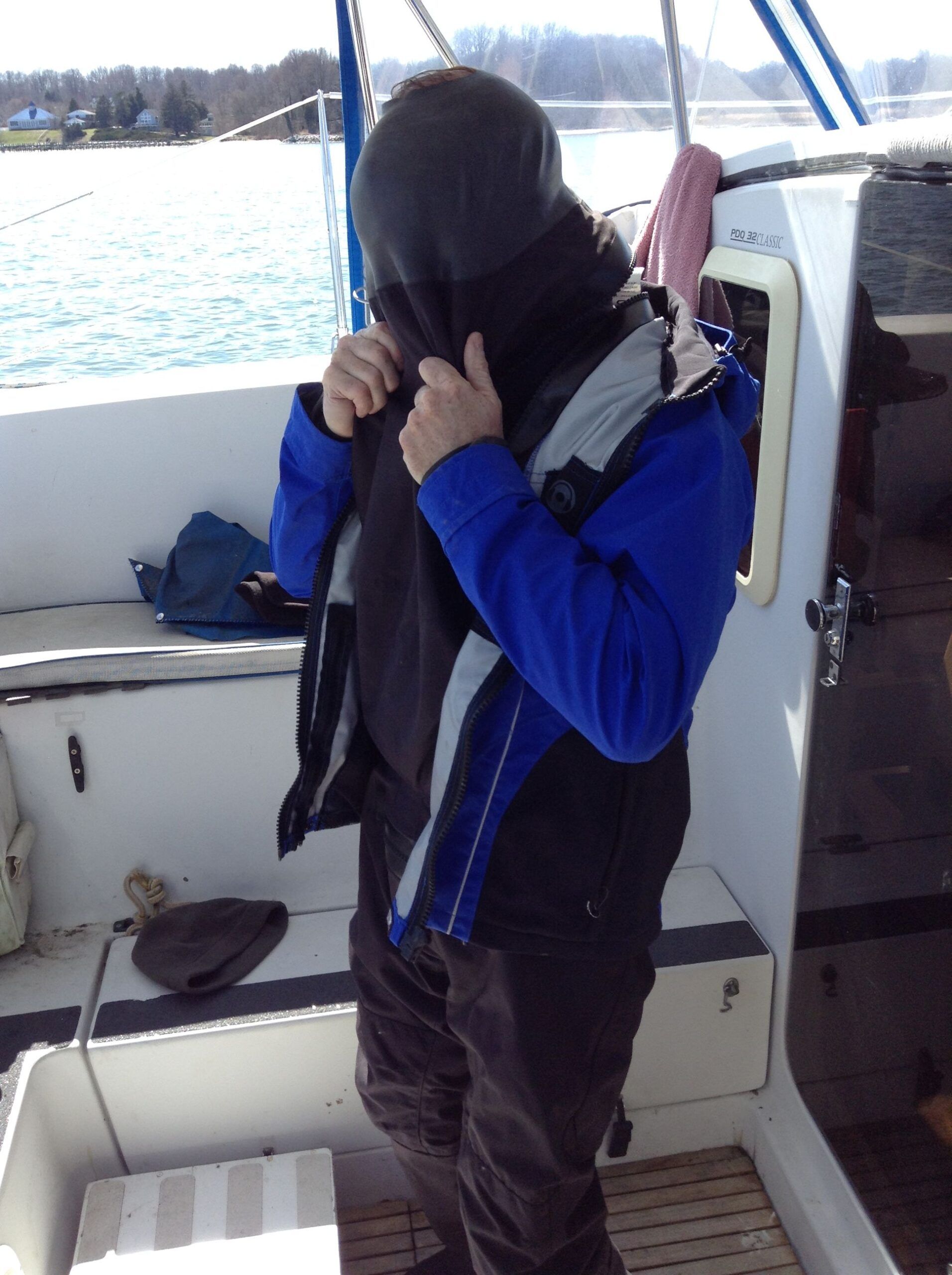
The suit must be donned within two minutes. While a dry suit takes a little practice to don, the two minute requirement is reasonable with practice. Additionally, you would generally don the drysuit as soon as the weather gets wild or sinking seems possible.
Field of Vision
While the standard allows for some restriction, a dry suit adds only that associated with the hood, and the hood can be lowered or removed (it serves no purpose in the water).
Hand Dexterity
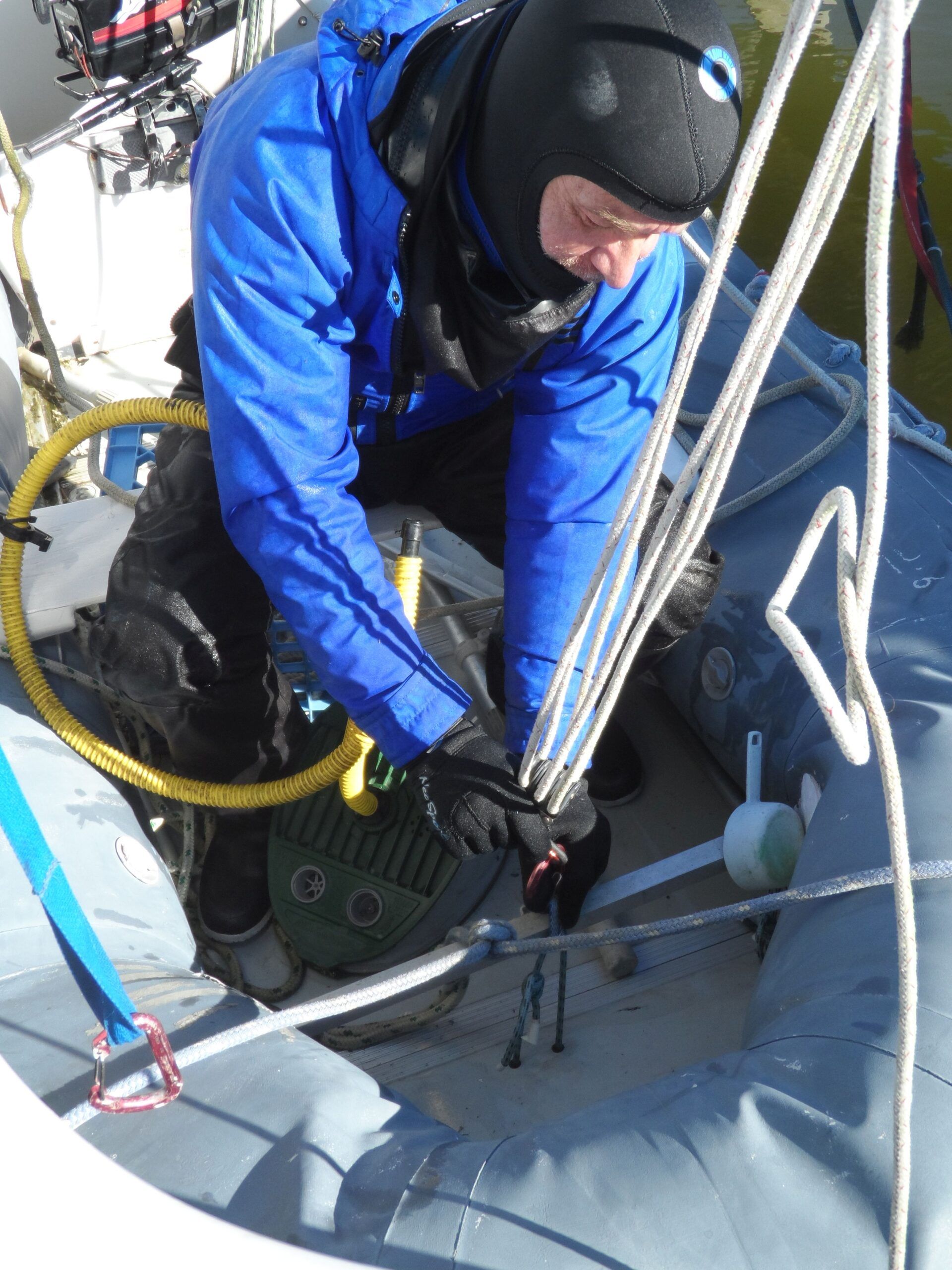
Must be able to pick up a pencil after one hour in 50 F water. While this depends on the gloves, we could untie knots, clip carabiners, detach Fastex buckles, and turn pages after six hours in 33 F water.
Walking
A course is described. A dry suit is typically better than most foul weather gear since there are fewer layers. Often after kayaking I forget I have it on and continue to go about my business. Less restriction than foul weather gear, and no difference when wet.
Climbing
A course is described. A dry suit is better than most foul weather gear since there are fewer layers and it is lighter. It does not add weight when climbing out of the water, because unlike foul weather gear, there are no layers and linings to trap water and your underlayers stay dry.
Swimming and Water Egress
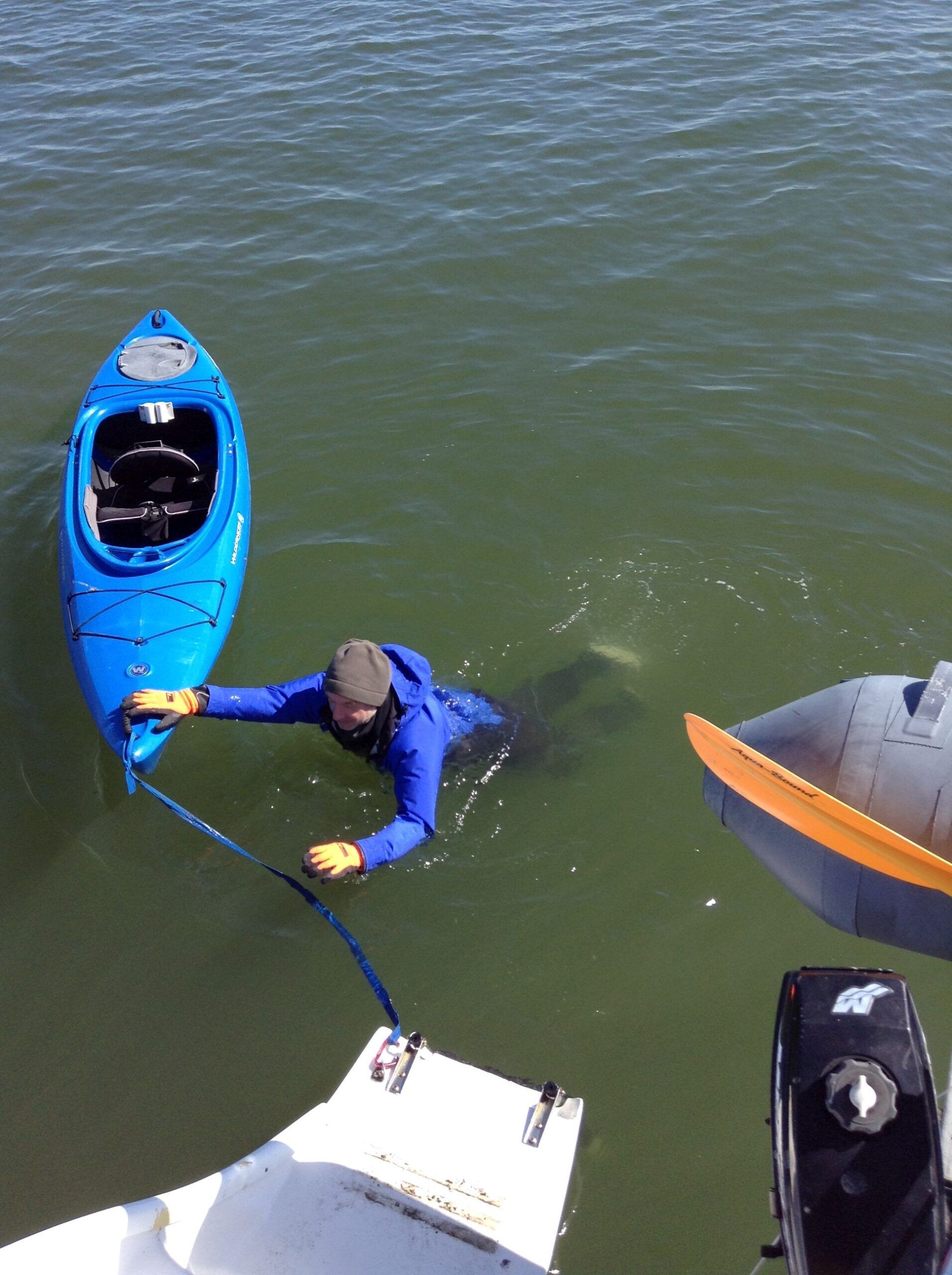
While the regulation allows this test to be performed in a warm pool, I performed these tests a 33 F harbor along with the thermal protection test. I anchored the inflatable dinghy the required distance from the boat and easily performed the swimming and dinghy boarding tests in the required time. It was even fun, swimming around months after traditional swimming weather had passed. There was no boat traffic in the harbor since most of the slips had frozen.
Discussion
Seals
The wrist and neck seals on a dry suit are always too tight as purchased, just as the pant cuffs on a dress suit are too long and are intended to be trimmed to fit. Using very sharp scissors, neatly trim the seals little by little, using the molded in rings as a guide. Smooth any nicks as these can start a tear. You should feel no restriction in circulation and if you have an Adam’s apple, it should be free to move.
Donning
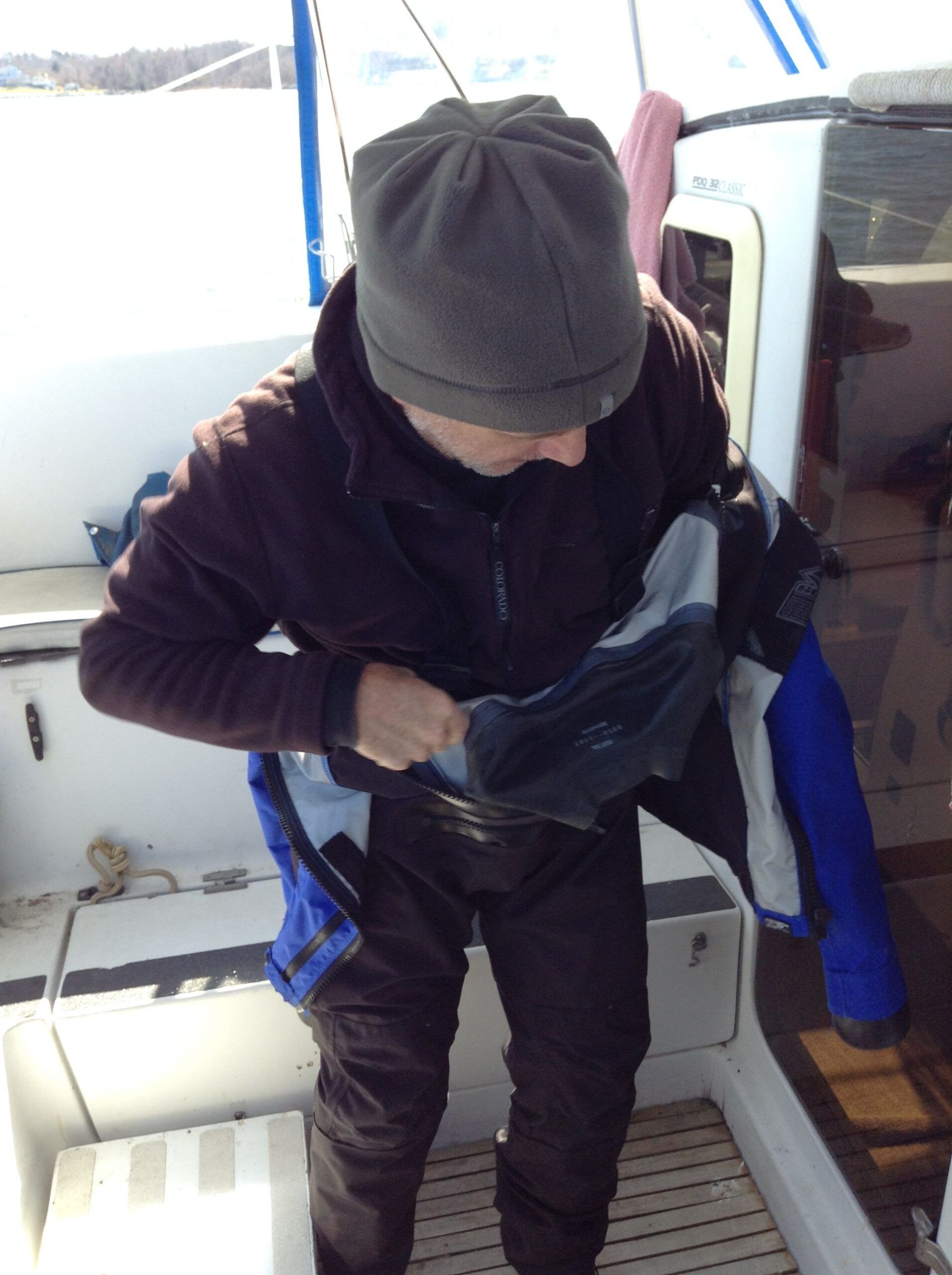
If you intend to use the dry suit for hull cleaning or other diving under the boat, fins will help you get down and a weight belt will be needed to achieve neutral buoyancy. Because the entry zip on the Soul is across the back of the shoulders, the best way to minimize retained air in the suit is to descend the boarding ladder to mid-chest before pulling the zipper the last ¼-in. For deckwear and survival in the water, simply squat before pulling the zipper closed—this will prevent over-inflated awkwardness and still provide considerable buoyancy.
Neoprene Beanie
I like a neoprene beanie (Ocean Rodeo and others) when kayaking or sailing in the rain. It keeps my hair dry and won’t blow off. For diving and severe cold water protection, I switch to a 3/5mm dive hood; it’s unpleasant on deck, but it keeps the critical neck area warm. Could be kept in a pocket.
Clothes Under the Suit
Try on the suit with clothes appropriate for cold weather sailing. The Ocean Rodeo has an athletic fit that is close in the hips; I weigh 165 lb., and with appropriate fleece layers, that is the limit for a medium. Try your own cold water test before relying on the suit in icy temperatures; people vary in the amount of insulation they require.
Drysuit Options
Drysuits vary in their suitability for sailing. Many are designed for diving, kayaking, or other water sports and lack vital features such as functional hoods, face shields and reflective panels. Additionally, the requirements for dinghy sailing and cruising are somewhat different. We have tested and like the Ocean Rodeo Soul ($899), Ignite ($1099—similar with better hood) and the Musto HPX Dry Suit ($1599) and liked all of them, but this is not a review and there are many possibilities.
Mask
Although we did not use a dive mask or snorkel for any of the testing (it is not in the standard), a mask adds considerable warmth by keeping the top half of the face warm, leaving only a small area around the lips exposed. A ski mask is a good substitute for sunglasses in cold weather, improving the view in rain and spray, but avoid two-layer lenses; water will get between them.
Immersion Suit
Strengths:
Weaknesses:
Dry Suit
Strengths:
Weaknesses:
Conclusions
It is not my intent to persuade you that a dry suit can replace an immersion suit or which specific suit is the right choice. There are too many choices and too many differences. However, after line-by-line review of Coast Guard immersion suit performance requirements, I feel that a good dry suit with the proper accessories comes very close to meeting immersion suit requirements, while offering dramatic advantages in wearability and utility.
If the probable risks are sudden sinking, roll-over, capsize, or simple man-overboard, a dry suit is the far more practical alternative. If you are sailing in cold waters, you really should have one or several dry suits on board anyway, for their general usefulness for maintenance, emergency repair, and MOB recovery.
In my case, as a year-round sailor and frequent single-hander (rapid MOB recovery is improbably in the extreme) it provides safety no other garment can. The real questions are whether you need something for the entire crew, and whether that something is a dry suit or an immersion suit. Finally, if a life raft or inflatable tender is available, a dry suit should be more than sufficient.
A conventional immersion suit offers more robust protection and flotation in an industrial setting, where one-size-fits-most makes sense, where user familiarity may be less, and where a boat sinking over some time period is the greater risk. I just don’t feel that is the real world of cruisers. I like my dry suit.













Drew, when wearing the hood, do you put its collar flap under the dry suit’s collar, or do you just let it ‘float’ outside the dry suit’s collar?
What is the brand of the hood that you wear? I have an older U.S. Diver hood whose collar is quite loose.
Great article!
I let the wet suit hood float on the outside. Otherwise the dry suit seal is compromised.
Neosport 3/5 mm. The neck fit me well and I trimmed most of the skirt away.