Practical Sailor

  • Subscribe
  • Free Waypoints e-letter
  • Customer Service


Forgot Your Password?

  • Home
  • Sailboat Reviews

    Articles

    Boat Review: Marshall 22 Catboat

    The Pros and Cons of a Plumb Bow

    Boat Test: The Last Sabre 34 Mark II

    The San Juan 24

    Used Boat Review: Gulfstar 36

    Seawind 950: Some Assembly Required

    Sailboat Reviews

    Unbiased, detailed reports on dinghies, daysailers, racer-cruisers, cruising sailboats, and multihulls. Insights into boat construction and design. Solid advice on buying a sailboat.

    Sailboat Reviews - Index

  • Marine Electronics

    Articles

    Field Testing Kannad, McMurdo, and Mobilarm MOB Beacons

    Best Mid-priced Marine Stereos

    Garmin BlueCharts Mobile Sea Trail

    Where Credit Is Due: April 2013

    DeLorme inReach vs. Iridium Extreme

    Marine Electronics

    Extensive tests of GPS chartplotters, fishfinders, VHF radios, radar, AIS, navigation software, and handheld gadgets. Professional guidance on installing and operating high-tech sailing gear.

  • Sails, Rigging & Deck Gear

    Articles

    Anchor Tests: Bending More Shanks

    Mainsheet Tackle Bench Test

    Shockles Snubber Test

    Summer Sailing Gear

    Mailport: June 2013

    Sails, Rigging & Deck Gear

    Independent tests of halyards, sheets, furlers, anchors, snatch blocks, shackles, ropes, winches, vangs, cleats, booms, masts, and standing rigging. Expert guidance on choosing a mainsail, jib, or spinnaker.

  • Systems & Propulsion

    Articles

    Fuel-vent Filter Test Resources

    The Fine Art of Sensing the Wind

    DC Watermakers Head-to-head Test

    Stainless-steel Hose Clamps

    Propane-powered Propulsion

    Systems & Propulsion

    Comprehensive comparisons of pumps, batteries, solar panels, wind generators, inverter-chargers, watermakers, propellers, toilets, engines, and other marine systems. Tips on ship-shape installations.

  • Boat Maintenance

    Articles

    Mailport: May 2013

    Dehumidifier Field Tests

    Anti-Mildew Weapons

    Mailport: June 2013

    Where Credit Is Due: May 2013

    Boat Maintenance

    Bottom paints, topside paints, varnishes, waxes, protectants, cleaners, metal polishes. If it comes in a bottle or can, PS has tested it. Proven methods to protecting your floating investment.

  • Belowdecks & Amenities

    Articles

    Dehumidifier Field Tests

    Bends and Breaks: Anchor Shank Strength

    Portable Marine Toilets for Small Boats

    Portable Chairs for Sitting Under Sail

    Belowdecks & Amenities

    Our top picks in galley stoves, cookware, cabin lights, refrigeration, and entertainment systems can help turn your cruising boat into a home. Creative solutions to the challenges of living aboard.

  • Personal Gear & Apparel

    Articles

    Mailport: April 2013

    Kids’ Life Jackets for Active Sailors

    Summer Sailing Gear

    Gift Ideas for the Sailing Family

    Curing the Hardened Sole

    Personal Gear & Apparel

    Thorough test reports on binoculars, boat shoes, foul weather gear, hand-bearing compasses, sailing knives, flashlights, headlamps, sunglasses boots, and anything else that belongs in a skipper's seabag.

  • Safety & Seamanship

    Articles

    Crew Learns Along the Way

    Kids’ Life Jackets for Active Sailors

    Practical Tips for Survival at Sea

    Mailport: June 2013

    The Science of Safety

    Safety & Seamanship

    Our testers evaluate life jackets, flares, life rafts, harnesses, man-overboard strobes, medical kits, seasickness aids, and emergency devices. Tips on marine safety gear, boat-handling, and emergency procedures.

  • Mailport & PS Advisor

    Articles

    Mailport: March 2013

    Anti-Mildew Weapons

    Mailport: June 2013

    Indoor Sailboat Refinishing

    Where Credit is Due: March 2013

    Mailport & PS Advisor

    Insightful letters from sophisticated sailors. Do-it-yourself projects and reader feedback on a wide range of boats, marine manufacturers, and sailing products.

  • Inside Practical
    Sailor Blog

Features

November 2011 Issue

Story Tools

  • Share |
  • E-Mail to a friend
  • E-Mail to the editor
  • Post a Reader comment
  • Printer Friendly

Hope for Best, Plan for Worst

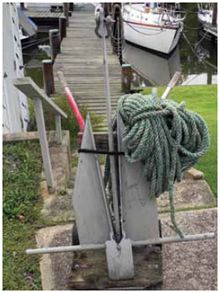
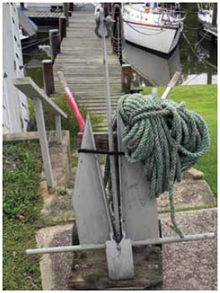
A good storm-anchoring rule of thumb is using “ground-tackle overkill.” Wind Shadow was well secured with multiple anchors, including this 60 H Danforth

When tropical weather threatens, being prepared for the wind, waves, surge, and flooding pays off. How you prepare for a storm depends on where your boat is in relation to the storm and whether you choose to keep it at a dock, on a mooring, or anchored in sheltered waters or a hurricane hole.

Irene may have lacked super-storm status, but her sizable diameter and the angle with which she approached the Northeast coastline caused considerable impact from Beaufort, N.C., to Bangor, Maine. Sailors hiding from the storm faced a range of impacts. The most common was tropical-force winds with gusts to about 60 knots.

For those on the Chesapeake Bay, Irene passed to the east. The combination of encountering the favorable side of the storm—with the subtractive nature of its wind direction and forward movement reducing the apparent wind—and the minimal storm surge kept damage to docks and marinas to a minimum. Long Island and Connecticut, on the other hand, saw a more significant tidal rise, and those caught on the eastern side of the storm also had more wind to contend with. Marinas as far inland as Lake Champlain (in Vermont and New York) suffered serious damage as sailboats and finger piers lost their grip on the lake side. Rain was a big issue, and as small streams flooded, a plethora of debris and flotsam floated into coastal waters, creating prop-damaging hazards during the days following the storm.

Along the Chesapeake, we noticed that more owners of the marina-secured boats had stripped off furling headsails and bimini tops ahead of the storm’s arrival. Those left on moorings doubled-up on bridles and added secondary mooring pendants.

Quite a few sailboats were hauled out in preparation for the storm. Many owners did so as a result of the early forecasts that indicated Irene would make landfall as a Category 2 or 3 hurricane. The fact that it had weakened significantly just before and during initial contact with land changed the outcome. North Carolina bore the mainland brunt of the storm, and only one or two boats were caught out. A 30-foot sloop heading up the Chesapeake was driven ashore. What the crew had in their mind was an escape from the storm’s worst effect. Unfortunately, they were a day late in their departure and certainly should have stayed put.

Landfall in New England coincided with a new moon spring-tide, and short-scoped moorings in crowded mooring fields led to a number of dragging problems. Those on the eastern side of the storm saw more wind and surge while those on the western side ended up with considerably more rainfall.

Storm Readiness

If you plan to ride out a storm aboard, be sure the following are checked off your To Do List well ahead of the storm:

• Search out an uncrowded, protected anchorage with adequate swinging room.

• Strip off high-windage items like sails and biminis.

• Lash loose deck gear.

• Dorades ready to rotate sternward.

• Double-check that hatches and opening ports are dogged securely.

• Make sure your bilge pumps are reliable and are working properly.

• Have a bright LED anchor light.

• Load your ground-tackle arsenal with anchor overkill.

• Be sure you have plenty of fenders deployed and extras ready to deploy.

• Have these items at the ready: extra line, a waterproof head lamp, a sharp fixed-blade knife (on deck), a well-made bucket and backup bailers, good victuals, and a couple of good books.

Read More on These Topics
  • Seamanship
  • Safety & Seamanship

Comments (1)

We live on the Gulf Coast and have survived countless hurricanes and other named stormed including Katrina. I believe that a true mariner with a love of his craft does not rely on insurance claims. I abhor the idea of calling my insurance and explaining that I failed to protect my boat from a storm which I was fully was coming. With this mind set, I use a large Fortress anchor chained about twenty five feet in front of a large CQR with about a hundred foot of chain. I use standard (Size Large) anchor rode after the chain for shock absorption. This holds great, but there are a few limiting factors. I find that many people have no idea how to anchor in normal conditions much less in a hurricane. Therefore, boats are always dragging all over a hurricane anchorage. One key point is to find a location where you can obtain sufficient scope and swing. Another is to place every fender in your locker all around your boat regardless of how ridiculous it looks. I guarantee someone will drag down on you since you will be holding steady. Don't use tires unless your yacht is a shrimp boat.

I used this method in Indian Bay at Dolphin Island which has no protection from the east once the waters rise. We kept the boat on the island for a few years; I didn't take it out there just for the storms. Out of three tropical storms and two hurricanes, only once did I have company mooring in that bay for the storms. That was good for me, because I probably needed most of the bay to swing. After all fives storms, we found her riding her anchor as if she had dropped the hook for lunch.

Posted by: Darien H | September 5, 2012 10:19 PM    Report this comment


Add your comments ...

New to Practical Sailor? Register for Free!

Already Registered? Log in

Forgot your password? Click Here.

Advanced Search

Related Items

Articles

  • Mailport: June 2013
  • Kids’ Life Jackets for Active Sailors

Current Issue

Cover Image

June 2013

  • Mainsheet Tackle Bench Test
  • Kids’ Life Jackets for Active Sailors
  • Dehumidifier Field Tests
  • Shockles Snubber Test
  • Summer Sailing Gear

Subscribe Today

Back Issue Archive

Resources

  • Practical Sailor Dinghy Survey Results
  • DIY Boatyard Survey
  • Sailboat Reviews - Index
  • DIY Projects
  • Bookstore
  • Issue Archives
  • Other Resources
  • Customer Service
  • About Us
  • Home
  • Subscribe
  • Give a Gift
  • Renew
  • Products
  • Customer Service
  • Privacy Policy
  • About Us
  • FAQs
  • Contact Us
Practical Sailor

© 2013 Belvoir Media Group, LLC. All rights reserved.