




The Best Inflatable Boat Cleaners for Stubborn Stains on a Dinghy
The shelves these days are packed with an endless array of boat cleaners. A mild soap and elbow grease is often all that is needed. But when you are dealing with extensive coats of mold, mildew and dirt, deep cleaners are the ticket. Practical Sailor divided a neglected, filthy Avon Rover R250 into even sections and tested 11 inflatable boat cleaners. Three products scored an excellent rating. Products tested include the best products from Star Brite, MaryKate, Nautical Ease, Marine Development and Research Corp, Amazons, Seapower, Pennel & Flipo, Revival Ecological Paste, and Spray Nine.

Anchoring in Crowded Harbors
Stagger while you anchor? It sounds like Ive either been drinking too much or sailing too long. Bear with me.
Safety Tether Caution
The hallmark of an overboard fall protection system is a system of jacklines running along the deck, with tethers attached so that the sailor can move throughout the boat with relative freedom. But this is not the real backbone of the system. A review of overboard accidents reveals that very few fall when transiting from cockpit to bow-they get washed overboard when they stop to perform a task. While moving, sailors are focused, holding on with two hands, and mindful of the approach of waves and the motion of the boat. But while taming a headsail or straightening up a tangle of line in the cockpit, the mind wanders, the hands are occupied, and risk increases. A wave strikes, we tangle our feet or step on a sail, and whoosh . . . were overboard.

The Importance of Sea State in Weather Planning
We all want a crystal ball that tells us exactly what we will be in for during a passage, however long or short it...

Why a Furling Staysail Makes Offshore Sailing Safer
With a double-headsail rig, you already have some powerful gear-shifting options. Putting your staysail on a furler adds an overdrive.

Breaking Down Performance
When it comes to sailboats, performance is a relative term, especially when it comes to a crews concept of how the boat will be used. Racing sailors, cruisers, and daysailors each have very different perspectives on performance. For example, those facing a light-air, around-the-buoys race measure performance in terms of how well their speed through the water holds up against the decrease in true-wind speed. Cruisers, on the other hand, especially those crossing oceans, often define it as a measure of versatility under sail, not just how a boat copes with near calms or gales, but how it performs in everything in between.

Dry Suit Versus Immersion Suit: A More Practical Solution?
Off season sailing, and even sailing and kayaking in cold water climates, presents the very real risk of hypothermia. Some MOBs experience a gasp...

Bloody Fingers to Princess Louisa Inlet
Sailing the west coast of British Columbia over the years has opened our eyes to the beauty of this cruising ground. From Washington State...

Trapped by Wind and Rocks: A Reefing Gone Wrong Off Vancouver Island
A few years ago, I was fortunate enough to be spending a few weeks aboard our 1978 Islander Bahama 30 Natasha cruising the west...

Dissecting the Art of Staying Upright
When the King of Sweden ordered the newly launched warship Vasa to sea in 1628, he gave little thought to the stability implications of the bronze canons perched on two upper decks. Just 1,500 yards into her maiden voyage, the Vasa capsized and sank, relegating the fire power intended to be pointed at Poland to ignominiously sink in Stockholm Harbor. This was neither the first nor last case of poorly calculated vessel stability, and todays sailors, boat designers, naval architects, and boat builders continue to debate just how much stability is enough.

O’Day 40 – A Budget Cruiser for the Bahamas
The O’Day 40 (1986) is one of those cruising sailboats that somehow slipped through the cracks of sailing history. Built during the final years...


Latest Sailboat Review
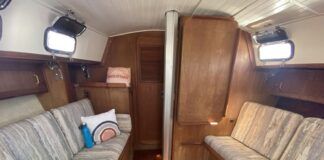
Caliber 33 Used Boat Review
The Caliber is a peculiar blend of tradition and innovation, of security and performance, of practicality and pizzazz. All of the owners we heard from were "satisfied." One called the 33 his favorite boat over six decades of sailing.