

Getting Rid of Mold and Mildew Onboard
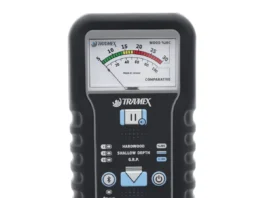
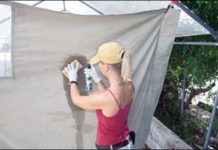
Among the marine maintenance products Practical Sailor evaluated recently were 14 pump-spray mildew cleaners to find out which one was the most effective at removing severe mildew stains. We tested chlorine bleach cleaners, chlorine-free cleaners, hydrogen peroxide cleaners, and ammonium chloride cleaners on a variety of materials, ranging from mildewed shower curtains to moldy vinyl seat cushions and moldy life jackets. We also used them to clean a mildewed sail and mildewed Sunbrella. All products were effective at removing the mold mildew from the shower curtain, but the cushions, life jacket, Dacron sail, and Sunbrella were more of a challenge. One product stood out as a more effective mildew cleaner: Klean-Strip Mildew Stain Remover. Klean-Strip is a highly concentrated product with 19 times more sodium hypochlorite than common bleach, and we do not recommend it for cleaning sails or fabrics. Other products tested include 3M mildew stain remover, Boat Armor mildew stain remover, Boatlife mildew remover, MaryKate mildew stain remover, MDR Amazons Amazing Mildew Stain Away, MDR Moldaway, Naturally Clean Mildew, Nautical Ease Mildew Stain Remover, household Spray Nine, Star brite Mildew Stain Remover, Sudbury Mildew Cleaner and Stain Remover, Thetford Mildew Stain Remover, and West Marine Mold and Mildew Cleaner.
Practical Sailor LED Lightbulb Test
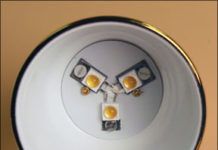
In this LED cabin light test, Practical Sailor looks at 17 light bulbs from seven manufacturers. The LEDs were tested to see which was the most worthy replacement for a 20-watt xenon bulb in a bulkhead-mounted reading light. Testers measure LED beam angles and intensity, LED power consumption, LED color temperature, LED radio frequency interference, and LED reading and cabin illumination. The LED lights tested include: Alpenglow TR LED complete brass fixture; three lights from Cruising Solutions; three lights from Doctor LED; four from Imtra; two from Opto Technology, two from Daniel R. Smith & Associates (DRSA) manufactured by Mast Products; two of Scad Technologies (Sailors Solutions) Sensibulbs; and one LED light from West Marine.
Best Boating Knives
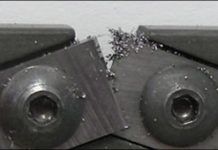
David Boye, the Arizona knifemaker whose unique folding boat knife of cast dendritic cobalt won our June 2000 sailors knives bench test and was a reference standard for our March 2004 revisit, recently introduced a new model Basic 3 Cobalt knife. These knives doggedly retain a cutting edge when going through tough, blade-resistant materials like rope, cardboard, or even old rugs. Others give up long before the job is done. In our experience, Boyes cobalt knives last much longer-and when they finally do slow down, they can be resharpened with just a few strokes on a medium stone. The difference, we reason, is in the metallurgy. Boyes cobalt blades are "cast to shape and retain the pristine crystal network of highly dendritic (branching) bonded carbide throughout the blade, which aids in cutting and maintaining the structure of the cutting edge," according to the maker. Most knives are from steel that originally contained a similar crystal microstructure, but then underwent rolling, stamping, or forging to shape. This process breaks down the original carbide microstructure of the metal. The carbides at the edge are then no longer rooted into the overall microstructure. Complex heat treatment is then applied to develop properties such as hardness and toughness.
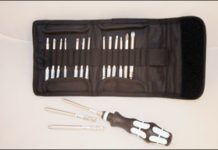
Wera: Stainfree with Stainless
According to German toolmaker Wera Tools, much of the corrosion we find in the cross-hairs of our Phillips-head and other stainless-steel fasteners is a result of cross-contamination during the tightening process when traditional, carbon-steel tools are used to secure the fastener. Small bits of the carbon steel are embedded in the fastener, and the particles form galvanic cells that quickly corrode or leave a pit. Solution? Stainless steel tools-the logic being that using stainless on stainless, there will not be any contact corrosion, and therefore no rust.
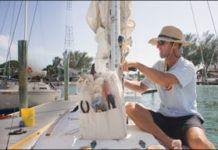
Diddy Bagg is More Than a Tool Bag
Practical Sailor testers are constantly schlepping tools between the Practical Sailor workshop, our own garages, and—of course—our boats. So we’re always on the lookout for a toolbag that makes said schlepping a little easier. Enter the Original Nantucket Diddy Bag, which we came across at a recent boat show. It is the first tool bag we’ve seen that is reversible and convertible. Designed by a Nantucket carpenter, the bag’s well-thought-out design is practical and versatile. With 36 various-sized pockets (including a hidden one in the bottom), the bag makes tools easy to find and keep organized—no more digging to the depths of a cluttered tool bag.

SteriPEN Portable UV Water Purifier
Cruising sailors who venture to the fringes of civilization, or to attractive but perhaps unsanitary foreign ports, or even to unfamiliar marinas, often have reason to view the sources of their drinking water as dodgy. Unless theyre willing to carry bottled water or have a watermaker on board, they catch as catch can, and sometimes what they catch isn't any fun. Boiling water and adding chlorine or purification tablets is a standard way of dealing with potential drinking water problems, but sailors may also want to consider a simple, relatively inexpensive gadget that trail-hikers, mountaineers, and other land-oriented adventurers have known about for the past few years. The SteriPEN, one of Readers Digests 2007 "25 Products That Will Change Your Life" and Wireds "25 Gotta Have Gadgets of 2008," kills water-borne viruses, protozoa, and bacteria with ultraviolet light, wrecking their DNA.
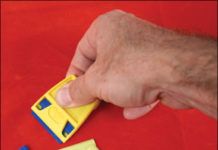
Plastic Razor Blades
Plastic scrapers have been around for a while. They are popular among painters, woodworkers, and auto detailers. For boaters, they make sense for jobs that need to be done quickly without scratching a delicate surface. However, for a fine cut and a lasting edge, metal blades remain the best choice. We tested the new ScrapeRite plastic razor blades on a variety of surfaces and found them handy for removing vinyl, cleaning dried paint on varnished wood, and trimming sealant. The blades come in three levels of hardness: red, general purpose blades for delicate surfaces like paint or varnish; blue, a polycarbonate blade for use on fiberglass and gelcoat; and yellow, acrylic blades for use on hard flat surfaces.
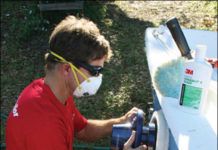
Power Tools for Restoring Gelcoat
For a control in our soon-to-be-published test of acrylic-type gelcoat restorers, we polished one panel on a 1972 Oday Javelin with 3M Finesse-It II and waxed it. PS has long prescribed Finesse-It II ($20, www.defender.com) for polishing, and the final gloss matched the panel with the best acrylic "miracle cure." We also tried various polishing tools fitted with wool buffing pads: the Waxmaster ($30, www.westmarine.com), the drill-mounted 3M Superbuff wheel ($17, www.defender.com); and a 7-inch variable-speed polisher from Chicago Electric ($30, www.harborfreight.com).

Ocean Tested: A Professional Carpenter and Cruiser Tells Practical Sailor What’s in His Power-tool...
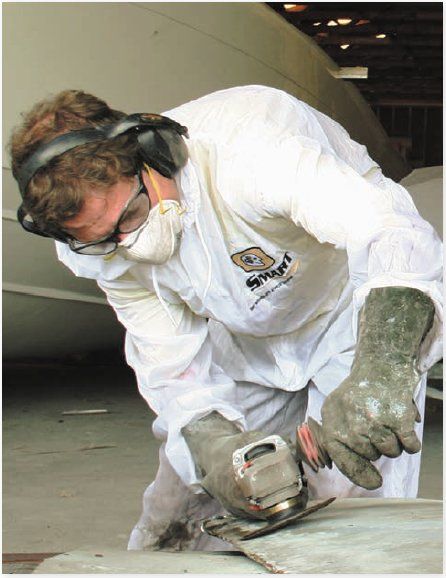
In the last decade, tool manufacturers have drastically improved their standard products. Today, all of the major manufacturers offer professional-grade power tools at reasonable prices. My personal choices are based on a wealth of experience with literally hundreds of tools owned by myself, my employees, and subcontractors. It boils down to reliable and versatile tools. The must-haves include: Hitachi angle grinder, Porter Cable Orbital Sander, Fein Multi-master, Dremel, Makita 14.4-volt drill driver, Makita 9.6-volt angle drill, and an 18-volt Milwaukee reciprocating saw.
Wave Survives Alinghi Challenge
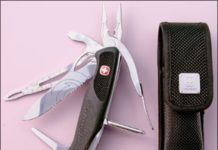
One of our campaigns over the last several years has featured knives and multitools as personal emergency tools that maintain and implement a sense of preparedness for the unexpected, even when ashore. Articles in several previous issues (March and August 2004, January and August 2005) have touched on this subject. To provide instinctive access in an emergency, the tools must be personal (worn on the person). So, when we evaluate personal tools, we always pose the question, "Would we wear this tool off the boat?" If yes, then the tool is personal gear; if no, we consider it strictly a multitool.

Morgan 382 – The $30K Boat Nobody Talks About
The Morgan 382 might be one of the most overlooked cruising sailboats ever built. Designed by legendary naval architect Ted Brewer and produced between...


Latest Sailboat Review

Jeanneau 55 Boat Review
This recent sailboat from Jeanneau may as well be a spaceship. They’ve taken all the time-honored designs of a monohull aft cockpit and turned...