



K2r Works on Canvas, Carpet, and Teak
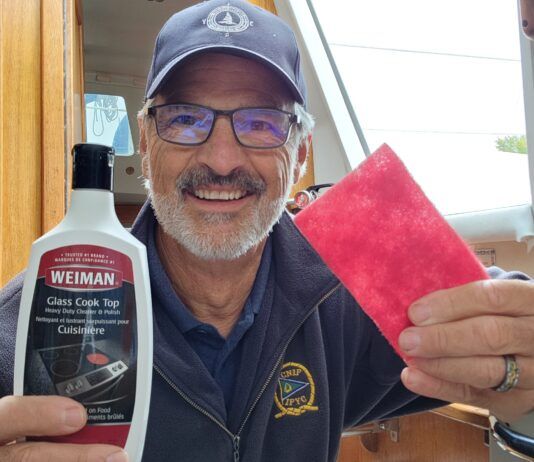
As all boatowners know, spills and stains are inevitable, particularly when you count children among your crew. Our heavily trafficked teak cabin soles and fabric-covered settees have seen their fair share of misfortune, so we keep our ears open for any recommended stain removers. A recent hunt for a product to clean stains from teak led us to K2r SpotLifter, which came highly recommended by Teak Decking Systems Jeff Scott.
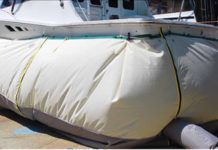
Sodablasting 101
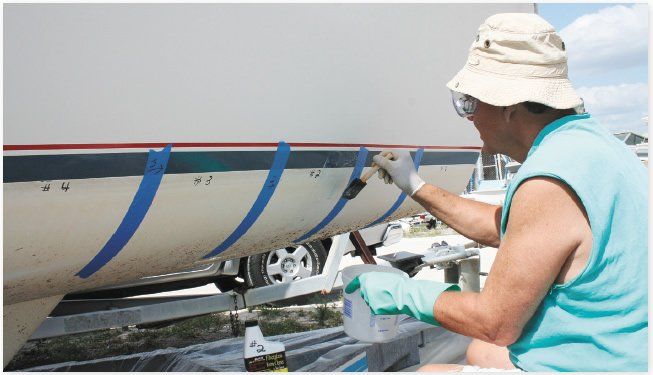
When deciding on a process for clearing antifouling paint and coatings off the bottom of your boat, first define your goals and try to be as minimally invasive as possible. If your boat bottom needs more than a scrubbing but less than a full peel, sodablasting is a technique that will strip bottom paint but leave gelcoat intact. The unique softness of the calcium carbonate powder in sodablasting is effective, and the tented setup keeps the old coating contained. This report outlines the sodablasting process, calculates the cost in time and money, and compares its performance and cost-effectiveness to other bottom-stripping techniques we've tested.
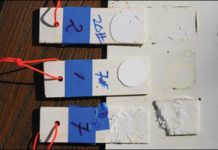
The Great Stickup: Practical Sailor Tests Marine Adhesives, Caulks, and Sealants
Practical Sailor rounded up seven readily available marine sealants and adhesives, including products from 3M, West Marine, BoatLife, and Sika Corp. The test included four polyurethane-based products, one silicone product, one polysulfide caulk, and one polyether caulk. Testers found that not all caulks will work for all applications. For example, the versatile polyurethane 3M 4200 was fast drying but didnt adhere well to wood, and all polyurethane products have to be kept away from acrylics and Lexan surfaces. Products tested were: 3M 5200 Fast Cure, 3M 4200 Fast Cure, West Marine 8200, Sikaflex 291 Lot, 3M Silicone, BoatLife Life-Caulk, and West Marine Multi-caulk.

Are Mildew Preventers the Best Defense?
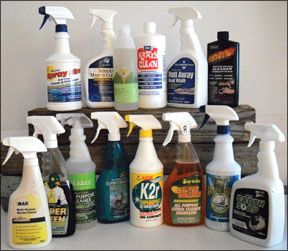
In January 2009, Practical Sailor tested 14 mold and mildew cleaners, and two household products stood out: the super-chlorinated Klean-Strip Mildew Stain Remover and Spray Nine, a chlorine-free household cleaner. After that test, several readers asked about products to prevent mold. One product in particular, Concrobium Mold Control, was repeatedly suggested for testing. We found Concrobium at Home Depot, and to make things interesting, we included two other mildew preventers that readers suggested: 3M Marine Mildew Block, a treatment formulated to follow the 3M Mildew Cleaner tested in January, and Mold Off, a product billed as an eco-friendly commercial-grade cleaner and protectant.

Mailport: June 2013
How thick is too thick for the buildup of old layers of bottom paint? This question arises because I have just finished painting the bottom of my boat. Even though I diligently sought out potential flaking spots with my knife, while rolling on the paint (Pettit Ultima Eco), I would frequently get a mess caused by the paint flaking off. I have only owned this boat for three years, so I really do not know how many layers there are.
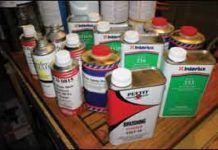
Indoor Sailboat Refinishing
I am restoring old fiberglass sailing club boats (Rhodes 19s) in a confined, heated space in winter, and I need to paint the topsides, decks, and bilges without poisoning the applicator. What do you suggest for a topside finish (white)? A repairable, long-lasting finish will be valued more than a high-gloss finish. Also, what do you suggest for the bottom paint? The boats will be in fresh water all summer; low environmental toxicity is a high priority.
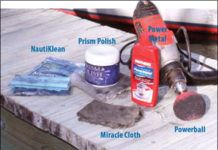
The Great Metal Polish Showdown
Practical Sailor last tested metal polishes in March 2007, and the best choice for most jobs was the Miracle Cloth. The treated cloths best feature is its ease of use. Since that test, Practical Sailor has come across a couple other products: another impregnated cloth product called the NautiKlean, two cloths that are meant to be used together; and Mothers Power Metal, a polish that can be used with the drill-mounted Powerball, a foam ball that allows power polishing around curves and in tight spaces. Theres also a smaller mini-Powerball. Testers pitted the NautiKlean cloths and the Mothers mini-Powerball and Power Metal Polish against the Miracle Cloth on a variety of metals, including anodized aluminum, stainless steel, and bronze. Testers also included a one-year-old tub of Prism Polish, a conventional polish that did well in the last test.
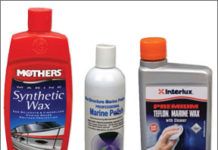
Practical Sailor Launches Long-term Liquid Boat Wax Test
With an ever-growing number of boat wax products on the market, Practical Sailor settles on 25 liquid wax products to test for application, initial gloss, and water beading. Marine wax manufacturers included Star brite, Cajun, Collinite, 3M, Mothers, Interlux, Rejex, Imar, Yacht Brite, West Marine, Turtle Wax, and Island Girl. In many ways the waxes all look, feel and smell the same and their differences may be in what the market application the manufacturers are seeking. Most of the two dozen waxes did a good job in the initial testing, and Practical Sailor will watch these for long-term protection. Waxes with a slightly oily wax finish formula showed better results at water beading in our initial tests, including two products by Star brite, and liquid waxes Island Girl, Zaino Brothers Z-3, Collinite Nos. 845/925, two carnauba wax products by Meguiars and Turtle Wax F-21.
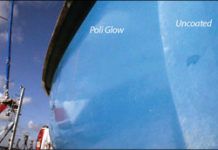
How Do Acrylic Finishes Hold Up Compared to Boat Waxes?
Our July 2009 issue compared 26 bottled waxes and gave an update on our test of 10 traditional paste waxes. This month, we offer a one-year checkup on acrylic coatings. Acrylic coatings differ from paste waxes in their chemistry and how they are applied. Acrylic finishes penetrate pores and chemically bond to the boats surface. We tracked down seven products, applied them to our blue-hulled test boat, and rated them at the one-year mark. Products tested were Vertglas from Lovett Marine, Poli Glow, NewGlass2, Star brite Glass Cote, Klasse High Gloss Sealant Glaze, Higley FiberGloss Restorer, and Presto Gelcoat Rejuvenator.

Cleaning the Holding Tank
Weve noticed an odor and a buildup of caked-on solids in the holding tank. My thought is to fill the holding tank with fresh water and the right additive, then let that slosh around underway, and then pump it out. What do you suggest for an additive?
How Long Do Sails Last?
How long do sails actually last? Sailmakers often say cruising sails last around 10–15 years, but what happens when you discover a sail that’s...



Latest Sailboat Review

Jeanneau 55 Boat Review
This recent sailboat from Jeanneau may as well be a spaceship. They’ve taken all the time-honored designs of a monohull aft cockpit and turned...