






Spring Inspection Checklist for Boats
Spring is here. Time to step back, put on your inspector hat, and approach the boat as an independent hired inspector would.
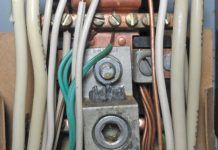
Conductive Greases vs. Corrosion
Many marine installations call for dielectric grease to seal out moisture and prevent oxidation at electrical connections. During the course of our multi-part reporting on greases, several readers asked if a conductive grease would be better for these connections. We have reviewed several conductive greases (see Marine Wiring: Are the Pricey Options Worth the Cost? Practical Sailor, December 2010), testing their ability to protect wires and terminals for extended periods in a salt spray chamber,…

Considering Fiber-Reinforced Composites for Sheathing
As we explore material legacies and evolution with a regenerative lens for our Wharram Narai Mk IV build, the focus now shifts to sheathing...

Seacocks for Thin Hulls
A proper below-the-water line sea cock consists of three parts: the outside portion or mushroom, which threads into the flanged valve, the flanged valve, and the backing plate.
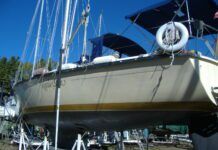
How To Prepare Your Boat for a Survey
You’ve decided to proceed with a pre-purchase survey for your potential sailboat and are working with the seller to get their lowest price. A...
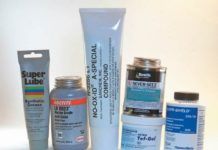
Anti-Seize Coatings for Spars
If youve ever been humbled by a single impossibly stuck fastener, or plan on adding hardware to your spar, running gear, or deck, this report on anti-seize protectants is right up your alley.
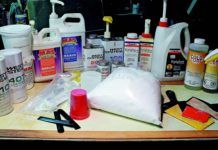
DIY Fairing and Filling
Epoxy deserves its wonder resin status as a highly adhesive, water-resistant laminating resin. It is the secret sauce behind a shelf full of fillers, glues, and fairing compounds.
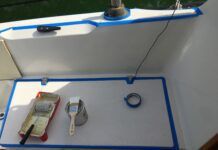
Non-Skid Refinishing with KiwiGrip
Like most sailboats from the heyday of factory production in the 70s and 80s, our 1978 Islander Bahama came with a textured non-skid gelcoat...
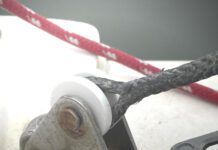
Wheel Thimbles for Synthetic Line Terminals
This is not a completely new concept. Spool thimbles have long been used on multi-pulley block beckets to increase the pin diameter to better...
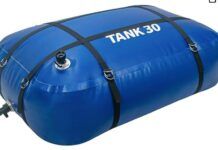
Managing Holding Tank Odors: For Fresh Water and Salt Water
Like most boats I’ve been in, that unpleasant foul smell emanating from onboard sanitation systems is not uncommon. Some smell worse than others!
For those...

Affordable AND Good? Sabre 34 Mk II Review
Can you buy a good sailboat for $25,000? In this video we take a deep dive into the Sabre 34 Mk II, a proven...



Latest Sailboat Review

Tartan 30: An Affordable Classic
The early 1970s was the heyday of the Tartan 30' racer/cruiser. In all, no less than two dozen boats of a similar size and type were introduced in just three years, many of them to become highly successful among sailors eager for the performance and amenities of big boats at a modest price. Among the most noteworthy and enduring of the 30-footers from this era has been the Tartan 30.