


Sticky Luff Track Cure
Racers demand lightning-fast hoists. Cruisers tire of the effort required to grind a heavy main up a sticky track. Roller furler foils that have been left vacan't over the winter can always do with a quick clean and lube before hoisting the genoa. But how can we accomplish this with minimal effort, without climbing the mast? Although it seems like the most common of tasks, the local chandlery doesn't carry what we need, and its slim pickings on the internet. Even calls to sailmakers and lube vendors yielded sparse information. Oddly, patents abound, but no products.
Undoing Mainsheet Twist
What kind of line do you use in your davit tackle? My lines keep twisting, chafing, and jamming. The ropes run crooked in the blocks no matter how often I restring them, asks Sailor One.

Snap Extenders for Old Canvas
Sunbrella does not shrink. That is the mantra, and for covers and dodger that are left in place, it seems to be the true. It stretches a little when wet, and so long as it is maintained under tension while it dries, it retains it shape. So says Sunbrella. While this seems true for tensioned cloth (our dodger still fits) and it hardly matters for a sail cover, our real world experience with removable Sunbrella window covers has been different, shrinking as much as 5 percent over a period of years. The problem, no doubt, is that these are worst case scenario, repeatedly removed while still wet with dew and allowed to dry. The end result was that the covers became difficult to install and some of the snaps were being ripped out by the excessive tension.
Mailport: Shackle Sense
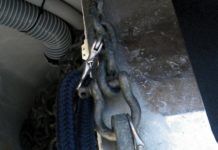
You have written thousands of words about shackles. One item that I don't think you have ever addressed is the use of double shackles. Our boat weighs 14,000 pounds dry (probably 17,000 pounds fully loaded for cruising). We use a 45-pound Manson, 200 feet of 5/16-inch G4 chain rode, and a Crosby 3/8-inch shackle (working load limit 2 tons). After hundreds of nights at anchor we have never dragged. We are big fans of a having a single anchor that you trust, and keeping a spare ready-but don't ever use it unless you lose the one you love. So I have no motivation to change the set up.

Sail Repair Tapes vs. Glues
Sail repairs are a fact of life for the sailor. A stray cotter pin can shred a spinnaker. Perhaps the mainsail luff could use some chafe protection, or the genoa sun cover is flapping. Often, a trip to the sailmaker isn't justified for these repairs. The sail is too old to take stitching without further weakening the material, or you simply want to delay that repair until the end of the season. Perhaps youre on a cruise and would rather wait. A sewn repair is generally the gold standard, but some tears better-fixed with a patch.

The DIY Sail Repair Kit
If youre going to sail youll be doing some stitching. No two ways about it. Dont jump into the $100 do-everything kit. Start with a modest kit, adding tools and materials only as your skills grow and projects require them. You already have most of what you need in your other supply lockers or tool boxes. Study a good book on sail and canvas repair, concoct a few small projects for practice.

Short Scope Anchor Test
In the process of our ongoing investigation on the effect of time and wind gusts on anchor setting and holding capacity, we performed limited testing at short scope and couldnt help but notice that holding capacity at short scope varied greatly. When recovering the test anchors, some anchors would lift out of the bottom while we were pulling the dinghy over to them, while others required heroic efforts even when the rode was nearly vertical.
Stopping Anchor Chain Twist
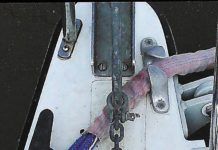
When an anchored boat spins, the anchor chain twists, and the anchor can come up backward. One solution is an anchor swivel, but failures with some poor designs are a concern-a lovely stainless swivel on one of our test boats had an interior crack that became visible only when disassembled. And as we found in our most recent test, many swivels arent very effective at reducing twist due to the inherent friction in the swivel.(see How Well Do Swivels Reduce Twist, Practical Sailor March 2016 online).
Essential Sailing Gear that Lasts
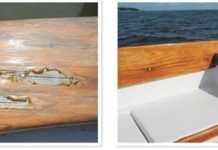
Our long-term testing at Practical Sailor may have the initial appeal of a tortoise race, but things do heat up at the finish line. The following conclusions stem from a decades, and in some cases, an even longer period of observation. In this round of field test feedback, I focus on hardware, cordage, fabrics and coatings plus two pieces of essential equipment that have kept my Ericson 41 Wind Shadow ready for sea as she enters her 50th year.

Custom-Made Hard Top Biminis
I was wondering if there is any information regarding the protocol for replacing canvas with a rigid Bimini/dodger on a small 36-foot catamaran. I could not find a review of solid Bimini replacements. We have strong stainless steel frames. They are fixed with metal struts with no flexible straps. I do want to be able to see the sails from the helm and bulkhead mount. I want to be able to take advantage of roll up clear plastic front and side curtains. Most summers my current set stays in the rolled up position. They have since shrunk enough that they can no longer be fully snapped.

O’Day 40 – A Budget Cruiser for the Bahamas
The O’Day 40 (1986) is one of those cruising sailboats that somehow slipped through the cracks of sailing history. Built during the final years...



Latest Sailboat Review
Island Packet Estero Used Boat Review
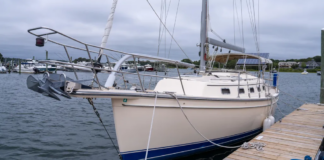
Florida-based Island Packet targets a relatively narrow niche, so the toughest competitors to its new boats are often older Island Packets. Introduced in 2010, the 36-foot, shoal-draft Estero is the company’s latest attempt to introduce a distinctive model that doesn’t stray too far from the company’s proven formula for success: moderate displacement, full-keel cruisers designed to be lived on, sailed far and in comfort, and endure the bumps, scrapes, and storms that cruising boats inevitably encounter. After sailing the Estero on Florida’s Sarasota Bay and inspecting its interior, construction, and systems, Practical Sailor testers noted that the shoal-water cruiser will appeal strongest to Island Packet fans who’ve been waiting for a shoal-draft, easy-to-sail boat that compares to the IP37 in terms of interior space. These strengths will be most apparent on intracoastal or riverine adventures like the Great Loop.