



In-Boom Furling: Five Systems
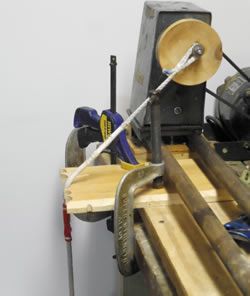
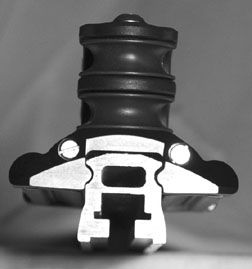
There's no perfect solution to boom furling. It's not an easy bit of engineering. Still, all the systems on the market continue to mature. Schaefer's new offering looks like a good bet for medium-sized boats.
Riding Sails to Tame Those Anchor-Dancing Boats
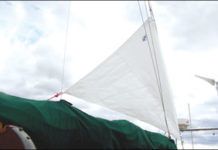
Practical Sailor recently evaluated a radically new designed riding sail, the FinDelta Anchoring Sail from Banner Bay Marine, which uses three panels instead of the traditional single panel. According to Banner Bay, as the boat tries to swing, the sails forward fin generates a thrust vector to one side only, gently realigning the boat. By comparison, a traditional, single-panel anchoring sail still allows some degree of sailing at anchor as the sail backs and fills from one side to the other, often resulting in flogging. The FinDeltas design also reduces one of the most common complaints of traditional riding sail users: noise. The FinDelta doesn't require attachment to the backstay-an excellent conduit to transmit the vibration from flogging anchor sail-and so noise is greatly reduced. While the single-panel riding sail has served sailors well for centuries, this new design intrigued our testers, and a head-to head-comparison between it and the traditional Sailrite riding sail was launched.

Abrasion and Break Testing
Testers first task was to determine whether any of these coatings could weaken line in the near term. To do this, we formed 20-inch loops of 1/8-inch polyester braid and nylon braid, coated a 1-inch length of the loop with each of the products, and broke these in our test rig.
Tiger Too Preventer
Toby Ritter of Mamaroneck, NY, has a nice preventer rig aboard his Sparkman & Stephens center-cockpit 48-footer, Tiger Too. He sent us the following...

Market Scan: Running Rigging
Replacement guidelines for sheets, halyards, and topping lifts.
Farewell to Skip Allan’s S/V Wildflower
Anyone who has ever run before a gale knows how exhilarating it can be. On the right boat, in the right conditions, the adrenaline rush is as intense as any we’ll feel in this world. Bull riders, surfers, and skydivers get a few seconds of excitement. An ocean gale can last for days ... and that’s where the problem lies. With your senses completely in tune with the boat, wind, and sea, the experience of hurtling down an ocean wave stirs the soul. But as the hours pass and day turns to night, the thrill gives way to exhaustion. Mostly, you’re too busy to be afraid, but each mountain of green water that fills the cockpit brings doubt. How high will these waves get? How long can I last? Even with a drogue streaming off the stern to slow down the boat, running before storm-driven waves entails a great deal of risk. There’s danger enough aboard a fully crewed boat, as the rig, sails, and steering gear get pushed to the brink.
A Decade-long Norseman Fitting Sea Trial
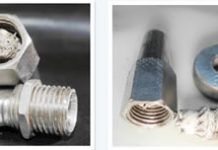
A couple of months ago, PS Technical Editor Ralph Naranjo disassembled a headstay that he had used aboard his Ericson 41 sloop, Wind Shadow, for nearly a decade. It was set up with Norseman fittings as terminals for 3/8-inch diameter, 1x19 stainless-steel wire that had supported a Harken roller-furling system. During disassembly, neither the wire nor the end fittings showed signs of corrosion or physical wear. And when the fittings themselves were taken apart-requiring heat to free the sealant in the terminal-the wire bundle was pristine and showed no sign of any slippage or corrosion.
Offshore Log: Up the Mast, One at a Time
Many PS readers undoubtedly found our articles on going aloft alone (July 1, 1998 and August 15, 1998) a little esoteric, but for the...
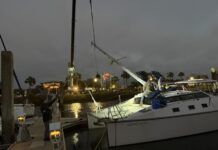
Seven Lessons From a Dockside Dismasting
Valentine’s Day is not my favorite holiday. Now it will remain the anniversary of my dismasting rather than the day with romance, roses, chocolates...
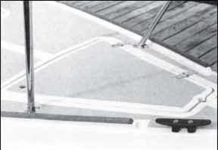
Clear the Decks: Anchor Wells and Bow Rollers
Ever since some ancient mariner broke a toe tripping over the killick stowed in the bow of his curragh, sailors have sought to solve the mysteries of ground tackle stowage. The solutions have been endless, and as a rule compromises. A significant portion of the interior volume of a 19th century warship was given over to the storage of anchor rode. Even aboard modern boats, the search for the proper stowage of several anchors and chain, plus hundreds of feet of sometimes slimy nylon anchor line, is one that occupies both designers and boat owners. Two "modern inventions" — the anchor well, and the bow roller — have greatly eased many of the problems of ground tackle stowage. But even these developments vary greatly in quality and design, some creating more problems than they solve.
How Long Do Sails Last?
How long do sails actually last? Sailmakers often say cruising sails last around 10–15 years, but what happens when you discover a sail that’s...



Latest Sailboat Review

Jeanneau 55 Boat Review
This recent sailboat from Jeanneau may as well be a spaceship. They’ve taken all the time-honored designs of a monohull aft cockpit and turned...