


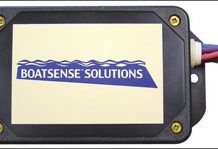
Boatsense Simplifies Remote Monitoring
From the weekend sailor whose boat is stored a few miles away to the full-time cruiser heading inland for a few days of exploring, we all wonder just what our boat is up to while were away. Is it sinking at the dock? Has some wiring MacGyver-ism started a fire? Did the mooring bridle fail, or is some miscreant breaking in to steal that new radio? There are a number of boat monitoring systems available to help soothe the worried mind of a nervous boat owner. However, high initial costs and monthly service fees combine to make many of them too expensive for the average sailor to swallow. Maine Maritime Academy graduates David Jacques and Russel Sirois aim to change that with their remote vessel-monitoring service, "Boatsense." "Boatsense has eliminated the complex network of satellites, technicians, keypads, and screens that fail in the harsh marine environment," Jacques explained. "All you need with Boatsense is the cell phone you already own."
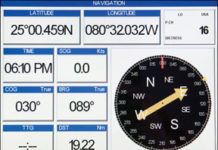
Practical Sailor Tests Standard Horizons Big, Bad CPV550
The across-the-board capabilities of the Standard Horizon CPV550, including VHF, GPS, and color chartplotting, required an extensive series of tests. Practical Sailor editors subjected the VHF to temperature extremes, radio frequency power output, frequency accuracy and power usage tests. We tested the huge 12-inch color display and rated it for user-friendliness and viewability under a variety of lighting conditions. We found the entire unit rugged and easy to read, with a wide range of capabilities. It performed on par with the best VHF radios, best chartplotters, and best GPS units that weve tested.
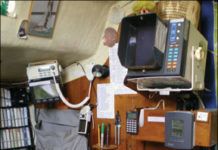
Solo Sailor’s Gear Box
First sailed in 1978, the Singlehanded TransPac (SHTP) crosses 2,120 miles of Pacific Ocean from San Francisco Bay, Calif., to Hanalei Bay, Kauai. Practical Sailor contributor and SHTP competitor Skip Allan took time out from his race preparations onboard Wildflower—his Thomas Wylie-designed 27.5-foot sloop/cutter—to open his notes on solo sailing. Last month, the veteran offshore racer and singlehanded cruiser discussed his gear, sail inventory, storm tactics, and his approach to provisioning. This month, Allan focuses on the electronics, safety gear, and routing tactics he employs when racing alone. Allan’s onboard systems include two deep-cycle wet-cell batteries that total 165 amp hours, two solar panels, and a 35-amp alternator on Wildflower’s10-horsepower Yanmar single-cylinder diesel. He has a fixed and handheld VHF, an Icom SSB radio, a Pactor modem for weather charts and weather faxes, and Winlink email. Other electronics include handheld GPS, LED lighting, and a small portable radio.
Solo Sailors Gear Box
First sailed in 1978, the Singlehanded TransPac (SHTP) crosses 2,120 miles of Pacific Ocean from San Francisco Bay, Calif., to Hanalei Bay, Kauai. Practical Sailor contributor and SHTP competitor Skip Allan took time out from his race preparations onboard Wildflower—his Thomas Wylie-designed 27.5-foot sloop/cutter—to open his notes on solo sailing. Last month, the veteran offshore racer and singlehanded cruiser discussed his gear, sail inventory, storm tactics, and his approach to provisioning. This month, Allan focuses on the electronics, safety gear, and routing tactics he employs when racing alone. Allan’s onboard systems include two deep-cycle wet-cell batteries that total 165 amp hours, two solar panels, and a 35-amp alternator on Wildflower’s10-horsepower Yanmar single-cylinder diesel. He has a fixed and handheld VHF, an Icom SSB radio, a Pactor modem for weather charts and weather faxes, and Winlink email. Other electronics include handheld GPS, LED lighting, and a small portable radio.

Flir Camera Redefines Night Vision Onboard
A thermal-imaging camera installed on your boat can significantly enhance safety during nighttime operations by clearly letting you see what is ahead and around your boat, even on the darkest or foggiest of nights. Practical Sailors review of Flir Systems Inc.s Navigator II, a thermal-imaging camera that can be mounted on a mast, finds that this kind of camera can aid navigation, man overboard recovery, and security. The equipment comes with a lofty price tag but for some, it will be worth the investment.

Singlehanded Sailors Notebook
First contested in 1978, the Singlehanded TransPac (SHTP) offshore race crosses 2,120 miles of Pacific Ocean from San Francisco Bay to Hanalei Bay, Kauai. Though the singlehanded race has been dubbed a bug light for weirdos, world-class navigators and sailors often throw their lot in with the pack. Longtime singlehanded racer and cruiser Skip Allan took time out from his TransPac preparations to outline the equipment he keeps onboard Wildflower, his 27.5-foot Thomas Wylie-designed sloop/cutter. From his Sail-O-Mat windvane to boom vangs to tiller pilots, Allan discusses a range of gear helpful to all singlehanded sailors and small boat sailors. He outlines his sail inventory and storm tactics, along with his approach to provisioning and eating at sea. A second installment of the Singlehanded Sailors Notebook will take a look at onboard electronics and safety gear for the solo sailor.

Norcross Hawkeye Sonar
When cruising off the beaten path, youre likely to come across harbors, channels, and other waterways that arent well charted. In these areas, a portable depth sounder becomes a necessary tool for safe navigation and anchoring. PS testers and well-known cruiser-authors Evans Starzinger and Beth Leonard recently had the opportunity to test and compare two such devices while voyaging the remote channels of Chile, where they often needed to sound an uncharted anchorage from the dinghy. The two products they tested were the Norcross HawkEye Portable Sonar System (DF2200PX) and Speedtech Instruments handheld depth sounder. Both are designed for use aboard a dinghy, through a fiberglass or wood hull, or through ice. The multi-purpose Norcross can read depths from 2.5 to 200 feet, and also has a sensor that measures the temperature of the water, the air, or any object the sensor is placed against. It can also be used as a fishfinder. A fish icon appears on the screen with the depth when the sonar detects something other than the bottom in its field. The Hawkeye floats and is waterproof to 200 feet.
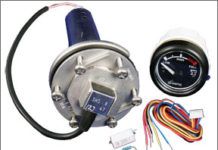
Whatever Floats Your Sensor
On many boats, mounting external sensors on the inside of a holding tank is too much of a hassle or is not an option because of where the tank is mounted. If the top of the tank is accessible, then it may be possible to install an internally mounted liquid-level sensor in the tank. Practical Sailor tested seven pre-packaged kits containing internally mounted tank-level sensors and remote monitor panels. Internally mounted tank-level sensors that used some form of float sensor were the SeaLand TankWatch1, Dometic DTM4, Groco TLM Series, and Wema SHS-8. Two test products used air pressure for reading: Fireboy-Xintex PTS and Hart Systems Tank Tender. And one productthe BEP Marines TS1 senderused ultrasonic technology to measure tank levels. All should work on standard composite, polyethylene, or aluminum tanks.
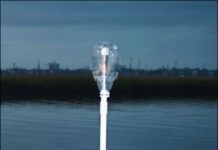
Whirlie Bird Anti-Fowlant
Every boat owner sooner or later becomes familiar with the degrading effects of the marine environment. Whether theyre barnacles along the waterline, metal fittings rusting on deck, or galvanic corrosion beneath the water, ultimately, we all learn to contend with such realities. But one damaging element in the marine environment often overlooked is the destructive power of bird feces. Guano, bird poop, white death-whatever you call it-is a strong corrosive. Bird feces naturally contain some of the most acidic substances: ammonia, uric, phosphoric, oxalic, and carbonic acids, as well as salt. Fecal matter from birds can cause crazing in Lexan hatches, accelerate the degradation of stitching in awnings, and break down the protective properties of wax. And yes, its also unsightly and unhealthy. The good news is that there are numerous devices on the market intended to dissuade birds from roosting on and fouling your decks or spars. This group comprises a broad range of sizes and styles from the ubiquitous plastic owl to the antenna-like, spider-style Daddy Long Legs.
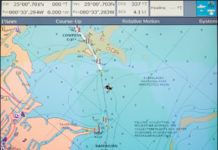
Consumers Edge: Practical Sailor Takes a Look at Updating Digital Charts
In conjunction with paper charts, most sailors these days are navigating via electronic charts displayed on big-screen plotters. The three key manufacturers in the digital chart game are Garmin (Blue Charts), Navionics (Navionics Platinum and Navionics Gold), and Jeppesen Marine (C-Map). The world beneath the waters surface is an ever-changing one, and to keep out of harms way, a navigator must have the most up-to-date charts available. Keeping on track with LNMs, or Local Notice to Mariners, is a good start, but its not as comprehensive as downloading a new, updated hard-card chart from Garmin, Jeppesen, or Navionics. Practical Sailor compares their prices and methods for updating their electronic navigation charts. We also review the procedures you can use to notify chart suppliers of errors on the charts.
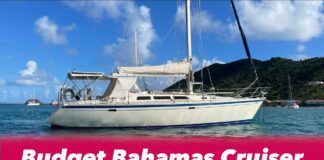
O’Day 40 – A Budget Cruiser for the Bahamas
The O’Day 40 (1986) is one of those cruising sailboats that somehow slipped through the cracks of sailing history. Built during the final years...


Latest Sailboat Review
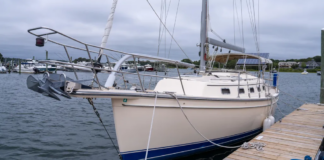
Island Packet Estero Used Boat Review
Florida-based Island Packet targets a relatively narrow niche, so the toughest competitors to its new boats are often older Island Packets. Introduced in 2010, the 36-foot, shoal-draft Estero is the company’s latest attempt to introduce a distinctive model that doesn’t stray too far from the company’s proven formula for success: moderate displacement, full-keel cruisers designed to be lived on, sailed far and in comfort, and endure the bumps, scrapes, and storms that cruising boats inevitably encounter. After sailing the Estero on Florida’s Sarasota Bay and inspecting its interior, construction, and systems, Practical Sailor testers noted that the shoal-water cruiser will appeal strongest to Island Packet fans who’ve been waiting for a shoal-draft, easy-to-sail boat that compares to the IP37 in terms of interior space. These strengths will be most apparent on intracoastal or riverine adventures like the Great Loop.