

Caring for Seacocks
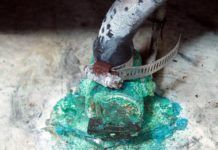
Considering the excitement a failed seacock can generate, the lack of attention they typically receive is almost criminal. Tucked away in the dim recesses of your bilge, seacocks typically don't get a second thought with regards to preventative maintenance or inspections - until they fail to operate or even break off in your hand during operation (it happens, Ive seen it, and it isn't pretty).
Unsung Hero: Aluminum Tape
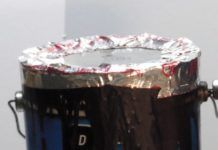
Duct tape, parachute cord, and cable ties. We carry a boat full of tools and spare parts, but these three make every sailors list of indispensables for temporary repairs. Weve reviewed conventional duct tape (If you Cant Duct it, Tough Duct it, Practical Sailor, December 2009), self-bonding tapes (Atomic Tape, PS, December 2005), and gaffers tape, but somehow skipped over foil duct tape. It does a few things ordinary duct tape just can't.

What About GlowFast Tethers?
In response to your request regarding safety tether knowledge or suggestions (see Safety Tether Warning, Inside Practical Sailor) please test and include information about Glowfasts HLR Safety Line system.
Which Bottom Paint for a Watertender?
I have a West Marine Watertender 9.4 with a polyethylene hull (versus polypropylene for the Walker Bays) and am wondering if there is an anti-fouling paint that is suitable. Looking through the product info for both, the manufacturers both claim that the plastics are slippery enough to not need paint, however, the plastic wrap (unknown material) on the wooden pilings on my own docks in Florida have marine growth on them, so I suspect the same will happen with my Watertender (currently stored on the dock).There are conflicting reports/opinions on various forums as to if there is a paint that would actually stick to the hull, as well as potentially damage the plastic.
Testing the B&G Zeus3 Nav System
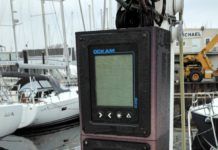
Multifunction display manufacturers have pushed their products through a dramatic evolution in the last five years as they try to keep pace with technology that we take for granted in our other electronics. Better interfaces, screen resolution, and the ability to download useful software apps (beyond navigation) are just some of the improvements. Most of the major vendors are on their third generation of touchscreen interfaces, higher resolution displays, downloadable software, remote music control, and other functions far afield of what MFDs performed five years ago.
A Do-it-Yourself Wind Sensor
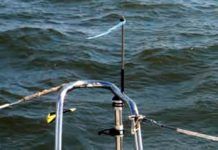
For more than 20 years, I always had bow-mounted vanes-a Telo Cat on my beach cat and a Windex sport on my Stiletto 27. The Telo Cat was sheltered under the forestay bridle and bowsprit and was never damaged. The long bows of the Stiletto kept the Windex out of harms way-although the Stiletto had a spinnaker, it reached faster than the wind and we always tacked downwind, jibing the chute inside like a jib and keeping the sail and sheets away from the bows. When I moved on to a PDQ32 catamaran, a cruising cat with a chute that is jibed outside, there was no place where either a sail or sheet couldnt pulverize the vane in short order. I learned this the hard way, crumpling several commercial vanes. The solution was not to build something strong, but rather to build something that could flex with the assault and pop back up; a flexible wand topped with a length of yarn.
Magic Fix for Hairline Cracks in Gelcoat
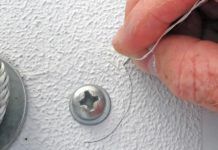
Spider cracks can indicate impact damage or serious structural problems that will need to be addressed to prevent spreading, but most often they result from relatively inflexible gelcoat that is too thick. Stress by thermal expansion or when bulkheads and liners were installed can cause minor flexing. Cracks from larger issues-a winch, for example, that was inadequately mounted-will need to be fixed before cosmetic repairs begin.
Stopping Centerboard Pin Corrosion
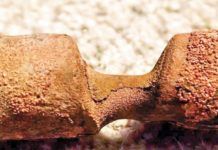
Im trying to determine the cause of erosion of the centerboard pivot pin from Arcturus, our 36-foot Soverel keel/centerboard cutter. It is a -inch diameter silicon bronze pin installed new in 2004. I removed the centerboard a few weeks ago and was surprised to see that the pin was heavily corroded. Ive attached a few pictures of the pin. The boat has a fiberglass encapsulated lead keel, with the lead bedded in a resin/sand mixture. The pivot pin fits in a hole drilled through the keel and centerboard trunk (which has encapsulated lead on both sides).
Snap Extenders for Old Canvas
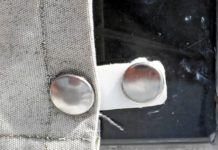
Sunbrella does not shrink. That is the mantra, and for covers and dodger that are left in place, it seems to be the true. It stretches a little when wet, and so long as it is maintained under tension while it dries, it retains it shape. So says Sunbrella. While this seems true for tensioned cloth (our dodger still fits) and it hardly matters for a sail cover, our real world experience with removable Sunbrella window covers has been different, shrinking as much as 5 percent over a period of years. The problem, no doubt, is that these are worst case scenario, repeatedly removed while still wet with dew and allowed to dry. The end result was that the covers became difficult to install and some of the snaps were being ripped out by the excessive tension.
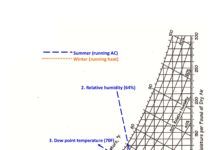
How to Measure Boat Humidity: Psychrometric Charts Do It Right
Insulation is a greater energy-saving expedient; if our heater or air conditioner is undersized, fixing drafts, shading or insulating windows, and insulating non-cored laminate are all ways to reduce the thermal load. For boaters, however, that is only half of the equation.
Lithium Batteries on Sailboats: The 3 Mistakes Everyone Makes
Lithium batteries are one of the most popular sailboat upgrades today—but they’re also one of the most misunderstood. In this Practical Sailor Saturday episode,...



Latest Sailboat Review
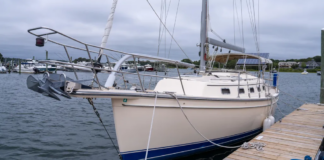
Island Packet Estero Used Boat Review
Florida-based Island Packet targets a relatively narrow niche, so the toughest competitors to its new boats are often older Island Packets. Introduced in 2010, the 36-foot, shoal-draft Estero is the company’s latest attempt to introduce a distinctive model that doesn’t stray too far from the company’s proven formula for success: moderate displacement, full-keel cruisers designed to be lived on, sailed far and in comfort, and endure the bumps, scrapes, and storms that cruising boats inevitably encounter. After sailing the Estero on Florida’s Sarasota Bay and inspecting its interior, construction, and systems, Practical Sailor testers noted that the shoal-water cruiser will appeal strongest to Island Packet fans who’ve been waiting for a shoal-draft, easy-to-sail boat that compares to the IP37 in terms of interior space. These strengths will be most apparent on intracoastal or riverine adventures like the Great Loop.