

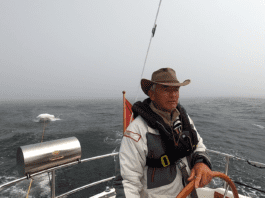
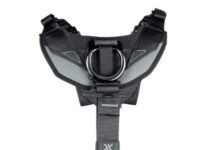
The Best Bosun’s Chair Might Not Be a Bosun’s Chair at All
I’ve long thought there must be a safer, more comfortable way to go up our mast than a Bosun’s Chair. When I criticized our...

NauticEd: The Best Way to Learn Sailing’s Rules of the Road
If you grew up sailing small boats, the basic rules about “when yachts meet” are now part of your DNA. Upwind, a boat on...
Sailing Without a Rudder
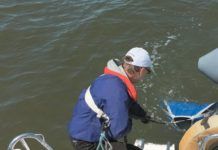
Loss of steering may well be the most common cause of rescue for boats sailing offshore, but the problem is even more common inshore where there is more debris to hit. An emergency rudder is always possible, but for most of us, extra gear to rig, cost, and strength concerns most often render the option impractical. Wrestling an emergency rudder into position will be physical and possibly dangerous in rough conditions. In the case of a catamaran it is simple to disconnect a rudder that is jammed straight, but what if it is jammed hard over, as in the loss of the Alpha 42 Catamaran Be Good Too in 2014? Tests have been published using drogues for steering with the rudder either removed or locked in position, showing that in moderate weather even sailing to windward is practical as long as sails were adjusted in concert and the drogue position was adjustable. Our questions go further. What if the rudder has jammed an angle? Are all drogues appropriate for this purpose? How do you choose the best size?

Bluewater Planning: Proper Preparation
Being out in the ocean means you are going to have to deal with whatever the weather sends your way. It also means you...
Bluewater Prep: Boat Design Factors
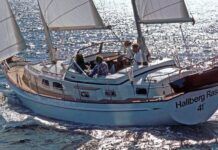
Offshore safety is in some ways simpler than coastal safety but there are some important differences in the approach you need to take. Close...

Finding Balance: Mental Health on the Water
For many of us who spend time on the water, there’s an intuitive understanding that sailing impacts our mental well-being. Whether it’s the meditative...
Mud Anchoring Wisdom
For as long as I can remember, and probably for generations, it has been Chesapeake Bay lore that the longer an anchor soaks the...

Top Fire Blankets for the Offshore Sailor
Fire extinguishers are a U.S. Coast Guard requirement, and every boating instruction manual starts by telling you how many you need, where to mount them, and how to use them. Unfortunately, the manuals never go beyond that simplistic guidance, even though most fire-prevention authorities agree they are often not the best first response.
Offshore Log: Thoughts on Engine Spares For Cruising
Emptying out the spares inventory for Calypso's Perkins diesel was an eye-opener—there were plenty of parts back-ups, and, in Nick's view, all for the best of reasons.
Safe Options for Stowing LPG on Deck
Disposable propane cylinders are darn handy, powering stern-rail grills, propane torches and catalytic cabin heaters. I’ve also had the valves fail twice, the result...
How Long Do Sails Last?
How long do sails actually last? Sailmakers often say cruising sails last around 10–15 years, but what happens when you discover a sail that’s...



Latest Sailboat Review

Jeanneau 55 Boat Review
This recent sailboat from Jeanneau may as well be a spaceship. They’ve taken all the time-honored designs of a monohull aft cockpit and turned...