



Chapter 11 Filing “A Good Thing” for Hunter
I had a near picture-perfect test sail last Thursday aboard the new Hunter 33 on the Manatee River, just north of our offices in Sarasota, Fla. All in all, the boat was very well behaved in the 12 to 14 knots of breeze, almost ideal conditions for this family coastal cruiser. Little did I know that days later, the parent company of Hunter, one of the cornerstones of production sailboat building in America, would file for Chapter 11 bankruptcy.
FCC Approves New AIS Distress Device
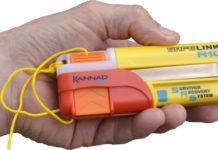
According to a press release issued yesterday from Kannad Marine, the FCC has approved for sale in the U.S. Kannads SafeLink R10 SRS, the worlds first personal Automatic Identification System (AIS) device designed to be worn by individuals and activated to assist in man overboard recovery. Worn on a life jacket and activated by simply sliding off the safety tab and lifting an arming cap to deploy the antenna, this unique product sends structured alert messages, GPS position, and a special identity code directly to AIS receivers within (approximately) a four-mile radius.

Tragedy Strikes Farallones Race
It's just a few weeks until summer begins, and our hopes and prayers for a safe 2012 sailing season in North America have already been shattered. Five sailors were washed overboard and died in Saturdays Farallones Race, sponsored by the San Francisco Yacht Club. This was an experienced crew, which included several sailors with close ties to the San Francisco Yacht Club-the home club to many longtime Practical Sailor readers.According to news accounts, the Sydney 38 Low Speed Chase was struck by a breaking wave while rounding South Farallon Island, one of a group of islands outside San Francisco Bay that serves as a rounding mark in the 48-mile race.

Beware of Fake Gear “Reviews”
Who can you trust? Youd think that the Internet explosion and the current boom in blogging and social media would make life easier for the wannabe cruising sailor looking for information on boats, equipment, and cruising in general. But when you start peeling back the layers of information-everything from bulletin boards to blogs to e-zines-you find that the Web is rife with contradictions, bad advice, and now, some contemptible stealth marketing.
Buttons, Dials, and Touchscreens
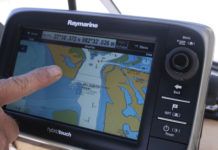
Were just wrapping up our testing of the new e7 MFD from Raymarine, which we ran side-by-side with the Garmin 740s, one of our favorites in our recent comparison of small chartplotter-sounders. The e7 was the most interesting electronic gizmo we saw at this years Miami Boat Show, the annual debutante ball for manufacturers to unveil their newest creations to the public. The company calls it a hybrid display, using both a…
Sailboats, Pirates, and the Police State
The government already has a variety of ways to track our comings and goings, and I suppose I can learn to live with these. But my boat always has been a more sacred and personal space. As I reflected on a future when a person can no longer step aboard his sailboat and fall off the map, I began to wonder whether this new floating creation, forever held in the gaze of the state, will even qualify as a boat.
Can Sailors Learn Something from Mil-spec Tethers?
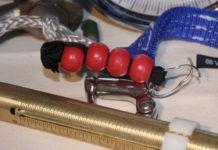
Has one of the world's most important suppliers of safety tethers for commercial, rescue, and military markets solved many of the problems faced by sailors today? PS Editor Darrell Nicholson talks about safety-tether release lanyards and how marine manufacturers and non-marine manufacturers approach the design challenges associated with this component.

PS Seeks Input on Harness and Tether Design
Weve received some good suggestions from readers in response to my editorial in the March issue of Practical Sailor that described our tether and harness design project. Similar to what we did with toddler life jackets back in 2007, the plan is to solicit input from experts in the field, other sailors, and PS readers to try to come up with an improved design for inflatable PFD/harnesses. Because the tether is such an integral part of the PFD/harness when sailing offshore, we plan to work on improved tether designs as well.
When Two Cultures Collide
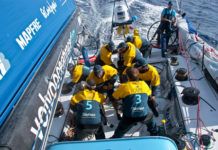
I usually don't get too excited about the tricked-out space ships circling the globe in the Volvo Ocean Race, but when I heard the race fleet was split in half, with three of the Volvo 70s planning to weave through the Solomon Islands, my interest was piqued. While the images of these thoroughbred machines racing down the long swells of the bottom of the planet are impressive, the idea of threading through an area of poorly charted reefs, jungle islands, and notoriously squally weather in the darkness presented a tantalizing new twist.

An Eye-opening Boat Show
They say a photo is worth 1,000 words, and this one certainly says a lot. On our way to a very serious study of hose clamps at the Miami International Boat Show, the nice sales ladies at the booth of some nameless speedboat showed their appreciation for Capt. Frank Lanier, a retired Coast Guard officer and one of our contributors. It is a standard boat show ploy: Beautiful girls attract men (even those as high-minded as Capt. Lanier) and men buy boats. For many complex reasons (including the fact that Frank's incredibly supportive wife might one day stumble on this blog post), I hesitated to publish this photo. But it serves to illustrate a point that struck me at this years Miami show . . .
What Happens When Lightning Hits a Sailboat?
Lightning striking a sailboat sounds like something out of a disaster movie—but what actually happen when it does? In this episode, we break down...


Latest Sailboat Review
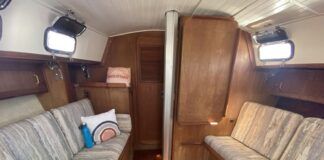
Caliber 33 Used Boat Review
The Caliber is a peculiar blend of tradition and innovation, of security and performance, of practicality and pizzazz. All of the owners we heard from were "satisfied." One called the 33 his favorite boat over six decades of sailing.