

Seaworthy and Solid Seawind II
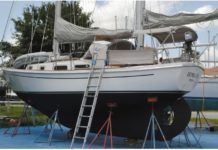
The hull of the Seawind II is a solid lay-up. The deck and cabin trunk are balsa cored. The top of the coachroof, in the way of the deck-stepped mast, is cored with solid, filled epoxy for greater compression strength.

The Allmand Sail 31
We were somewhat surpised, and impressed by the number of people living aboard the Allmand 31. For her size, she certainly does offer much space below and in the cockpit (one owner said shell easily sit six or seven in the T-shaped cockpit).The wide beam gives her a good deal of initial stability, though this is not the kind of hull form that you want to capsize as inverse stability will be greater than on a narrower boat (and one with a deeper keel).
Express 34, Hobie 33, Olson 34
Compared to conventional productions boats of the mid-1980s, the Express 34 and Olson 34 were lighter and faster, but still suitable for distance cruising. The Hobie 33, though most suitable for camper-crusing, was designed to be fast yet trailerable and capable of blue-water sailing.
PDQ: Rugged Quality
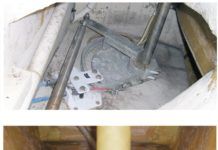
The PDQ 32 is laminated using a modified epoxy resin (AME 5000). Tri-axial knitted fiberglass fabrics are used in the hull and deck. The mast is supported by a carbon-fiber reinforced deck beam. The hulls are solid fiberglass below the waterline and cored with Klegecell foam above the waterline, an arrangement that has proven very durable. Owners have not reported problems with blisters or structural cracking, only limited gelcoat crazing in highly stressed corners. Another PDQ 32 we inspected showed numerous construction shortfalls, including delamination and poor resin wet out, so a thorough survey of any used boat is important.
Living Small on the Big Sea
Readers familiar with the work of William Crealock-the renowned designer of the Crealock 37, the Cabo Rico 34, the Dana 24, and at least 30 other production-built vessels-understand that his designs are steeped in practicality. Crealock famously wrote: Seaworthiness in a cruising boat has to be the No. 1 consideration. It doesn't matter how cute the boat is if it doesn't get [to the destination] in one piece. And those familiar with his life are aware that his knowledge of sailing wasnt just grounded in the study of design, but also in extensive hands-on experience at sea-an imperative for any designer of boats intended for offshore.
Hand Laid in the USA
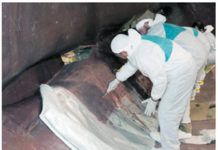
Workers at Pacific Seacraft laminate these hulls by hand, using vinylester resin and layers of biaxial fiberglass laid at 45- and 90-degree axes for enhanced multidirectional strength. The decks are cored with balsa wood except for those areas where fasteners pierce through or fixtures are mounted; those spots are cored with either marine plywood, high-density foam, or solid fiberglass. The two-tone deck is accomplished by masking off the nonskid areas in the mold prior to gelcoat application. This yields a very durable surface.
Express 37 Nails Performance
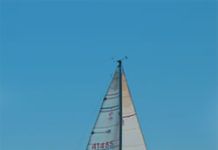
Following graduation from California State Polytechnic University, naval architect Carl Schumacher spent four years working as an apprentice with Gary Mull before opening his own shop in Alameda, California, in 1977. He has since designed 37 boats ranging in size from one tonners to 50-foot world cruisers, participated in the design of the front-ruddered Americas Cup boat skippered by Tom Blackaller in the 1987 trials, and most recently designed the Alerion Express boats, which are being constructed at TPI Composites, Inc.
Alberg Owners Love Their A35s, Warts and All
Nearly every owner we spoke to about their Alberg 35 had small gripes about the boats performance, cosmetic defects, and outdated equipment. Nevertheless, it was clear that each had great confidence in the hull design and construction, and took pride in the boats enduring classic aesthetics.
Used Boat Review: LM32 Pilothouse Sloop
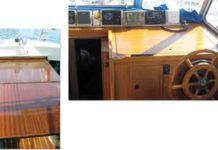
Danish company LM (Lunderskov Mbelfabrik) began as a wood furniture maker in 1940. In the 1950s, the company incorporated the newfangled fiberglass into their furniture, and in 1972, the company built its first fiberglass sailboat, the LM27. Over the next 20 years, it built 3,000 boats in five models, ranging from 24 to 32 feet. All LM models share a similar look-canoe-stern hulls with a pilothouse ahead of a sizable cockpit. All are mast-head rigged sloops, and every owner we talked to said that the boats sailed better than they expected-an experience that we shared on our test sail of the LM32.
Boat Test: The Last Sabre 34 Mark II
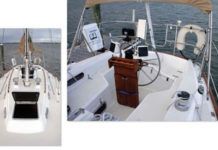
In 1985, after nearly a decade of building the popular Sabre 34, Sabre Yachts significantly revamped the design. The resulting boat-beamier, roomier, faster, and more powerful than the original-is usually referred to as the Sabre 34 Mark II. The Mark II, like its predecessor, still hews the performance-cruising line that Sabre established with the introduction of its very first boat, the Sabre 28, in 1971. The Sabre 34 Mark II is not without quirks, but its many positives far outweigh its downsides.
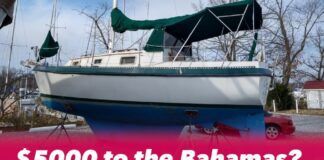
Bahamas for $5000? The Watkins 27 foot Sailboat
Is the Watkins 27 the ultimate small cruising sailboat? In this video, we take a deep dive into the Watkins 27 — a classic...



Latest Sailboat Review
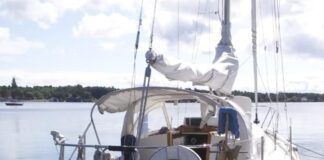
Tartan 30: An Affordable Classic
The early 1970s was the heyday of the Tartan 30' racer/cruiser. In all, no less than two dozen boats of a similar size and type were introduced in just three years, many of them to become highly successful among sailors eager for the performance and amenities of big boats at a modest price. Among the most noteworthy and enduring of the 30-footers from this era has been the Tartan 30.