















Home Search
pumps - search results
If you're not happy with the results, please do another search

Mailport: August 2011
Letters to Practical Sailor, August 2011. This month's letters cover subjects such as: Wing Dinghy, Rope Hygiene, Multi-Pump Bilges, Water Tank Sealsnt and More!
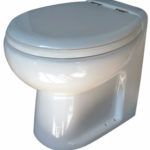
Electric-Flush Marine Toilets Part 2
Practical Sailor evaluated 14 electric marine toilets from seven manufacturers. This article is a follow-up to the February review of seven compact electric toilets; it focuses on the seven larger, heavier, more expensive test toilets, which are similar in size to standard household toilets. Part 2 of the toilet test report included heads from Dometic, Jabsco, Planus, Raritan, Thetford, and Tecma. These heads, equipped with more sophisticated flushing systems than those previously tested, are best suited to boats over 40 feet. Testers looked at the toilets' varying approaches to macerators, flow valves, and plumbing. The bench tests also evaluated noise levels during flushing, construction quality, ease of installation and maintenance, time to flush 1 gallon of water, and macerator performance.

Mailport: Iron Keels, Clothes for Cold, Anchor Roll Bars
It would be useful for PS to list which manufacturers use iron encapsulated in their keel. I am surprised to learn that many old sailboats have iron instead of lead as encapsulated ballast.Edward Addeo via PS Online

Fast Flow Pump: The Name Says It All
Originally designed for pumping operations on land, the Fast Flow engine-driven pump has a tremendous pumping capacity, with the ability to move nearly 5,000 gallons of water per hour (at 800 rpm). Thats nearly five times the amount of the average electric bilge pump. The Fast Flow Pump comes in a variety of sizes, but a close look at installation and fittings is necessary to determine if the pump will fit on a particular boat.

After 38,000 Miles
As designers and boatbuilders, over the years we've found it helpful to build "test beds" to check new design ideas and systems. We've usually...

Bench Test Simulates Onboard Plumbing Setup
Our testing apparatus included a pressure gauge and shut-off valve rigged on an upright board that provided about a 6-foot lift—about the max for boats 40 feet or shorter. The rig has a 3/4-inch outlet with 3/4-inch hose leading down to a calibrated container; this permitted precisely timed runs to determine the actual gallons-per-minute flow. Pumps that offered multiple hose-diameter options were tested using the largest option.

Mailport: August 1, 2001
Furlex Dust CoverAs always, I enjoy reading of Nick's adventures aboard Calypso. It was nice to hear how happy he was with the...
Mailport 12/01/98
Mysterious Bilge Pumping ExplainedThanks for publishing my letter on bilge pump cycle counter installation (February 15, 1998; other reader comments appeared in June 1998)....
Bilge Pump Basics to Keep Your Boat Afloat
Our research into bilge pumps and associated equipment stretches back several decades with the most recent bilge pump tests taking place in 2010 (See PS September 2010, and October 2010 online). When selecting a pump, keep in mind that sailboats rarely meet the ideal flow rate.
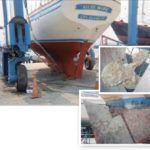
Mailport: September 2012
Letters to Practical Sailor, September 2012. This month's letters cover subjects such as: Bottom Paint Woes, Measuring Epoxy Success, Fleet Tracking Apps, and more!