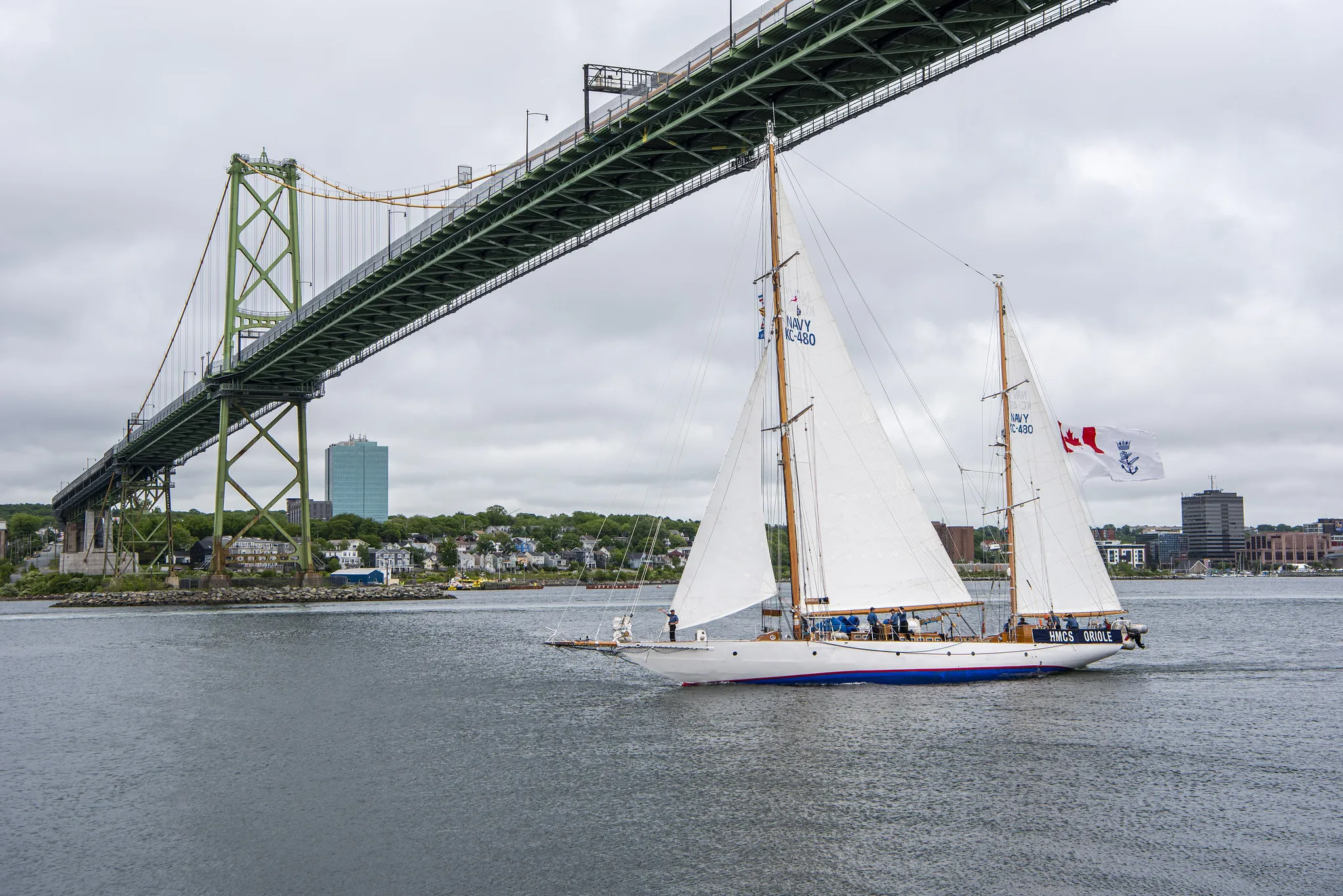
It is not often that one can say a navy ship is pretty or beautiful. But the Royal Canadian Navy (RCN) actually does have one such vessel and her name is Oriole. Actually, her formal name is HMCS Oriole, where a few years ago the acronym HMCS meant “Her Majesty’s Canadian Ship.” Of course, it is now “His Majesty’s Canadian Ship.” She is a tall ship, currently in service and used by the RCN for training and public tours and events.
At 104 years old, she is the oldest and longest serving commissioned ship in the RCN and has been is service for Queen (King) and country since the Second World War. But her story started long before that.
History
Designed by renowned MIT Naval Academy yacht designer, George Owen, Oriole was first commissioned by George Gooderham, then Commodore of the Royal Canadian Yacht Club in Toronto, Ontario. Her initial construction began in Toronto at the Dominion Shipbuilding Company. However, due to a labor strike, she was shipped and finally completed in Boston and finally launched on 4 June 1921.
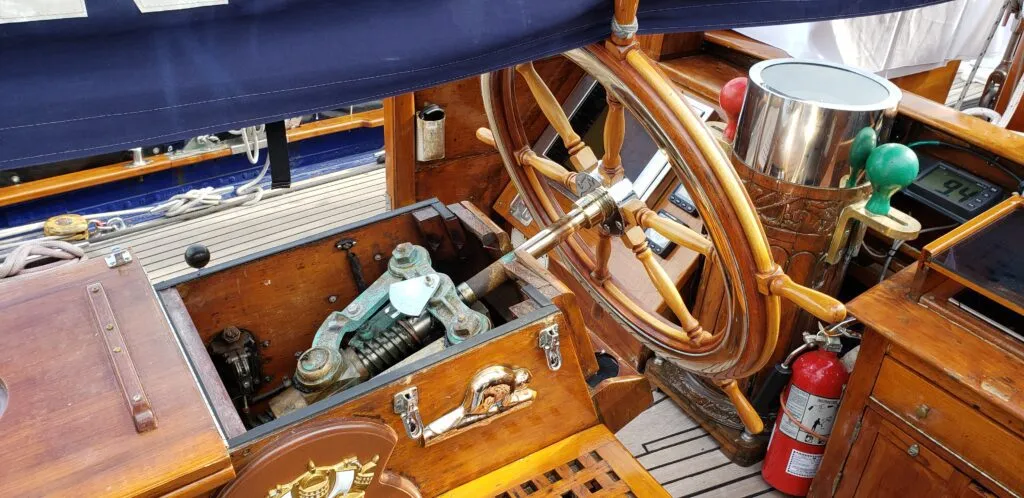
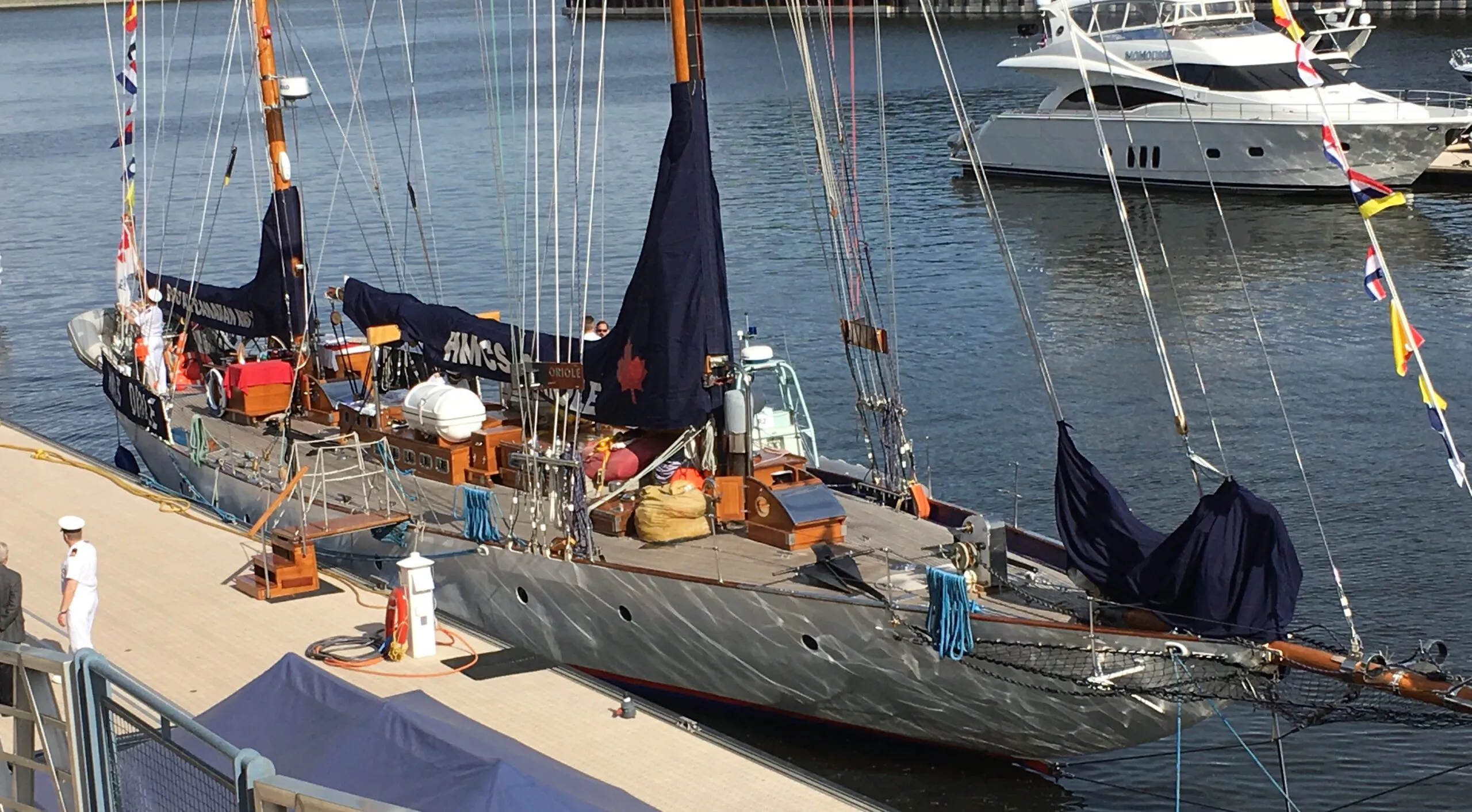
Although she may be mistaken as a schooner, Oriole is a ketch-rigged design. The difference with a schooner is that the mizzen mast is smaller than its mainmast and is stepped further aft. When fully rigged, HMCS Oriole sets over 13,100 square feet of Dacron sail. These tremendous sails are all manhandled; there is not a winch on the ship. Oriole’s hull is steel, however its decks, cabin house, skylights and hatches are all made of teak.
Sailboat Specifications
Displacement 101.4 tons
Length Overall 102 ft
Length on Deck 91 ft
Waterline Length 63 ft
Beam 19 ft
Draught 9 ft
Mainmast Height 103 ft
Mizzenmast Height 70 ft
Sails Main, Mizzen, Jumbo, Yankee, Top Jib
Storm Jib, Mizzen Staysail
Code 0, Gennaker, Spinnaker
Main Engine 671 Detroit Disel 230 HP
Electrical Generator 15 KW Yanmar Diesel / 4 KW Fischer Panda
Armament 1 Signalling Cannon
Complement 1 Captain
1 Executive Officer
19 sailors of various ranks
Accomodations 21 people
Designer
Born into a family active in the yachting world, George Owen ended up going to MIT in mechanical engineering. After a few years working as a draftsman for various industrial company, including the Herreshoff manufacturing company until 1901, when he moved to Canada. While working for the Hamilton Iron and Steel Company, he began designing and drafting yachts for the Canadian market, building many race and award-winning designs, from smaller dinghy and skiff class designs to larger race class designs.
In 1904, Owen moved back to Massachusetts and eventually started designing yachts full time for the Fore River Shipyard. Innovative in his own right, Owen used more experimental design rules, such as then innovative Herreshoff’s Universal Rule yacht measurement formula. Owen went on to design 24 yachts using the Universal Rule. Many of which went on to winning many races and awards. Certainly, too many to list here. Suffice it say, the design of Oriole was in very good hands.
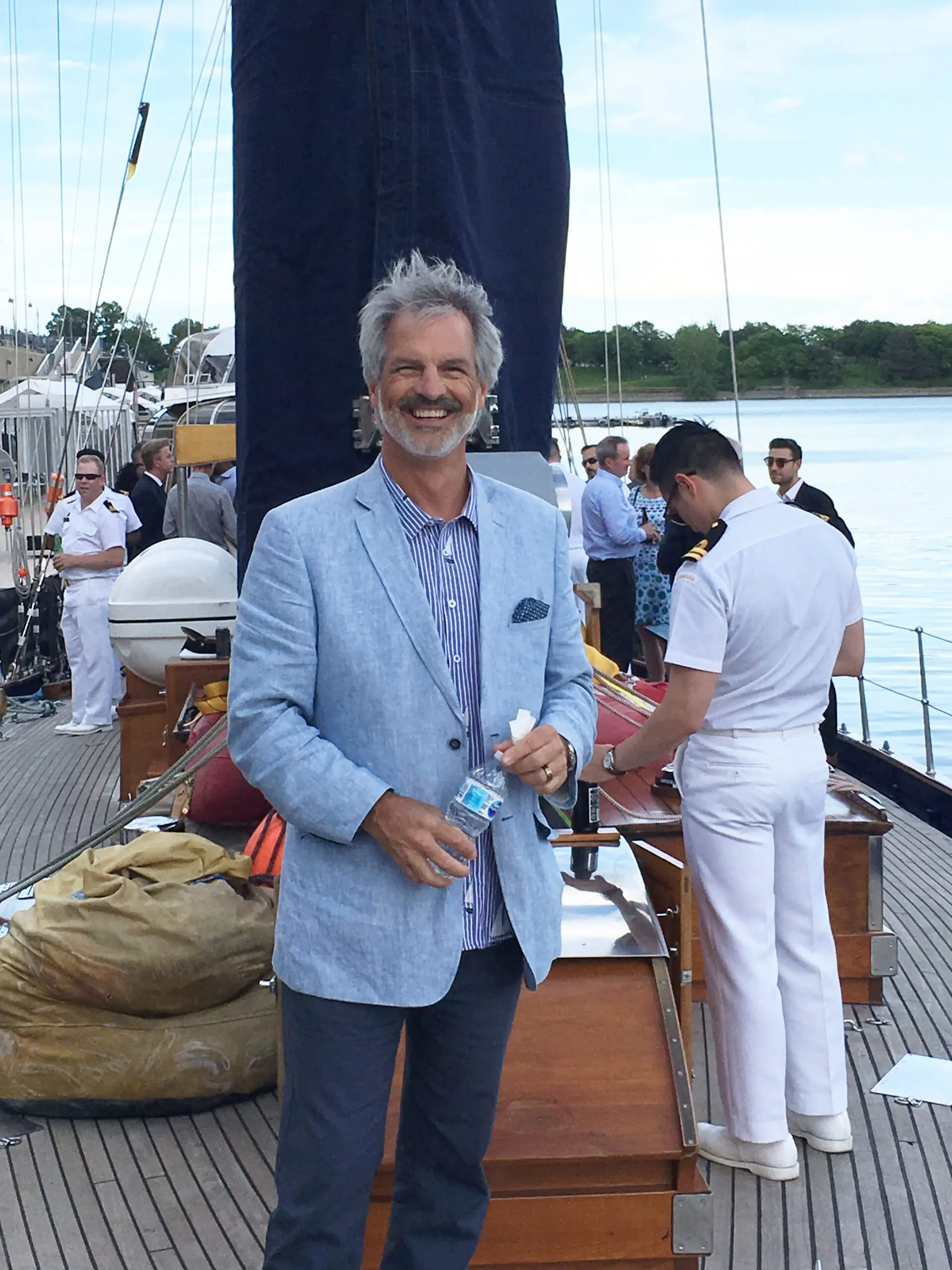
At Sea and in Service
Oriole’s career started as the Flag Ship of the Royal Canadian Yacht Club until she was acquired in 1941 by the Navy League of Canada and used for Sea Cadet training.
In 1943, Oriole was chartered by the RCN as a training ship during the Second World War. During the war, she was stationed and well protected in Georgian Bay at the Queen Elizabeth Sea Cadet Camp on Beausoleil Island.
After the war, in 1950, she was once again chartered by the RCN as a recruit training ship.
In 1951, she was moved to the east coast Halifax Naval Base. That year she was assigned to HMCS Cornwallis and was later transferred to HMC Dockyard for training cruises. In 1954, she was moved to the west coast in British Columbia at Canadian Forces Based (CFB) Esquimalt assigned at the Naval Officer Training Center.
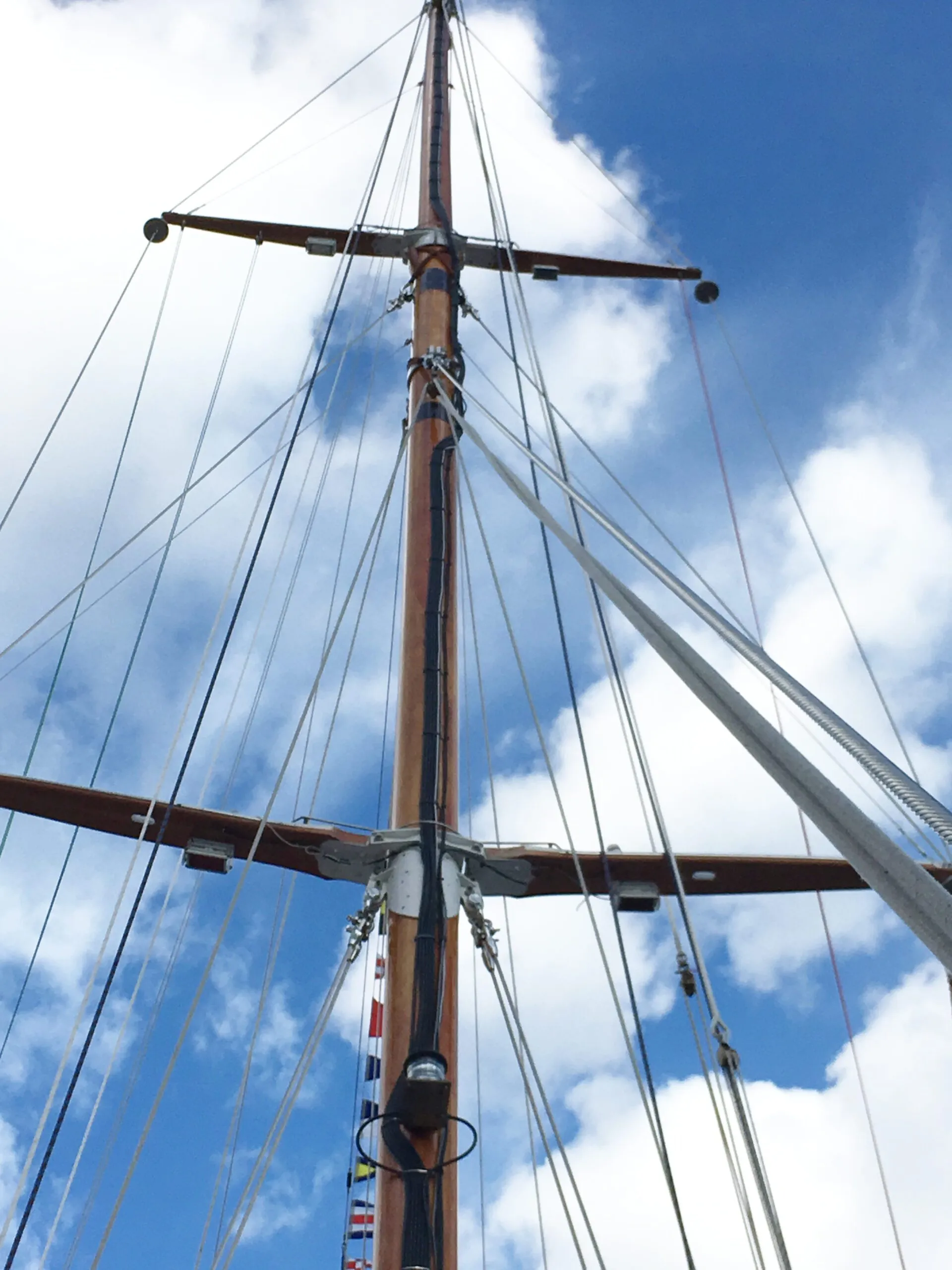
She was finally purchased in 1956 by the RCN and assigned to HMCS Venture in British Columbia and remained there until 1984 when she was moved once more to the east coast to take part in the 450th anniversary of Jacques Cartier’s arrival in Quebec.
Still Sailing
Since then, Oriole continues to sail and participate in many events such as Tall Ship Regattas and various celebrations, such as Canada’s 150th anniversary.
She underwent many repairs in Lunenberg, Nova Scotia. Of course, the Lunenberg shipyard is where the world-famous schooner Bluenose was built and continues to make her home there. A little trivia, the schooner engraved on the Canadian dime is Bluenose.
Since 2018, with Halifax as her home port, Oriole and her gallant crew make training tours during the spring to fall season while visiting many ports down the St-Lawrence Seaway and the Great Lakes. In 2021 Oriole celebrated her 100th anniversary—may she enjoy many more years with wind in her sails.
Sources and References:
George Owen – Classic Sailboats