
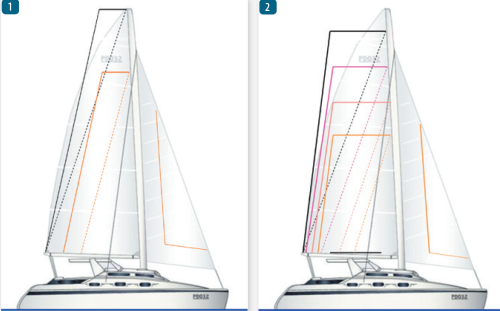
The center of effort will move aft compared to a pinhead and forward compared to a full roach sail. Whether this is good or bad depends on the existing balance of the boat. The change is generally small, but expect to adjust both jib and mainsail trim practice.
It must also be remembered that when replacing an older sail, the draft is generally farther forward than the old bagged out sail, and so the balance will seem to move forward until the new sail distorts.
- The moderate fathead sail offers a little more area, and also a slight change in the center of effort. The center of effort will be higher and either farther aft compared to pinhead, or farther forward compared to a high roach sail. A change in mast rake or jib size may be required.
- A radical 60 percent square top results in rather odd reefed shapes and a lot of poorly supported roach. Sail area is also reduced less, because the foot remains long.
Related posts: Pros and Cons of ‘Fathead’ Mainsail
Fad or Function? Fathead Sails Offer A Little of Both