


Topside Paint Test Kicks Off with a Look at Application and Gloss, Tips and...
Practical Sailor applied 29 topside fiberglass paints from nine manufacturers to fiberglass panels and rated them on handling, coverage, and gloss. Paints will be evaluated for long-term durability and gloss retention over time. Seven of the paints are alkyd enamels; 12 are one-part urethanes; and eight are two-part linear polyurethanes. Two paints were classified as "other." Paints tested included alkyd enamels from Kirby, Sherwin-Williams, and Pettit Z-Spar; one-part urethanes from Epifanes, Insignia, Interlux, Pettit, and West Marine; and two-part polyurethanes from Epifanes, Awlgrip, Fabula, Insignia, Interlux, and Sherwin-Williams. Two Crab Coat paints from CrystaLac also were tested. Looking for tips on painting topsides yourself? PS also takes a look at the tips, tools, and techniques of do-it-yourself topside painting.
Inflatable Boat Fenders Test
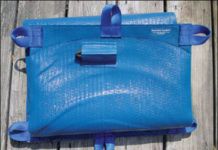
When youre tight on storage space but still want to be prepared to protect your hull when docked in a blow, consider inflatable fenders. They often offer the same protection as conventional fenders without the storage headaches. Practical Sailor inflatable boat bumpers from three manufacturers: StowAway Boat Fenders from DACA Innovations; Aere fenders from Pratek; and Easystow Fenders from Seoladair. All were subject to abrasion tests and compression test. Long-term testing is under way to determine resistance to UV, chemical, and biological deterioration. Stay tuned to see which of these docking aids is the toughest inflatable fender.
Plastic Razor Blades
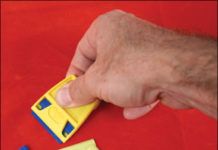
Plastic scrapers have been around for a while. They are popular among painters, woodworkers, and auto detailers. For boaters, they make sense for jobs that need to be done quickly without scratching a delicate surface. However, for a fine cut and a lasting edge, metal blades remain the best choice. We tested the new ScrapeRite plastic razor blades on a variety of surfaces and found them handy for removing vinyl, cleaning dried paint on varnished wood, and trimming sealant. The blades come in three levels of hardness: red, general purpose blades for delicate surfaces like paint or varnish; blue, a polycarbonate blade for use on fiberglass and gelcoat; and yellow, acrylic blades for use on hard flat surfaces.
Power Tools for Restoring Gelcoat
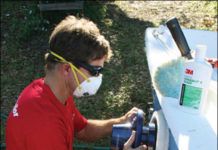
For a control in our soon-to-be-published test of acrylic-type gelcoat restorers, we polished one panel on a 1972 Oday Javelin with 3M Finesse-It II and waxed it. PS has long prescribed Finesse-It II ($20, www.defender.com) for polishing, and the final gloss matched the panel with the best acrylic "miracle cure." We also tried various polishing tools fitted with wool buffing pads: the Waxmaster ($30, www.westmarine.com), the drill-mounted 3M Superbuff wheel ($17, www.defender.com); and a 7-inch variable-speed polisher from Chicago Electric ($30, www.harborfreight.com).
High-Strength Repair Kit
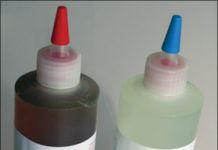
As Practical Sailor carries out a series of structural and cosmetic repairs on our various test boats, well have the opportunity to test several different brands of epoxy products in real-world situations ranging from bonding to laminating and sealing. Recently, a couple of small bonding projects allowed us try a relatively new product from West System, G/flex. The two-part epoxy system comes two ways: pre-thickened in squeeze-tubes or bottled in a liquid form that can be used for laminating or thickened to a desired consistency for bonding.
Top Marine Wax Products
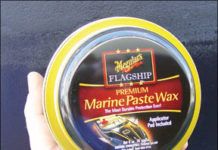
The number of marine wax products on the market is staggering, and Practical Sailor has commissioned a series of projects to help readers make sure they get the best and longest wax protection for their money and effort. Our most recent full-fledged wax test ran for little over a year, with the results posted in the Nov. 15, 2004 issue. A test of cleaner-waxes-a different animal-was carried out in 2006-2007, with Star brite Heavy Duty Cleaner Wax and Restructure Marine Cleaner Wax coming out on top (Practical Sailor November 2007). Prior to those tests, a series of articles dealing with gelcoat protection were published. Two are posted online at www.practical-sailor.com under the "Tools and Techniques" section: "Plastics Versus Weather: The Nature of a Losing Battle," an interesting read for those curious about the chemical battles between your boat and the environment; and Nick Nicholsons "Offshore Log: Gelcoat Maintenance," some hard-earned how-to-tips on gelcoat maintenance.
Lights On for Practical Sailor Headlamp Round Up
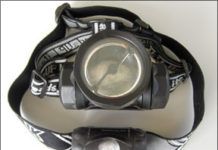
Headlamps compliment rather than compete with traditional hand-held flashlights. Lighting of more than one kind is invaluable on board, and headlamps have the advantage of freeing up the two hands of the sailor who always seems to need a third. Our test focused on LED headlamps that claimed water resistance and featured a crosshead strap for comfort, and did not require a battery recharge. We tested 17 headlamps from six manufacturers: Icon from Black Diamond, a rock-climbing and skiing gear maker; the HeadsUp Recoil 2680 from Pelican, maker of all things watertight; and Vizion from Underwater Kinetics, along with four headlamps from Petzl, five from Princeton Tec, and five from Streamlights. Our top picks were based on wearing, testing and using these headlamps for months. Best Choice honors go to the Black Diamond Icon, a lightweight lamp thats versatile and loaded with features. Recommended products include the feature-laden red-filter-equipped Petzl Tactikka and the lightweight, Lithium-powered Streamlight Argo HP. The Pelican outshone others on pure brightness.
Can Your Boat Make You Green?
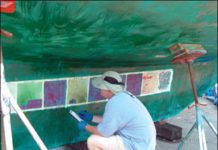
Practical Sailor tests products touted as environmentally friendly and compares the shades of green of some of the best performing products on the market. Previously, we have looked closely at power generating and power saving equipment such as solar and wind generators, and we will continue to test these in future articles. This article focuses on pollution, waste, and proactive measures that reduce the impact of the foul things that are sluiced, rinsed, or sanded off our boats, or pumped out of them. Products reviewed in this article include copper-free bottom paints: E-Paints zinc-based EP-2000, E-Paint EP-21, E-Paint ZO; Sea Hawk ablative Mission Bay CF and Mission Bay CSF; Pettit Alumacoat SR, and Vivid Free; and Interlux Pacifica. Water-based copper paints Pettit Hydrocoat, Flexdel Aquagard, and Interlux Fiberglass Bottomkote Aqua were also examined. Next up we look at biodegradable paint strippers including Back-to-Nature Ready Strip and Aqua Strip; Pettit Bio-Blast; Franmar Soy Strip; Bio-Blast; Dumond Chemicals Peel Away Smart Strip; EcoSolve; and CitriStrip. We compared the effectiveness and shades of green of Descalers including: Barnacle Buster from Trac Ecological; Rydlyme Marine from Apex Engineering; Star brite Zebra Mussel and Barnacle Remover; and MaryKate On & Off. Finally we looked at waterline stain removers and hull cleaners including: Spray Nine Boat Bottom Cleaner; Captain Johns Boat Brite Algae and Waterline Stain Remover; Rydlyme; Prime Filters Mineral-O-Magic; and Nautical Ease Nonskid Deck Cleaner and Black Streak Remover.
The Greener Perspective
Just to put things into proper perspective: When it comes to water-bound polluters, sailors are the smallest of small fries. But a search for proper perspective on environmental issues can be maddening. Whenever I dig deeply into the topic, I soon find myself far down a rabbit hole conversing with hatters and griffins. The surging movement of "green" consumerism is particularly sticky. At the surface, the trend inspires hope. The wider non-sailing marketplace is finally reflecting sailors long-held concern for the environment, and manufacturers are responding to this development (and some tough legislation) by offering what they deem eco-friendly products. Conveniently, some of the green products actually cost less than the products they replace. Even better, most are far safer to use. But measuring the environmental impact of any product defies simplification, particularly if you want to gauge the products carbon footprint, the amount of carbon that is pumped into the atmosphere as a result of the product during its life. Add to this mix an unscrupulous marketer out to make a buck, and the truth becomes even murkier.
Practical Sailors Exterior Wood Coatings Test Continues
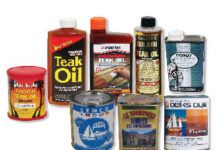
Most of us have a soft spot for a boat with fresh, beautiful brightwork on a teak deck-unless its your boat. Than the brightwork is just that: work-something that is synonymous with boat maintenance. In this, our fourth installment in our ongoing look at exterior wood finishes, Practical Sailor focuses on the application of teak oils and sealers. Testers evaluated eight products for ease of preparation, ease of application, number of coats recommended, recoat time, and finish. The products were: Dalys Seafin Teak Oil, Deks Olje No.1, Interlux Premium Teak Oil, Le Tonkinois Huiles Bio Impression, MDR Amazons Golden Teak Oil, Semco Teak Sealer, Star brite Premium Golden Teak Oil, and Star brite Tropical Teak Sealer. The Interlux Premium Teak Oil and Semco ranked as the top easy-to-apply teak oils. The inexpensive Star brites Premium Golden Teak Oil got the Budget Buy nod. Ratings were for initial results only as we wait for results from the second part of the evaluation, the durability test, for the final rankings. Long-term test may find that the more difficult a product is to apply, the longer it lasts. Also included in the search for a long-lasting wood finish are dozens of one-part varnishes, two-part varnishes, synthetic wood coatings, and wood stains. Stay tuned to see which products make the all-star list of the best wood finishes.
Lithium Batteries on Sailboats: The 3 Mistakes Everyone Makes
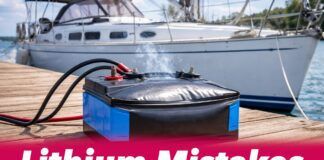
Lithium batteries are one of the most popular sailboat upgrades today—but they’re also one of the most misunderstood. In this Practical Sailor Saturday episode,...



Latest Sailboat Review
Island Packet Estero Used Boat Review
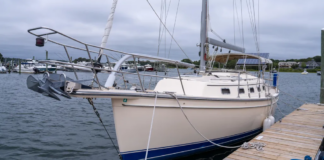
Florida-based Island Packet targets a relatively narrow niche, so the toughest competitors to its new boats are often older Island Packets. Introduced in 2010, the 36-foot, shoal-draft Estero is the company’s latest attempt to introduce a distinctive model that doesn’t stray too far from the company’s proven formula for success: moderate displacement, full-keel cruisers designed to be lived on, sailed far and in comfort, and endure the bumps, scrapes, and storms that cruising boats inevitably encounter. After sailing the Estero on Florida’s Sarasota Bay and inspecting its interior, construction, and systems, Practical Sailor testers noted that the shoal-water cruiser will appeal strongest to Island Packet fans who’ve been waiting for a shoal-draft, easy-to-sail boat that compares to the IP37 in terms of interior space. These strengths will be most apparent on intracoastal or riverine adventures like the Great Loop.