















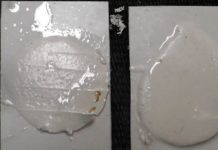
Removing 3M 5200
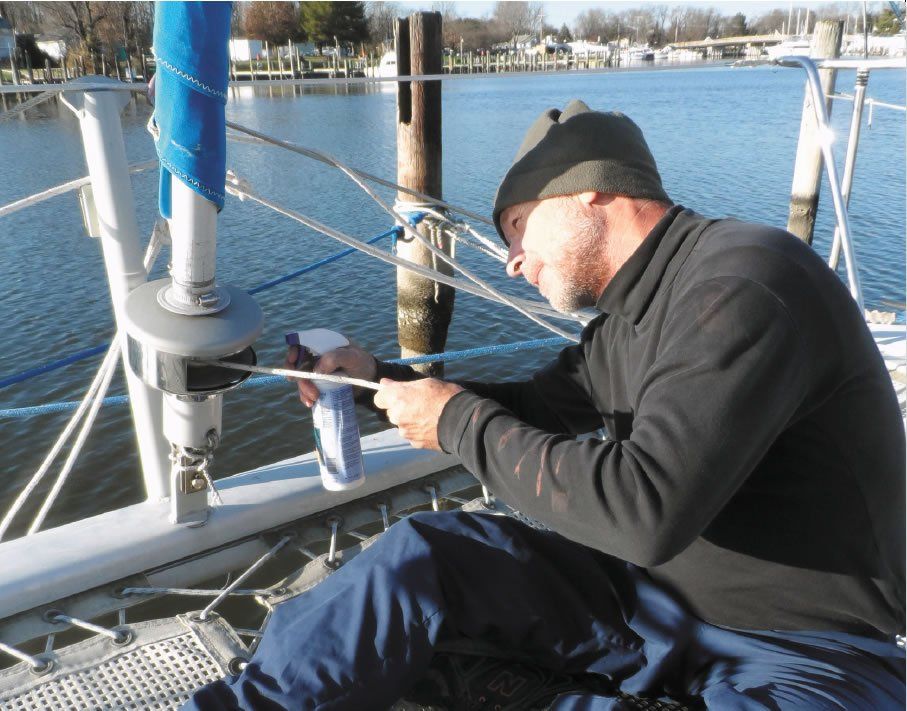
Our recent test of caulk removers, (PS Tests Caulk Removers, Practical Sailor, January 2017), focused primarily on silicone caulk remover because these caulks can leave a residue that makes it impossible for anything to bond. After that test, we got a call from reps at Debond who explained that their product, although effective with silicone, is formulated to break the bond between to break the bond between 3M 5200 and a smooth gel coat surface. This is a common challenge for sailors who must disassemble through-hulls, remove chainplates, or repair structural components. So we went back to the lab to find the best antidote to 5200, and we present the results of our tests here.
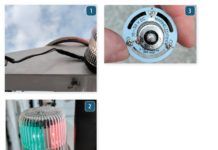
Converting an Anchor Light to an LED Tricolor Light
The cost of masthead tricolor navigation lights, a safety improvement many sailors add to their boats, involves expense beyond the fixture itself such as a switch on the DC panel, additional wire to snake from the panel to the masthead, through-deck fitting, and labor.
Checking Respirators for Fit
A respirator can't protect you if it doesn't fit your face. Its that simple. Anything that prevents a good seal-whether facial hair or a hollow under the side of your jaw-is unacceptable. In a workplace this fit test will be performed in a very rigid manner by a trained technician. However, for the sailor/occasional boat yard worker, we offer this shortcut procedure that is far better than nothing.

2017 Top Sailing Gear
Each year, just prior to the fall boat show season, Practical Sailor editors consult with our testers to come up with a select list of Gear of the Year from the previous 12 months of testing. For most of the 2016-2017 testing season we focused on essential everyday products that owners of boats of all sizes-with a few exceptions-rely on. While our testers appreciate new technology, they recognize that a safe passage often depends on the reliability of the weakest link, and that weakest link is often a seemingly minor component that gets little attention. In short, our Editors Choice list is not the sexiest product roundup, but if youre serious about keeping your electrical connections corrosion free, making professional repairs on a blue-collar budget, maintaining a safe speed in a steep following sea, or looking for a way to manage a big genoa without upgrading to an electric winch, youll appreciate it.

The Best Respirators for the Boatyard
Athough falling off a ladder or cutting yourself with a sharp tool are the most common boatyard injuries, damage from the foul air we breathe is more insidious. Marine paints contain solvents that can make you dizzy at best or increase cancer risk at worst. Dust from sanding wood is usually only a nuisance, but sanding bottom paint or grinding fiberglass presents serious health risks. Fortunately, theres a wealth of industrial experience with contaminated air…

Fixing Tears in Sunbrella Boat Canvas
Sooner or later, chafe, UV rays, and sharp edges take their toll on our canvas. A misplaced screw or simple friction will eat holes in a dodger. A seam gives up, a boom rubs through the fabric, and a few snaps come loose.
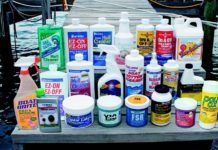
Getting Rid of Impossible Bird Poop Stains
I honestly hope you can help. Several weeks ago local seagulls had a sushi feast on my boat. The leftovers were large and small and mostly on non-skid. When I got to the boat I cleaned up whatever I could pick up, but the sun-baked stains remained. Ive tried whatever I possibly could including Barkeepers Friend and Total Boat White Knight. They both have oxalic acid as main ingredient. It stayed there for 30-40 minutes, I didnt touch it. Next I got oxalic acid as powder and made my own very strong mix. Again, no major effect. Next, In desperation, I broke out 3000 PSI power washer, which again didnt remove the stains. My marine biologist friend said to try Draino.
Esoteric Fibers Call for Epoxy
Theres little debate over the adhesive quality and toughness of epoxy resin-just look at where its being used. We hear about its presence in crucial structures such as aircraft wings, race car bodies and high-end custom racing yachts. But it takes a little familiarity with engineering lingo to help us understand why epoxy trumps its ester relatives.
Mailport: Water Purification on Lake Michigan
We race a Tartan Ten out of Montrose Harbor, Chicago. Since were sailing on fresh water and the Chicago Area Sail Racing Association doesn't require us to have a built-in tank for offshore racing, the water tank was removed long ago to eliminate excess weight. For port-to-port racing, we usually buy jugs of bottled water and refill individual water bottles. For round-the-buoy racing, we bring water bottles. Some of the T10s just use a camping-type water filter. W

One Hull or Two? It Depends.
The monohull versus multihull debate has been going on for decades, and for many PS readers, their minds are already well-settled on the subject. But with the rising popularity of cruising catamarans, and the development of some high-end performance cats (and some increasingly compelling marketing) its worth reviewing again the pros and cons of each approach.

Boat Thru-Hulls & Seacocks 101: Inspection, Failure, Safety & Upgrades
In this video, we dive into one of the most important — and most ignored — parts of boat ownership: thru-hulls and seacocks. These...


Latest Sailboat Review

Jeanneau Sun Odyssey 32 Used Boat Review
The Sun Odyssey 32 and Sun Fast 32i are two versions of the same boat, designed by Philippe Briand. The attractive combination may well capture a good share of the market in this size slot.