




How to Prevent Head Odors Aboard Your Sailboat
While permeation of waste gases through flexible sanitation hose is a major source of odors in the head, it is not the only one. This article looks at the possible sources one by one.
Winterizing the Engine: Maintenance that Is Truly Preventive
Winterizing an inboard engine installation means a lot more than filling the cooling system with antifreeze and stuffing a rag in the exhaust outlet. It means taking care of the exhaust system, the fuel system, the engine controls, and other components of the drive train, such as the shaft and prop. If you want to do these things yourself none of them is difficult, only time consuming plan on a long day of work, or perhaps a leisurely weekend.
Checking and Replacing: Keelbolts, Part 1
The largest fasteners in any sailboat with outside ballast are likely to be the bolts holding the ballast keel to the hull. As a rule, designers specify keelbolts by a tremendous factor, on the order of ten to one or more. Nevertheless, this safety margin does not guarantee eternal life for keelbolts. Corrosion takes its toll, sometimes more quickly than you might think.
Maintenance of Interior Teak
For the last decade or so, the majority of all production boats built in the U.S. have been trimmed above and belowdecks with teak. Teak makes abundant sense on deck. With resistance to weathering as its primary virtue, however, teak makes less sense for use as trim below.
Can You-Should You-Build Your Own Fiberglass Tanks?
Due to the litigious environment in today’s society, I feel compelled to advise that fuel tanks used in boats-especially those used to store gasoline or alcohol-based fuels-be built by persons or firms specializing in the manufacture of marine tanks.
Stop That Leak!
Alot of water has gone over the dam since the days when boats were caulked with cotton, and storm windows were snugged up with putty.
Stemming Troublesome Deck Leaks
Deck joints don’t leak as much as they used to. Most builders have switched to less leak-prone types of joints, and most are more conscientious about fastening and sealing them.
Upgrading the C&C 33 Part I
In July 1990 we bought a 1975 C & C 33 to function as a test platform for Practical Sailor. We chose it above others for several reasons: The design seemed typical of many modern sailboats, with a fin keel and spade rudder and moderate displacement; C & C had a good reputation; and the price was right.
Getting the Charge Out of Lightning
Every year, a surprising number of boats are struck by lightning. Almost invariably, there is some damage to the boat or its equipment. The damage can range from minor electrical problems to serious hull damage.
A Rose is a Rose is a Rose, and Wood is Wood is…
For the boat owner customizing his boat, the choice of wood to use in a project can be as interesting as the design or execution of the job. Because of the overwhelming use of teak and mahogany in boatbuilding today, this opportunity to select a different wood is often overlooked.

O’Day 40 – A Budget Cruiser for the Bahamas
The O’Day 40 (1986) is one of those cruising sailboats that somehow slipped through the cracks of sailing history. Built during the final years...



Latest Sailboat Review
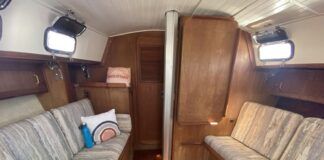
Caliber 33 Used Boat Review
The Caliber is a peculiar blend of tradition and innovation, of security and performance, of practicality and pizzazz. All of the owners we heard from were "satisfied." One called the 33 his favorite boat over six decades of sailing.