


















PS Advisor: Tangled Up in Turbochargers
I have noticed that several new sailboats are being offered with turbocharged diesel engines. Seems to me these pose two problems: excess fuel consumption and excess heat. Do you have an opinion or technical advice on their use practicality?

Mailport: March 2011
Letters to Practical Sailor, March 2011. This month's letters cover subjects such as: Wind Gens, Great Anchor Debate, Bottom Paint, Designs, and more!

Trident recalls gas system solenoid
Trident Rubber Inc. has recalled the solenoid valves in its quarter-inch Trident Marine LPG Systems sold between March and October 2010. The recall was issued late last year when the company discovered that defective quarter-inch 12-volt and 24-volt Parker-branded solenoid valves were used in the systems. The LP gas control solenoid valve may not fully turn off, allowing gas to continue to flow to the distribution system until it is turned off at the LPG cylinder. The plunger piston assemblies, which move to open or close the valve to gas flow, are defective

Mailport: February 2011
Letters to Practical Sailor, February 2011. This month's letters cover subjects such as: Micron in Fresh Water, Onboard Washing, Wiring Tools, Glazing and Bonding, and Paint-Away Spiders and more!
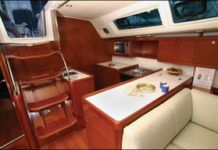
PS Advisor: Downhill Galley Cooking
In the October 2010 boat review of the Catalina 375, there was a statement regarding the location of a galley: "While some argue that the traditional port-side galley is more desirable when crossing oceans, the point is moot for a family coastal cruiser." Is this just a whimsical nautical tradition, or is there some logic underlying it? Why is the port preferable? I would agree that [a port galley would be favored] if most of our sailing is on a starboard tack, but the number of port and starboard tacks should be about the same.

PS Advisor: A Classic Finish for a Classic Boat
I’m the happy owner of a 31-foot sloop, a replica of a 100-year-old wooden Friendship. Her fiberglass hull was laid up in a mold made from the old boat. My boat is very traditional, with wooden mast and spars, and lots of heavy bronze hardware on her gaff rig. The mast and spars all need to be stripped and refinished this off-season, and the owner of the yard where she’s stored has recommended using Mas epoxy (www.masepoxies.com) as the base, then a coat of varnish, then a sprayed-on clear coat. The Mas people advised not to use an oil or mineral-based spar varnish, as it isn’t compatible with their product.

Mailport: January 2011
Letters to Practical Sailor, January 2011. This month's letters cover subjects such as: Sailing non-profits, wind gens, pressure cookers, wood finish and mildew remover.
PS Advisor: Can Water Tanks Be Used for Fuel?
We made the embarrassing mistake of putting fuel in one of our water tanks (built-in fiberglass tanks). The silver lining is that we were trying to figure out how to expand our fuel capacity. Can you advise me on how to figure out if the tank can serve as our new fuel tank?

Mailport: December 2010
Letters to the Practical Sailor editors in December 2010 include: paint colors, sailmaker services, bilge pumps, pest control and the Wirie v. a DIY WiFi antenna.

PS Advisor: Are Diaphragm Bilge Pumps OK?
My boat has an ITT/Jabsco 36600 diaphragm bilge pump that does not sit in the bilge and is rebuildable. With an 8-foot head on the pump installation, I think this type of pump may be a better type for me than the electric centrifugal pumps you reviewed in the September 2010 issue—although they are more expensive. You did not include any diaphragm pumps in your review. Was there a reason? Do you plan to test this type of pump and perhaps compare them to the ones reported on in the September article? Any information on diaphragm pumps versus centrifugal pumps would be greatly appreciated.

Boat Thru-Hulls & Seacocks 101: Inspection, Failure, Safety & Upgrades
In this video, we dive into one of the most important — and most ignored — parts of boat ownership: thru-hulls and seacocks. These...


Latest Sailboat Review

Jeanneau Sun Odyssey 32 Used Boat Review
The Sun Odyssey 32 and Sun Fast 32i are two versions of the same boat, designed by Philippe Briand. The attractive combination may well capture a good share of the market in this size slot.