Offshore cruisers and boaters come in all shapes and sizes. The greatest highlight of my nearly 40 years of ocean sailing and over 200,000 ocean miles is indisputably the amazing people and cruising communities that I’ve encountered. I wish that every land-based community could be as friendly, neighborly, interesting, like-minded and dynamic as those that represent cruisers. What’s particularly unique is that cruisers have abandoned traditional society, disposed of our “stuff,” and faced the monumental highs and lows that Mother Nature bestows.
It’s not always easy. Living in small spaces with our partners can cause tremendous friction even between the most intimate couples. Aligning shared dreams requires huge compromises. We all miss our beloved family, friends and activities at home, and continuously face the daunting unknown of “what’s next” in terms of boat breakdowns and weather challenges.
Witnessing the great variety of cruising types has always fascinated me: couples, families, solo sailors, solo couples on two boats, and many offshoots of these types. While this list isn’t exhaustive, I have categorized cruisers into some general divisions, and I’m excited to share my personal observations and recommendations.
Teaching Essential Skills
For the last twenty years, I’ve had a lot of fun teaching “The Dynamics of Boaters” courses at the Toronto and Vancouver Boat Shows, as well as Bluewater Cruising Associations and boating related organizations. My audiences tend to be forever grateful insofar as so much time and effort is often concentrated on the boat’s systems and personal skill training in preparation for boating life, and yet managing the personalities, expectations and people aboard is critical and all-too-often overlooked.
Note: Please forgive me if you’re not included in these roles as they’re simply generalizations. Also, given that I’m female, I am particularly sensitive to gender bias. These roles can be interpreted and interchanged in all genders.
Ironically, I have personally experienced all these roles during my sailing career.
Category A: All-Hands-On-Deck Couple
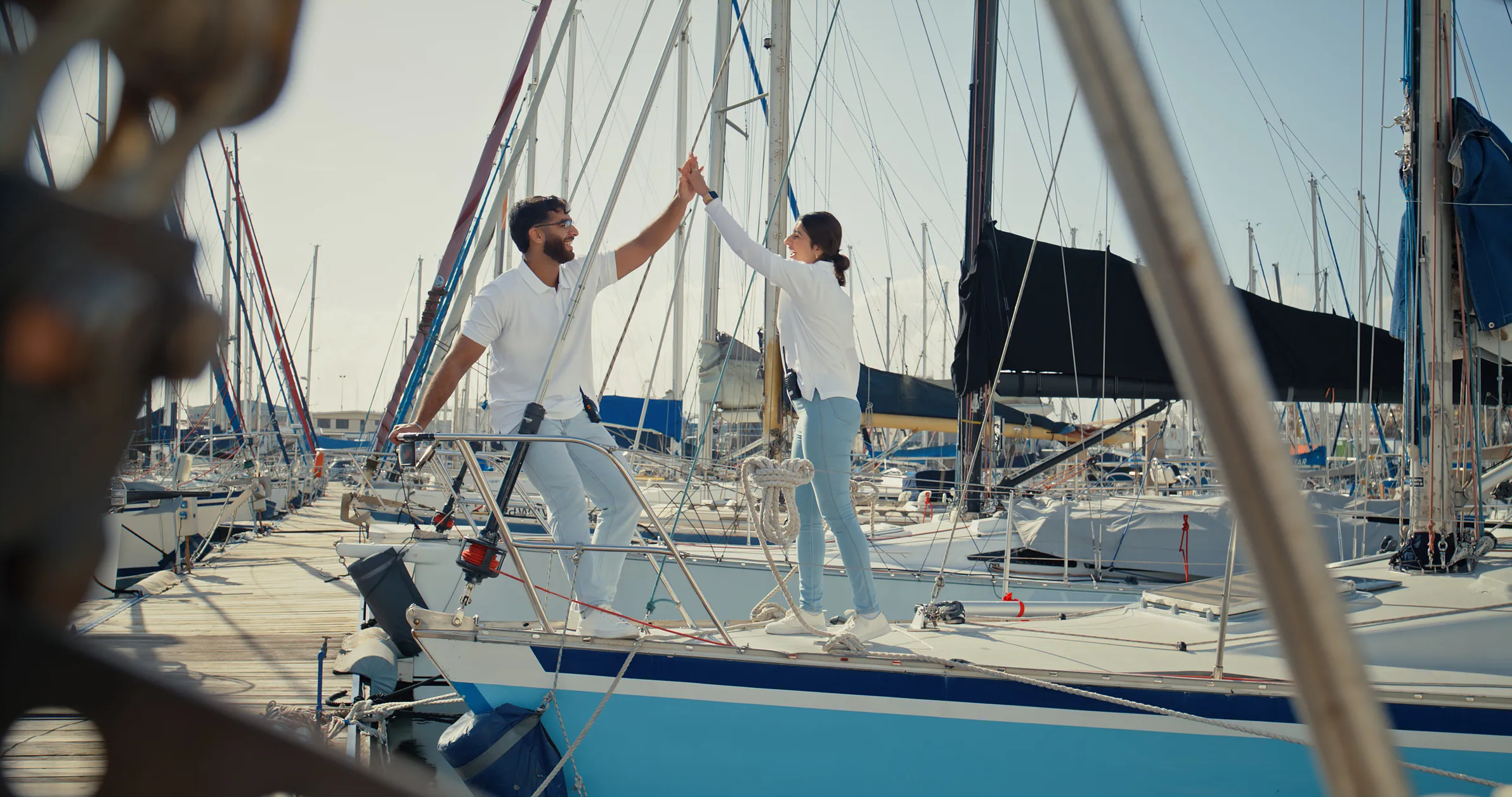
Annie and Andrew are a dynamic and resilient couple who both absolutely love their cruising dream-come-true lifestyle. Their partnership is built on teamwork, equality and mutual effort. Both partners are fully committed to sharing the responsibilities of sailing, dividing tasks based on strengths or simply pitching in wherever needed. Whether it’s trimming sails, doing maintenance, navigating, cooking meals and cleaning, they approach every challenge as a unified force.
Communication is their defining trait. They excel in high-pressure situations because they trust and rely on each other. Occasionally, their intensity and commitment may lead to disagreements, but they typically resolve issues quickly, recognizing the importance of maintaining harmony. Ultimately, they demonstrate an excellent balance of sailing and life in general.
Personal Experience
I was personally an All-Hands-on Deck couple with my former husband during our first Pacific Ocean voyage with our two boys aged four and ten in 1986. We took so many courses together—celestial (no GPS in those days), maintenance, CYA Sailing etc.—in preparation for our voyage aboard Kluane, which was a Beneteau First 38. I was the celestial navigator, teacher, weather forecaster and did alternate watches. I knew every boat system and related maintenance. In fact, when my family flew home to Canada for work and school from Japan after three years offshore, I carried on solo from Nagasaki to Tokyo.
Every couple should do their best to embody the characteristics of Annie and Andrew and of being Couple A: All Hands-on Deck. I still cherish the occasions when people from my boat show audiences excitedly seek me out to say, “We moved from a B to an A!”
Room for Growth
If you’ve mastered the concepts of Couple A there’s always more room for improvement. Boating has captivated my attention for the past forty years because no two minutes are ever the same. There’s always something new to learn (together!) whether it’s a new strategy, technology, weather trend or simply another way to do a routine procedure in a better way.
Category B: The Aspiring Team Couple
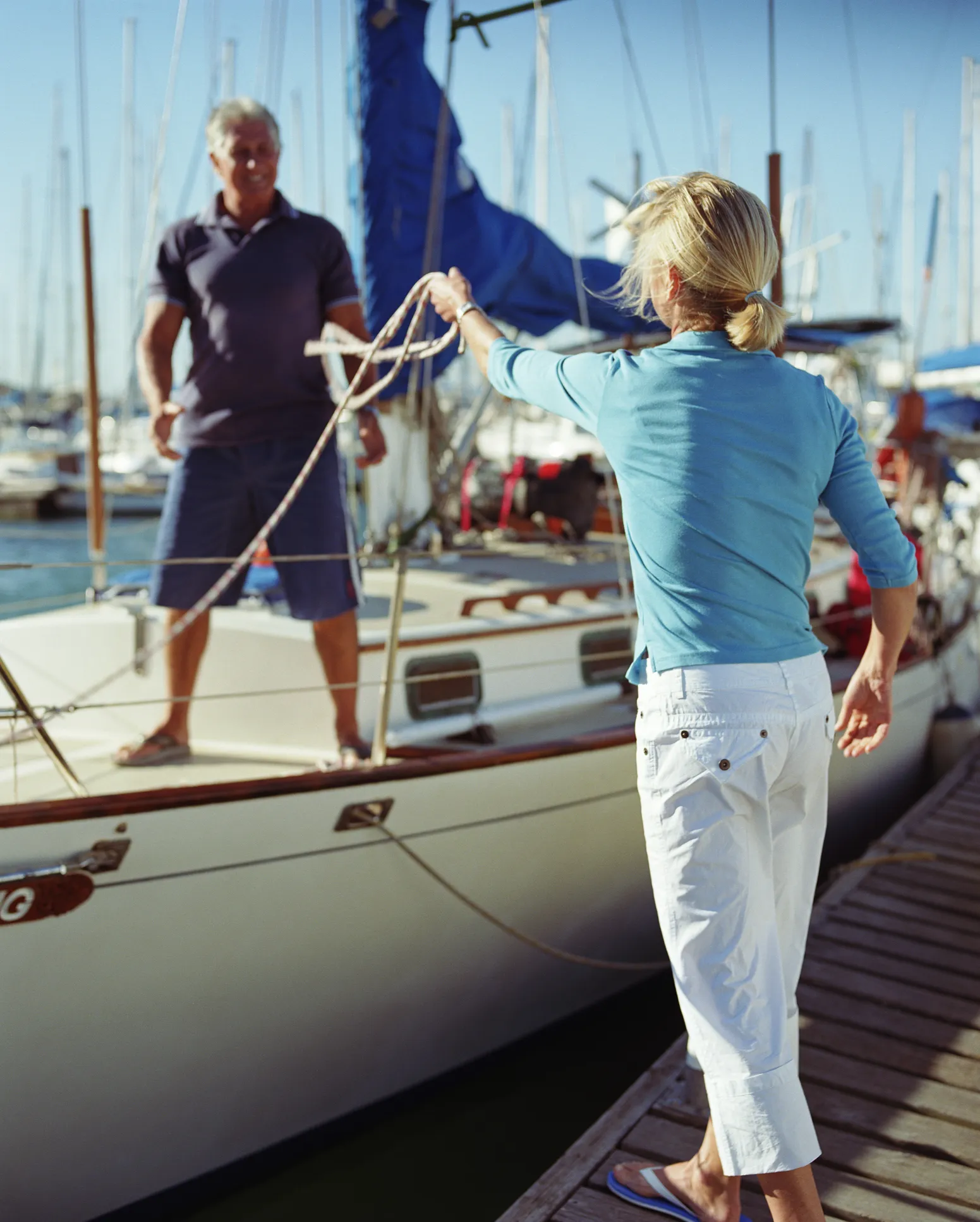
Betty and Bob are happily well established in their businesses and community at home; however, it’s always been Bob’s dream to sail around the world. He’s a competent sailor and loves to fix things. As they reach the stage in life when they’re approaching retirement and their children have left the nest, it’s now Bob’s time in life to fulfill his true dream. They can afford an offshore boat and the associated lifestyle.
Betty has always been a dutiful partner in their marriage, and acknowledges Bob’s dream. She even finds the idea of sailing off into the sunset somewhat intriguing. Betty is a very independent and capable businessperson, family and community member, and absolutely loves her devoted girlfriends. Now, she is facing breaking all ties to her impressive past and follow her beloved husband Bob’s lifetime dream.
Bob and Betty represent about 75 percent of cruising couples—based on my surveys at boat shows and boating-related seminars that I’ve taught.
As they begin their offshore voyage, Bob is now her boss. He’s in charge! Betty loses her independence. Betty was incredibly capable and confident in all aspects of her life, and now she’s unfamiliar with her environment. Perhaps even scared. Operating the dinghy to get to shore is problematic—she has to share it—whereas she has always owned her own car. After all of her degrees and achievements she now resorts to cleaning and making sandwiches. The social life is fun, but deep-down Betty misses her family, friends, independence and fulfillment. This wonderful lifetime dream of Bob’s will be very short-lived unless serious steps are taken to enhance Betty’s experience.
Recommendations for Moving from a B to an A
-
Communication is Essential
What are Betty’s hesitations and how can they be addressed? What are their shared goals? How can Betty play a greater role in managing the entire boating experience so that she gains the same sense of fulfillment and enjoyment equal to Bob’s.
Couples in the B category need to communicate. It’s possible that Bob has no idea about Betty’s challenges. He may be too focused on the boat and their mutual safety. Regardless of why, serious attention should be made towards these difficult and sensitive issues.
Begin by making a list of potential grievances and how to address them. Continually refer to the list as often as (say) your inventory list or other important tasks.
2. Education
There are extensive courses available for offshore cruisers at boat shows as well as with independent boating agencies. Women are often reluctant to get their hands too dirty in the engine room; however, weather, navigation and managing the inventories/paperwork etc. are important tasks which women often gravitate to with enthusiasm and adeptness.
Small Wins. I often say that it’s easier to change a fuel filter than a diaper. So many aspects of boat maintenance can be shared (filter changes, hose clamps) without becoming too grimy. As confidence in the engine room builds, these small wins can be celebrated, and another new small task can be added. Let Betty make mistakes or do things differently, as long as the safety of the boat isn’t jeopardized.
Sharing responsibilities when driving the boat; and alternating who operates the boat each day, as well as the changing various roles, provides a good balance.
4. Patience and Adaptation
We often learn by trial and error. Having a positive attitude is imperative. Keep in mind that people’s characters are often magnified aboard a boat due to stress, fatigue, heat and discomfort. Yelling and impatience will not be rewarded.
Safety
These recommendations not only enhance satisfaction for both partners, they are also safety issues. Both parties should be confident and competent enough to operate the boat from point to point (docking and/or anchoring). The skipper is more likely to be injured or fall overboard given the extent of duties on deck; and therefore, the first mate needs to be savvy with operating the boat.
Several years ago, a couple was crossing the Atlantic and the skipper fell overboard. The woman’s skills and boat knowledge were so limited that she couldn’t turn the boat around and she watched him perish at sea as she sailed away. She only knew how to use the satellite phone radio because she often phoned her children. Imagine.
I recently had a personal experience as Couple B. My wonderful partner Henry and I met as solo sailors, and after three years of taking both of our boats throughout Central America and Mexico, we decided to bring my boat to Canada for Canadian summers and keep his catamaran in the tropics for Canadian winters. So now, when we’re aboard his boat, he is my boss.
Thankfully, I followed my own advice to achieve A status, and we now operate our Rapscullion equally and happily!
Category C: Commuter Couple
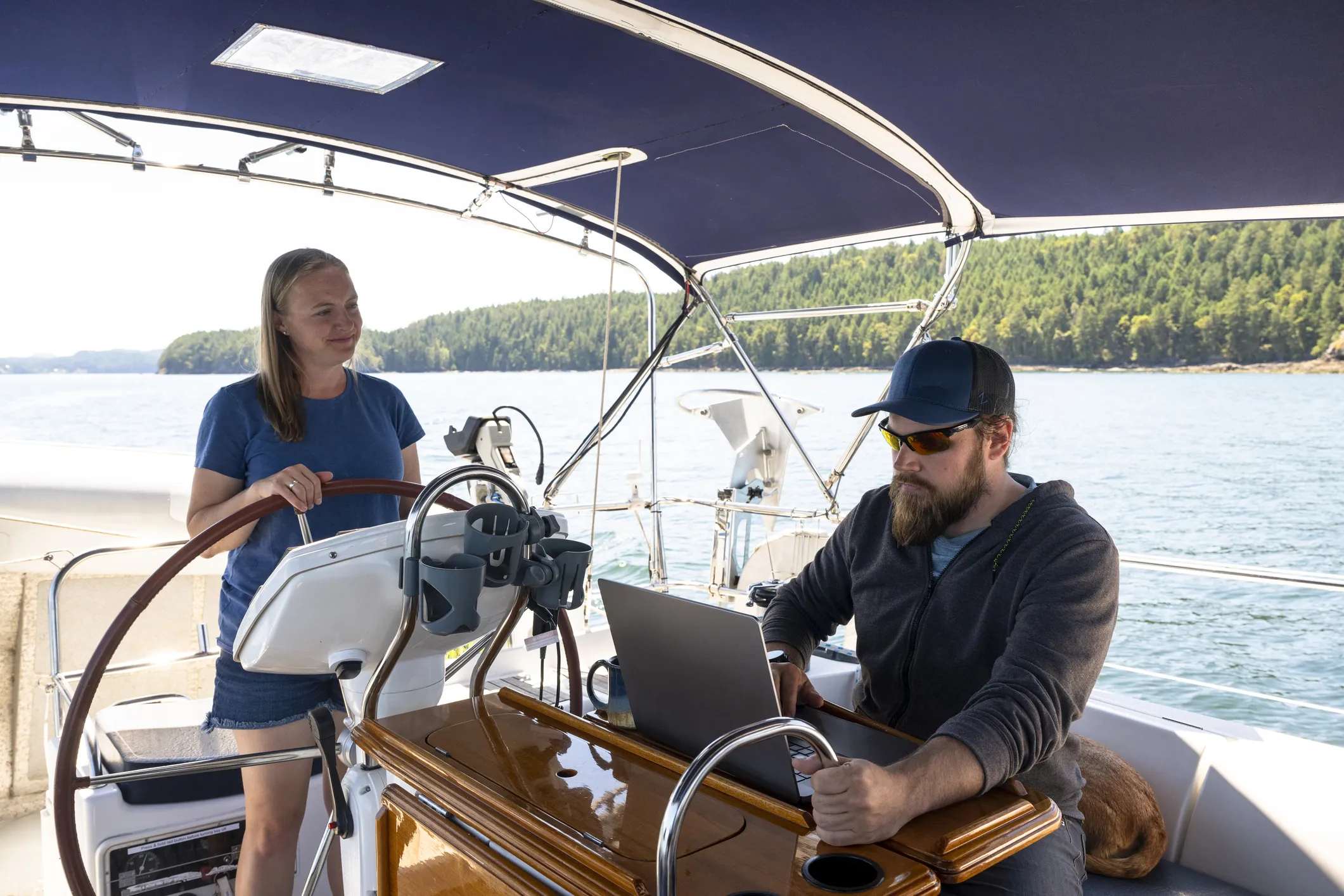
Cathy and Chris have a similar story to Bob and Betty (above); however, Cathy has chosen to remain at home with her family and community while Chris follows his dream of sailing offshore. This strategy appears to be attractive; however, it rarely works. At least over the longer term.
Offshore sailors’ characters change over time. Our minds expand to new horizons that a typical family member or neighbor couldn’t possibly comprehend. Chris is meeting like-minded sailors from across the globe, exploring new countries and cultures, and is focused on staying safe and managing his boat in a huge variety of challenging situations. Cathy remains in her status quo, and happily concentrates on her job, community, family and friends, but her horizons are limited in scope.
In my case, I had a wonderful Canadian partner for a short period who had no interest in my cruising lifestyle. He would fly into a variety of ports where we ate in fancy restaurants and stayed in glamorous hotels, but we weren’t on the same page—although I never complained about the fine foods and amenities! While he was living and working in a small Canadian community, I had sailed my boat from Mexico to the Galapagos and Peru! Our worlds were growing further and further apart. Our relationship ended when I reached Peru.
Longterm Planning for Couple C
It’s common to witness Couple C in action, but I don’t think either party is happy. Ideally, Couple C should consider a reasonable compromise whereby they spend a portion of their time at home and another portion time at sea. Some couples hire delivery crews to take the boat to a new destination during their “at home” time—especially if one party is concerned about being on long distance passages.
Otherwise, Category C is a recipe for disaster, and could end up in separation, or ending the voyage completely.
Category D: Independent Solo Sailor
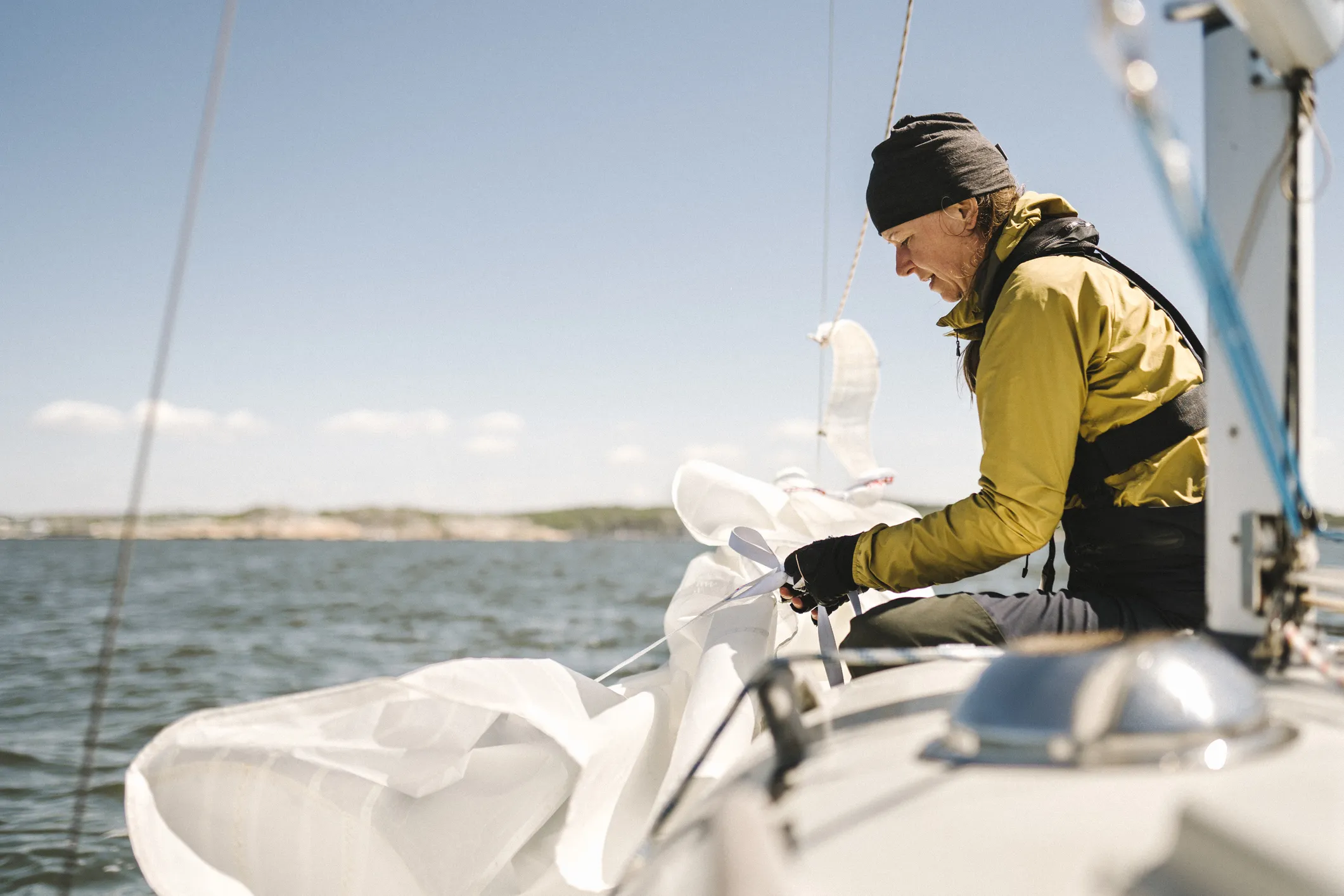
Debbie has a passionate love for sailing and has taken great steps to understand all the maintenance and performance characteristics of her precious Tayana 37 sailboat. She’s brave, adventurous, curious, confident and single. Solo sailing presents an exciting new chapter in her life that encompasses all the elements of her lifetime dream.
Embarking on solo ocean sailing is a thrilling venture, filled with many challenges and rewards. Here’s a closer look at the positives and challenges.
Major Positives:
-
Independence
This independence is a profound blend of exhilaration and empowerment. You can cast off the constraints of land and society, steering your vessel wherever your heart desires. There’s deep satisfaction in knowing that you can rely solely on yourself to chart the course, hoist the sails, and adapt to whatever the ocean throws your way. The dance with nature is yours alone!
2. Personal Growth
Solo sailing provides an incredible sense of self-reliance. Alone at sea, every decision is yours to make, every success is yours to celebrate, and every mistake is yours to learn from. This independence builds confidence, as you come to trust your instincts, problem-solving abilities and capacity to navigate the unknown.
3. Simplicity
It’s more work, but you’re on your own schedule. You can go where you want, whenever you want—weather and local country protocol dependent. It’s simple and incredibly rewarding.
“No tool Tuesday” was part of my weekly routine. To this very day, Tuesdays bring a special smile as I remember having an entire day without touching a tool.
Major Challenges:
-
Responsibility
Solo sailors carry the weight of complete responsibility—this is a unique challenge that tests their limits both mentally and physically. Every aspect of the voyage—from navigation to maintenance, from safety to sustenance—rests entirely on their shoulders. I was always thinking of Plan B for every situation because there’s no one to share the workload or to step in when fatigue sets in or you want a second opinion.
2. Physical Demands
Significant physical demands can challenge a solo sailor. Stamina, strength and agility are necessary to manage the boat effectively while contending with the ocean’s unpredictability. Tasks that might be shared among a crew—such as steering, adjusting sails or navigating—must all be handled single-handedly, often under challenging conditions.
This is compounded with sleep deprivation, the possibility of having to manage repairs, and constant vigilance of sails and navigation. It can be exhausting. I used to sleep during the day and stay awake at night—knowing that boats can see me during the day.
3. Safety Risks
Without anyone nearby to assist, even minor injuries or accidents can escalate into life-threatening situations. There’s always a risk of sudden medical emergencies. A solo sailor facing a medical issue, such as dehydration, heatstroke or severe illness, must rely entirely on themselves to manage the situation. Isolation makes it harder to seek help or intervention quickly.
Personal Experience
Solo sailing played a huge role in my offshore sailing adventures, and the positives clearly outweighed the challenges. I took such great pride in managing both the “blue” and “pink” roles and loved the feeling of being able to take my boat anywhere in the world that’s attached to the oceans. But it’s a lot of work.
Bottom Line
While solo sailing may appear lonely at first glance, most solo sailors are surrounded by the wonderful cruising community whereby everyone looks after each other. A lot of solo sailors travel to new destinations together, which ensures the best of all worlds. They can experience self-sufficiency and independence, while still enjoying wonderful camaraderie with fellow sailors.
Category E: Family Sailors
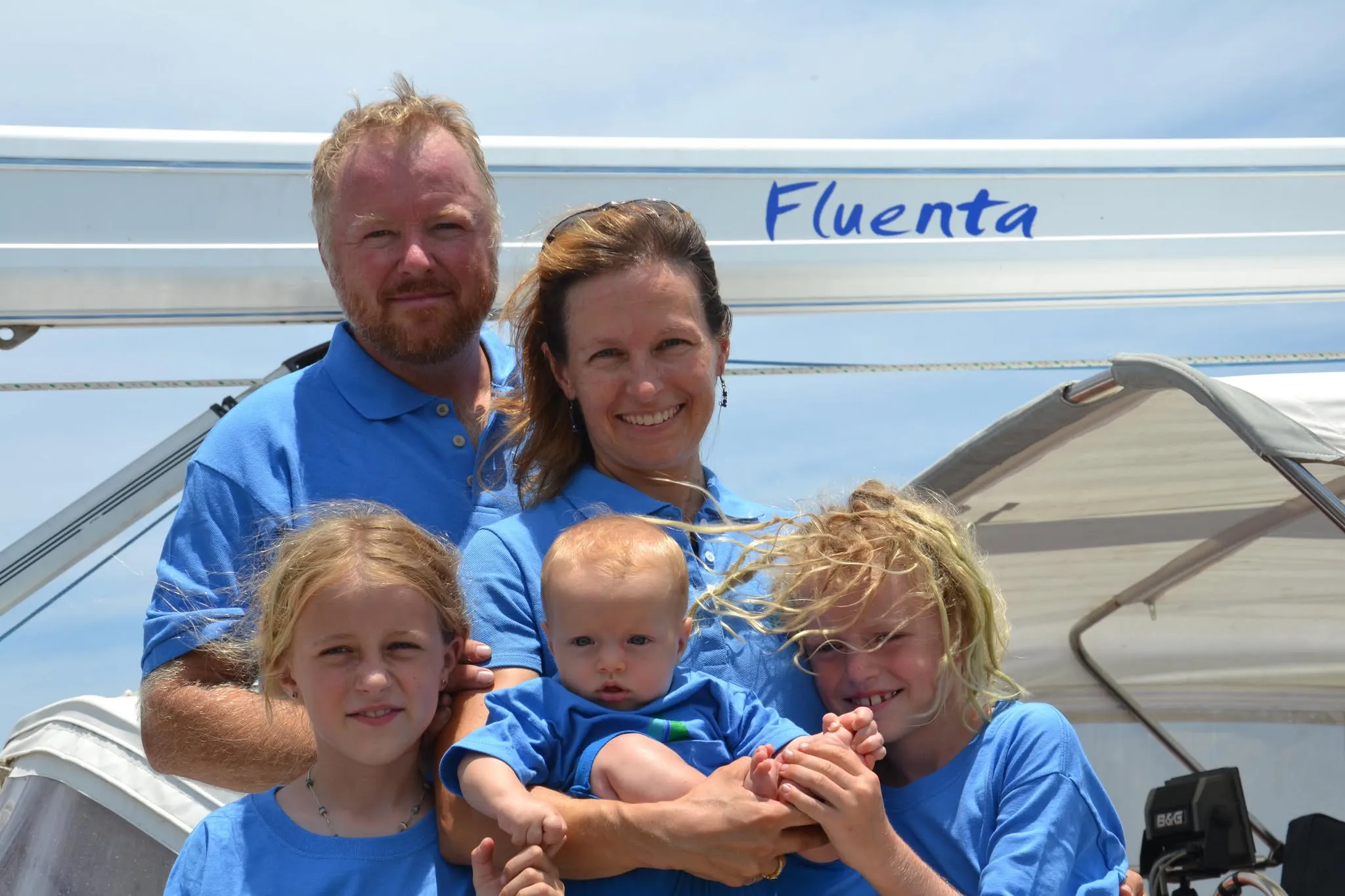
The Everette Family set sail on a voyage of their lifetime. Parents Edward and Elaine believe that the education derived from offshore sailing provides a strong foundation for the lives of their two young children Emily (8) and Ethan (10). Emily and Ethan will be home-schooled and participate in all the sailing and operational tasks aboard their boat.
Life as an offshore family is a bold blend of adventure, learning and togetherness. However, the demands of isolation, space and constant responsibility require resilience and a well-synchronized family dynamic to truly thrive amid the vastness of the ocean.
Positives:
- Family bonds. Intense family bonds are created in offshore sailing families. The unique environment aboard a boat requires meaningful collaboration and trust. The kids must get along! It also provides real-life lessons in teamwork and communication.
- Nature’s Classroom. Cruising kids gain a terrific understanding of weather, marine life, navigation, sustainability and responsibility. They also have global exposure to new cultures and how other children live—many who aren’t necessarily as privileged.
- Quality Time. Parents have more control and input to their children’s upbringing without distractions from social media and other negative influences in society.
Challenges:
- Isolation. Living off the grid away from social norms can be challenging for young children. They not only miss their friends and activities, but also precious time with their extended family including grandparents, cousins, aunts and uncles. This is perhaps the biggest price for offshore cruising families.
- Space and Privacy. Children are often stuck spending extended time in the small space of the boat versus playing in parks and larger amenities. Privacy is virtually non-existent. I used to take my coffee into the dinghy for privacy, which we dragged behind the boat!
- Re-Entry. Cruising kids have a remarkable, diverse and worldly upbringing that is so unique making it difficult for traditional kids to relate. Upon re-entry they don’t know the lingo, local traditions, and how to be cool—at least in the eyes of traditional children.
I absolutely loved and cherished the three years that we spent sailing offshore as a family with our kids Sam and Charlie—departing Victoria, Canada to New Zealand and throughout the Pacific to Japan (1986-89). Both boys are now exceptional in their careers, and every cruising kid that I’ve met has been exceptional. I authored the book “Kids for Sail” – Orca Book Publishers, 1999, which describes our family voyage.
Conclusion
Inshore and offshore boating is wonderfully satisfying when everyone aboard is happy and thriving to their fullest capacity. I sincerely believe that by being sensitive to your fellow crew members and working towards everyone’s fulfillment is the way to success while pursuing a lifetime of happiness at sea.
Best wishes and happy sailing!