















Multiplexing Marine Electronics
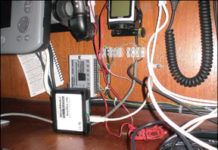
In an effort to find an inexpensive, reliable way to connect a PC (or Mac) to our onboard electronic navigation system, Practical Sailor testers scouted basic NMEA 0183 multiplexers with good track records. We zeroed in on the easy-to-install MiniPlex Lite from Holland-based ShipModul. This multiplexer was one of the first high-speed NMEA 0183 multiplexers capable of handling the data rates required for some of the newer electronics like AIS receivers. With very little effort, the Mini Plex Lite allowed us to network our Dell Latitude D620 laptop, AIS, GPS, and chartplotter, and it handled the data transfer without a glitch. Our chief gripe: This entry-level model uses the laptop for its power source.

GPS Receivers for Smart Phone Navigators
During our testing of pocket navigators for the December 2009 issue, we examined other approaches to propagating a GPS signal around the boat and found some viable alternatives. Several aftermarket options can turn smart phones or PDAs into handheld navigation tools by supplying or sharing reliable GPS data. Practical Sailor looked at a Bluetooth-enabled Globalsat BT-338 GPS receiver with the SiRFStarIII chipset and Franson Technology’s GPSGate software for Windows and Windows Mobile, which was designed specifically for the task of sharing GPS data. Testers found both utilities to be good choices for the job, however, we still caution against relying solely on a PC-based navigation network onboard.

Mariner Resources on the Web
Practical Sailor’s roundup of practical boater websites covers all topics related to sailing, boat owning, and boat maintaining. From weather forecasting and navigation sites to boat-owners’ groups and social networking sites, these links to online sailing resources are editors’ and readers’ top picks from the world wide web.
New Waterproof Handheld VHFs Enter Crowded Market
Electronics is the most rapidly changing category of marine products, and the steady stream of VHF radios is an example of how fast the market changes. Since our reports on VHF radios earlier this year, two new waterproof handheld VHF radios have entered the market. Practical Sailor compares the new, inexpensive Standard Horizon HX28OS to the 2009 Best Choice, the Cobra HH325VP. Testers compared the new floating handheld from Icom, the M36, to the high-end Best Choice, the Standard Horizon HX85OS, a floating VHF that also offers full DSC capability and has a built-in GPS.

Testing Smart Phones at Sea
Practical Sailor tests a cross-section of PDAs, pocket PCs, and smart phones between $100 and $800. Palm OS and Windows Mobile software were included. Readability, functionality and practical application were foremost considerations. Reliability, weather resistance, and batteries were also considered. We evaluated Palm Phones Palm Treo, Hewlett Packard iPAQ, Palm PDA Palm TX, Active Captain MobileSource, Memory Map Navigator, and Ozi Explorer CE. Testers compared the mobile devices to a handheld GPS specifically designed for navigation, the Garmin Oregon 400C.

In Distress? Theres No App for That
This months review of "smart phone" navigation tools and software got me thinking about my own descent into the mobile phone abyss, and more broadly, how the communication revolution is reshaping our approach to life at sea. For many years after moving ashore, I resisted the urge to own a mobile phone. That changed after my pregnant wife got stranded in a New England snowstorm. Now, a half-dozen saltwater-soaked phones later, my immersion into cell-phone society is complete. As this months article shows, the same tool I use to order a pizza can now guide me across the Atlantic. (Although Id never encourage taking such a risk.) So when the makers of safety equipment and government spokesfolks ballyhoo a too-good-to-be-true safety communication network for mariners, the Global Maritime Distress and Safety System (GMDSS), it doesn't come across as science fiction.

Mailport: 11/09
To keep from being pulled under in a collision between a tanker and my sailboat, I "pulled the ripcord" to release the snap shackle on my Standard West Marine Safety Tether . The tether release lanyard was outfitted with a series of balls. (See bottom photo at right.) I had rehearsed reaching for and feeling the release toggle many times so it would come naturally in an emergency. The balls have a distinct feel. There was nothing on my PFD or foul-weather jacket that resembled them. The replacement tether I bought from West Marine (ISAF Specification Safety Tether, No. 9553504) has a new toggle on the snap-shackle release lanyard that consists of an open triangle of plastic. This is dangerous, in my opinion! In my first few hours of using the new tether, in moderate sea conditions, I managed to snag the triangular loop on something and release the snap shackle. I am now replacing all triangular loop pulls with bead pulls that I have crafted myself.
Testers Take Tacktick and Nexus Wind Instruments for a Spin
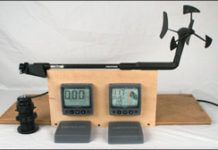
Practical Sailor testers compared Tackticks improved Race Master system to the Nexus Start Pack 3, a hybrid wired/wireless system. The Tacktick Micronet wireless wind instrument, a compact system featuring wireless display and a masthead sensor, has a strong following among racers. It has proven to be a good choice for those sailors serious about improving race performance as it has many options for tracking performance on the course in real time. Its ability to work with a 12-volt system makes it a good choice for small boats. The versatile, expandable Nexus hybrid has an impressive and intuitive interface and a graphic analog wind representation. It provides all of the basic functions a cruiser or racer uses most, and testers found the analog wind display appealing.
Stocking Stuffers For Sailors
Its hard to believe, but the 2009 holiday season is upon us. As is custom, Practical Sailor editors have put together a varied roundup of gifts to stuff those stockings more likely to hang from a bulkhead than the mantle. For the racing or small-boat sailor whos making the leap from wire rope to high-tech fiber, Colligo Marines Softies offer a lightweight alternative to traditional steel shackles and headsail hanks. Made of extra strong and chafe-resistant Dyneema, the "soft" hardware is the perfect solution for use with synthetic forestays, and unlike metal hanks, theyll never leave rust stains on sails. Using the Softies is as easy as pulling the shake-resistant knot through the expandable spliced loop, then sliding the slip ring (rubber O-rings) up to the knot. A lanyard ensures easy opening, but the self-tightening O-rings offer added security against accidental opening or shaking loose.

PS Advisor: Safe Mounting for Radar
I am looking at antenna mounting options for my 2.2-kilowatt radar. I like the idea of keeping the antenna out of the foretriangle and its sail and rigging, but am a little concerned about crew exposure by mounting the antenna aft on a pole or lower on the backstay. The manufacturer (Furuno) mentions nothing about exposure hazards in its installation manual. Does a hazard exist in this configuration?

Dangerous Anchoring Myths That Put Sailboats on the Beach
Are you relying on anchoring advice that could put your boat on the beach? In today’s video we’re diving deep into the dangerous anchoring...


Latest Sailboat Review

The $100K Cruiser Showdown: How the Catalina 380 Stacks Up
Are you in the market for a 35 to 40 foot sailboat under $100,000? Are you considering a Catalina 380? Have you seen a...