





Surviving the Great Hurricane
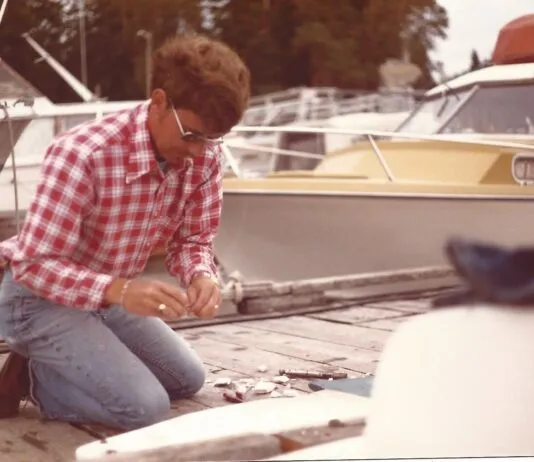
Would the owner of the boat pictured below please call or write me again? I imagine by now, in the wake of Harvey and Irma and whatever heartbreaker came after, there are a few more people like me who would benefit from your tale. People in need of a bit of encouragement, some cloud-vaporizing wit, the kind of inspiration you brought me over the phone. Sadly, Ive forgotten many of the details.

2017 Top Sailing Gear
Each year, just prior to the fall boat show season, Practical Sailor editors consult with our testers to come up with a select list of Gear of the Year from the previous 12 months of testing. For most of the 2016-2017 testing season we focused on essential everyday products that owners of boats of all sizes-with a few exceptions-rely on. While our testers appreciate new technology, they recognize that a safe passage often depends on the reliability of the weakest link, and that weakest link is often a seemingly minor component that gets little attention. In short, our Editors Choice list is not the sexiest product roundup, but if youre serious about keeping your electrical connections corrosion free, making professional repairs on a blue-collar budget, maintaining a safe speed in a steep following sea, or looking for a way to manage a big genoa without upgrading to an electric winch, youll appreciate it.

Top Sailing Products to Keep You Safe on the Water
We looked at a wide range of safety equipment over the past 12 months, and three products stood out as exceptional among their peers.

Regalvanizing G70 Chain
As high tensile G70 chain becomes more prevalent in the marine market, Practical Sailor has been busy testing the limits of this material, which has been used for many years in other industries. One question we have raised in the past is whether G70 chain can be safely regalvanized (see PS June 2014, Making Sense of Marine Chain Standards). Chain is expensive and regalvanizing helps to extend its life. If G70 chain can't be regalvanized, as we have suggested in the past, this needs to be factored into the initial cost.

Making a Safe Landfall
I feel for the crew of Tanda Malaika, a family of six whose 46-foot Leopard catamaran was lost on a reef on the southwest corner of Huahine in French Polynesia in July this year. The loss is especially acute because, as the captain himself points out, it could have been avoided. The account of the wreck, provided by the skipper/owner Dan Govatos, and recorded in the podcast Slow Boat Sailing offers important lessons for cruising sailors.

Multihull Special Report
In Part 1 of our special report on multihulls we scrutinized the implications of stability and the benefits derived form a wide stance, buoyancy and hull shape of multihulls. This time well look at structural issues and the energy transfer that takes place due to a multihulls impressive initial resistance to heel. We will also delve into what all this means for the rig, rigging, hull structure and hardware interfaces.

Skipper Recounts Capsize 57-foot Atlantic Cat
Charles Nethersole has been a professional sailor for decades, and in addition to racing commitments and deliveries, hes accrued 14 years of sea time as a professional captain aboard 55- and 57-foot, Chris White designed, Atlantic catamarans.

Controlling Jibes With Boom Brakes
Ten years ago, you may recall having seen the Walder boom brake demonstrated at sailboat shows. There wasn't anything quite like it. The device caught on for a time with single-handed racers, who liked the way it slowly eased the boom across during jibes. (Philippe Jeantot had one on Credit Agricole when he won the first BOC Challenge.) When your hands are full with jib sheets and the wheel or tiller, there's too often the tendency not to pull in the mainsheet to minimize the shock load on the gooseneck when the boom slams across to the new tack.

Boatyard Chemical Wisdom
With all of the products out there claiming to be green or non-toxic, surely there must also be villains that are now best avoided. In just a century weve begun to make a fine mess of the world that we need to live in for the next few million years. Yet we are making progress, and finding less hazardous replacements is a part of the answer.

How to Make Sense of Material Safety Data
Material Safety Data Sheets must be available to employees and they must be trained to read them. Failure to abide by this rule set by the U.S. Occupational Safety and Hazard Agency is the second-most frequent employer violation. Even when MSDSs are available, few employees ever read them. Culturally, we believe instructions and warnings are a joke. Well, its your funeral … literally.

Morgan 382 – The $30K Boat Nobody Talks About
The Morgan 382 might be one of the most overlooked cruising sailboats ever built. Designed by legendary naval architect Ted Brewer and produced between...



Latest Sailboat Review

Jeanneau 55 Boat Review
This recent sailboat from Jeanneau may as well be a spaceship. They’ve taken all the time-honored designs of a monohull aft cockpit and turned...