

















Responding to Emergencies: A Skipper’s Guide for Staying Calm
This article is not a “how to” on COB drills or other procedures. There is lots of good training available on that subject and...
Sailboat Safety on Deck
We often think of safety on deck in terms of PFDs, lifelines and jacklines, but the falls they protect against only happen after something...

Master the Sailing Basics: Never Stop Learning the Little Things
Seamanship is about big concepts and small skills. They work together, but we see them differently and they represent different types of learning. Big...
Person-Overboard Retrieval Techniques
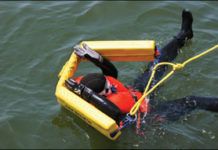
Practical Sailor Technical Editor and in-house safety expert Ralph Naranjo tagged along on some recent man-overboard retrieval trials put on by the U.S. Naval Academys Sailing Master Dan Rugg and the Philadelphia Sailing Club. The lessons learned on those at-sea safety drills can benefit all who call oceans and waterways their playground. The trials showed that no single MOB retrieval method will suit all boats, all situations, or all crews. The wide range of variables that can come into play in a crew-overboard incident cannot be overstated. Factors ranging from crew skill and size to the vessels behavior under different sea state affect the challenges involved in a rescue and define the right maneuver to use. Among the COB techniques tested, the Quick Stop, which requires a quick reaction from the crew to keep the victim close at hand, was deemed best suited for fully crewed vessels moving at slow or moderate speeds. Other maneuvers that the sea trials evaluated included the Figure 8 MOB rescue method, the Fast Return, the Deep Beam Reach, and rescue with a Lifesling. Naranjos report offers a new look at some widely accepted techniques. Practicing these tactics aboard your boat will help you to determine which works best for your boat-be it a heavy-displacement cruiser or feather light race boat-and your crew-be they a team of professionals or your family and friends.
Electric Winch and Windlass Safety
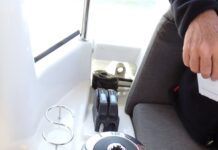
A decade ago a woman from Venezuela was hoisting her husband up the mast of their Amel Maramu 54. The winch was electrically powered,...
Severed Anchor in the Bahamas: Seven Lessons Learned
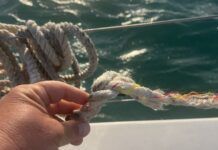
Leaving Rhode Island to sail to the Bahamas, I wanted to be untethered, for a while. Adrift at dawn and heading for rocks in...
Another Look at Fitting Jacklines
“Keep the crew on the inside and the water on the outside.”
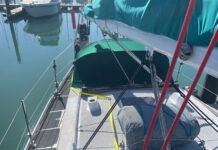
This old salt's advice to new offshore sailors is somewhat “tongue in cheek”...

Collision Avoidance When ‘See and Avoid’ Fails
The obvious answer for how to maneuver when vessels meet at sea is for everyone to follow the Convention on the International Regulations for...

When a Welcome Home Becomes a Rescue
Bill had been sailing single handed aboard his Bristol Channel Cutter 28 Pixie for nearly 90 days from Christchurch, New Zealand to Victoria, British...

Emergency Steering? You Can Jury-Rig a Drogue For That
I had been driving my 34-foot catamaran down the Chesapeake Bay at 8-9 knots all morning, propelled by a fresh breeze. “Thud … thud.”...

Dangerous Anchoring Myths That Put Sailboats on the Beach
Are you relying on anchoring advice that could put your boat on the beach? In today’s video we’re diving deep into the dangerous anchoring...


Latest Sailboat Review

The $100K Cruiser Showdown: How the Catalina 380 Stacks Up
Are you in the market for a 35 to 40 foot sailboat under $100,000? Are you considering a Catalina 380? Have you seen a...