













Youth Safety Gear Top Picks
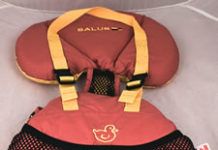
It’s summertime, which means the kids are out of school and flocking to youth sailing camps, heading out on family cruises, and cooling off in the pool. Over the years, we reviewed dozens of safety products to keep wee crew safe around the water, including PFDs (personal flotation devices) for children, toddlers, and infants. Here are some of our top picks.

Re-examining Youth Sailing Safety
Fourteen-year-old Olivia Constants was participating in the Severn Sailing Associations junior race training program on Chesapeake Bay in late June when she and her partners Club 420 capsized sharply to leeward and inverted. While her partner emerged from the inverted hull, Constants did not. By the time the support boat reached her and staff pulled her out of the water, she was unconscious. Attempts to revive her failed.
Flare Mishap Highlights Need for Caution When Firing
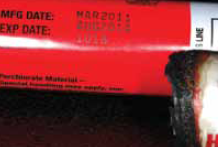
In a recent emergency procedures training course at the Annapolis School of Seamanship (www.annapolisschoolofseamanship.com) a handheld Orion flare melted through its handle and began dripping hot slag. Course coordinator Matt Benhoff said, “The trainee operating the flare was wearing heavy leather gloves and goggles and dropped the malfunctioning pyrotechnic flare in a disposal bucket before the problem led to an injury.” If a similar scenario played out in a life raft, hot slag could injure a sailor already in trouble, or result in raft damage if the molten slag landed on an inflated buoyancy tube.

What’s the Best Way to Clean Marine Rope?
Every spring, there are numerous online forums discussing the best rope-cleaning methods. Practical Sailors interviews with technical representatives from major rope makers Bluewater Ropes, New England Ropes, Samson Cordage, and Yale Cordage yielded uniformly conservative guidance on how to get the grit out of old lines without destroying the rope's integrity. Testers also took to the laundry room to determine the effects of detergent, wash cycles, acids, bases and solvents, fabric softeners, power washing, bleach, hot water, and heat on rope strength and stretch.
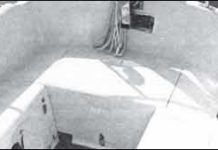
Life Raft Stowage: The Overlooked Necessity
Sometimes, it seems that safety is a dirty word in the boat- building industry. A favorite marketing catchword is "bluewater cruiser." We assume this means a boat capable of going to sea, rather than a boat designed to tiptoe along the shore. But when you go aboard the "bluewater cruiser", more often than not you find a boat most suited for blue water when it is secured to the deck of a ship enroute to the dealer. Nowhere is this more apparent than in the provisions made for the stowage of life rafts. Or rather, the lack of provision made. Few people would venture offshore without a life raft, yet the location of the raft aboard the boat is almost always an afterthought.
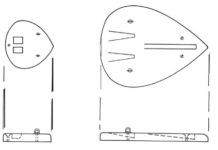
Wooden Anchor Chocks
Conventional commercially available anchor chocks, though convenient, can be nasty metal toe stubbers and not particularly attractive. In contrast, wooden chocks are easy to make, handsome, and relatively snag- and toe-proof.

West Marine Updates Recalled Tether
West Marine has released a new, improved version of the safety tethers it voluntarily recalled last summer. As we reported in the August 2010 issue, West Marine recalled its model 9553512 (single) and 9553504 (double) safety tethers—which featured Kong hooks on the boat end and snap shackles on the user end—over concerns about the durability of the split ring connecting the snap shackle’s release pin and the lanyard.
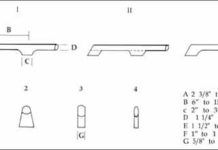
Design For: Building Your Own Handrails
One of the most used and easily made items of safety gear on boats is the handrail. Rare is the boat which shouldn't have handrails along the major portion of either side of the cabin top, and also down the centerline of the deck. Belowdecks, handrails are also important for safety. They are usually mounted on the cabin overhead, parallel to and on either side of the boat's centerline. To simplify mounting, the most desirable position is under the rails on deck. That way a single set of bolts can serve to fasten both rails.
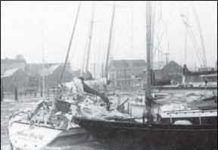
How To Help Your Boat Survive A Major Storm
Hurricane Gloria was a most impolite lady. She barreled up the Atlantic coast, scaring the heck out of people from Florida to Massachusetts. Despite the fact that the storm didn’t live up to its billing, hundreds of boats in New York, Connecticut, Rhode Island, and Massachusetts were destroyed or severely damaged. In some cases, the boats were lost through no fault of the owner. No amount of preparation will save your boat if another boat drags down on it in the middle of a hurricane. In other cases, however, lack of proper preparation was a major cause of a damaged boat. There’s no excuse for that type of loss.

A Close Look at 2 New MOB Alarms
There are several different man-overboard alerting systems that represent different approaches to the challenges of an MOB event. Testers reported on the long-term testing of the MobiLert 7200, tested BriarTek’s ORCAdsc, and evaluated the upgraded Mobilert. Both of the new man-overboard alarm systems are designed to alert crew when any crew member goes overboard. The ORCAdsc is a water-activated, wearable MOB beacon that sends out an alarm via a VHF radio's DSC function. Any boat in the vicinity of the MOB that has a DSC-capable VHF radio will receive an alert that there is a man overboard. The wearable Mobilert beacons activate an alarm when the radio signal between the beacon and its base station is interrupted, typically because the beacon is either in the water or out-of-range. For cruisers who spend most of their time in regions with well-established search-and-rescue support, we still recommend a third-generation 406-Mhz personal locator beacon (PLB) such as the ACR ResQFix.

Why This $1M+ Sailboat Might Be The Best Bluewater Cruiser in...
The Bluewater 56 is one of the most misunderstood offshore cruisers in the sailing world — and today we’re diving deep into what makes...


Latest Sailboat Review

The $100K Cruiser Showdown: How the Catalina 380 Stacks Up
Are you in the market for a 35 to 40 foot sailboat under $100,000? Are you considering a Catalina 380? Have you seen a...