
















Dinghy Launchers: Wheels for the Dinghy
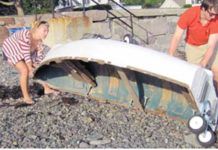
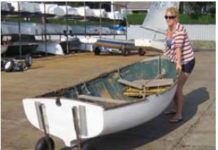
Getting your dinghy to the dock, across a beach, or down a boat ramp can be a real back-breaker, unless you have some mechanical advantage. Several manufacturers offer wheeled devices to keep you out of the chiropractor’s office. We tested seven of them—one dolly and six sets of launching wheels: Davis Instruments’ Wheel-a-Weigh Boat Dolly, two sizes of Davis' Wheel-a-Weigh launch wheels, the Garelick Eez-In, Newport Vessels Launching Wheels, Defender Industries Launching Wheels, and Danard Marine Launching Wheels. Selecting the appropriate launching wheels depends on the size and weight of your dinghy or small boat and where you intend to use it. Practical Sailor tested the products on concrete, a soft-sand beach, and a rocky shore, and we found that not all wheels can handle uneven terrain.
Dinghy Roller Test Drive
We tested each product for overall quality of construction, ease of installation, and ease of use. Each model was tested on three different surfaces that are common dinghy-transporting areas: an inclined, concrete boat launch ramp with cracks in the pavement wide enough to push some dinghy dollies off course; a sandy beach, where the sand ranged from nearly flat and hard at water’s edge to more than 4 inches deep and soft above the high-tide mark; and a rocky shoreline, with some irregular stones that measured up to a foot in diameter. Each set of dinghy wheels was attached to the transom of a 9-foot, 130-pound rowing skiff. To avoid drilling a bunch of holes in our own $1,200 dinghy, we picked up a haggard—but appropriately sized—$75 garage-sale skiff for these tests.

The No Discharge Zone Illusion
Long Island Sound, the belt of water stretching 110 miles from Hell Gate in New York City to the Race at the Sounds eastern end, is a fitting emblem of the water-quality woes future generations will face. Today, as Tom Andersen, author of This Fine Piece of Water: An Environmental History of Long Island Sound, describes, the Sound is at the brink of an ecological crisis, a term so frequently applied today that weve become numb to it.
PS’s Safety Tether Test Results Reignite Concerns
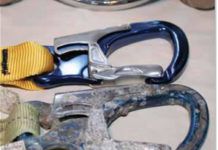
The safety tether is the sailor’s leash—a short stretch of webbing or rope that keeps a sailor from going overboard. Its purpose is complicated by the fact that it must be capable of two opposing functions: It must offer a secure means of attachment to the boat, and, when the need arises, provide a quick means of release. The recent Chicago-Mackinac Race tragedy and similar accidents, recent product recalls, and findings in Practical Sailor’s latest round of tether testing also bolster the argument that sailors—and manufacturers—need to pay more attention to the safety tethers on the market today. For this test, we evaluated three different West Marine tethers and found that despite improved engineering, they still fall short of perfection.
Sailing Fatality Studies Shine Light on Tethers
The capsize of WingNuts is not the first fatal accident that has put the spotlight on the harness-to-tether connection. Since 1986, several widely publicized fatal sailing accidents have prompted inquiries into the harnesses and safety tethers used by sailors.
The Sailor’s Leash: Single or Double? With Elastic or Without?
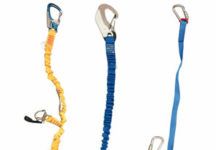
Once you’ve settled on the types of clips you want on your tether, the next choice is the webbing construction. Currently, there are two main types of tethers: single tethers with one hook at each end; or double tethers, with two legs and three hooks. Double tethers have an extra clip, usually attached to a short leg at the mid-point of the tether, that shortens the length to about 3 feet.

Bugs Be Gone
Keeping bugs at bay has always been a conundrum for boaters, particularly when that calm, idyllic anchorage becomes a refuge for black flies, mosquitoes, and other flying bloodsuckers when the sun goes down. No one wants to slather on smelly chemical creams or sprays to enjoy happy hour in the cockpit, but bug repellent options have been rather limited until recently.
Orion Reports on Defective Flare Investigation
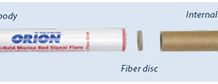
In the July 2011 Mailport, Practical Sailor reported that a new Orion handheld flare had malfunctioned during an emergency training course at the Annapolis School of Seamanship. The defective flare had melted through its end cap, allowing hot, melted slag to drip out.
The Sailors Leash: Single or Double? With Elastic or Without?
Once you’ve settled on the types of clips you want on your tether, the next choice is the webbing construction. Currently, there are two main types of tethers: single tethers with one hook at each end; or double tethers, with two legs and three hooks. Double tethers have an extra clip, usually attached to a short leg at the mid-point of the tether, that shortens the length to about 3 feet.
A Second Look at Safety Tethers
Sailing harnesses and safety tethers were put to the ultimate test in July when a storm packing winds of more than 50 knots swept through the fleet of sailboats racing in the annual Chicago-to-Mackinac Race. One of the boats, the Kiwi 35 WingNuts, capsized in a powerful gust. It stayed inverted, forcing the crew of eight into the water. At the time of capsize, the crew were wearing safety harnesses and tethers, and most were clipped in to jacklines on the boat. All but two of the sailors, skipper Mark Morley and his girlfriend, Suzanne Bickel, were able to unclip themselves and survived.

Why This $1M+ Sailboat Might Be The Best Bluewater Cruiser in...
The Bluewater 56 is one of the most misunderstood offshore cruisers in the sailing world — and today we’re diving deep into what makes...


Latest Sailboat Review

The $100K Cruiser Showdown: How the Catalina 380 Stacks Up
Are you in the market for a 35 to 40 foot sailboat under $100,000? Are you considering a Catalina 380? Have you seen a...