


















TruPlug is a Handy Emergency-kit Tool
Spring is here, and that means its time for systems and safety checks. Among the items that should be on your to-do list are checking your seacocks and making sure essential safety gear is on board. For us, that has always included keeping an inventory of soft wood thru-hull plugs for plumbing emergencies, but this year, we decided to also add a few of Forespars new closed-cell foam TruPlugs.

Weather Radar for Windows Phones
We know the drill now. If we feature a Mac product, we have to appease the PC crowd, and vice versa. Otherwise, the earth spins off its axis and our inbox starts smoking. So while the iPhone crowd gets their fill with our review of navigation apps (page 24), heres a morsel for readers using Windows Mobile devices. After testing several navigation programs for Windows Mobile handhelds in December 2009, we had the opportunity to evaluate Memory-Maps Weather Radar for Windows Mobile cellphones.

What is the Best Backup for a 406 EPIRB?
Maritime search and rescue missions prompted by distress alerts from emergency position indicating radio beacons (EPIRBs) have topped 6,000, and that number continues to grow. Although Practical Sailor recommends having a GPS-equipped 406-MHz EPIRB (GPIRB) on board, two means of satellite signaling for help is definitely better than one, and a few hundred dollars invested in a secondary tracker or beacon is worth it. In this article, we examine supplemental emergency signaling and tracking devices, including government-supported systems such as the ACR AquaLink Personal Locator Beacon, and private-network systems such as SAT phones and The Spot Messenger.

Mailport: April 2010
Letters to Practical Sailor's April 2010 issue include: MOB drills, tethers, nav lights, cleats, no-buff shines and tankless water heaters.

PS Advisor: Fires at Sea and Raft Stowage
I need to buy a marine offshore life raft, and I’ve been considering stowage spots. I considered a deck-mounted canister. But I’m concerned that my wife would not be able to deploy the raft safely. The canister-packed rafts are typically too heavy for her to lift, and I seriously doubt she’d be able to control one on a wet, heaving deck in heavy weather. I was all set to store the raft in one of our lazarettes, and then it occurred to me that the raft might be particularly vulnerable to an engine-room fire, because the genset and propulsion engine compartments are located underneath the cockpit sole, inboard of the lazarettes. Both engines are diesel, and I have an automatic fire extinguisher. Nonetheless, the fact that a fire would likely start in one of those engine rooms has me rethinking my idea about stowing the raft in the lazarette. Do you have any information on raft fire resistance?

New Clear, No-rust Propane Tanks
Unlike aluminum or steel propane tanks, clear composite tanks allow users to see how much fuel remains, a nice feature in an LPG tank.Following our year-long evaluation of Ragasco’s 9-kilogram one-piece blow-molded tank, Practical Sailor tested the American-made Lite Cylinder, a two-piece composite tank. The two tanks have nearly identical dimensions, and may be a challenge to fit in a standard propane locker designed for metal tanks. In fire tests, composite tanks melt rather than “explode” like metal tanks, giving them a slight edge in safety, and the non-metal tanks resist rusting, a common problem of aluminum LPG tanks.
Practical Sailor Tracks Down the Best LED Tri-color Light
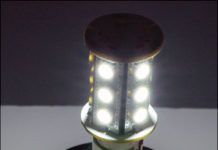
Practical Sailor found that the full brightness that LEDs offer, coupled with a huge energy savings, a wide tolerance to voltage changes, and a very long expected lifespan, make LED a great alternative to incandescent lights for masthead tri-color. The tradeoff is the considerable heft of the price tag. Practical Sailor tested LED tri-color lanterns from Orca Green Marine (OGM), Signal Mate, and Lopolight. We also evaluated LED tricolor bulbs designed to replace those in the popular Aqua Signal Series 40 tri-color light. Those were bulbs from Lunasea, Dr. LED, and LED Shop.
Multiplexing Marine Electronics
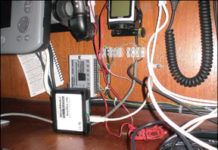
In an effort to find an inexpensive, reliable way to connect a PC (or Mac) to our onboard electronic navigation system, Practical Sailor testers scouted basic NMEA 0183 multiplexers with good track records. We zeroed in on the easy-to-install MiniPlex Lite from Holland-based ShipModul. This multiplexer was one of the first high-speed NMEA 0183 multiplexers capable of handling the data rates required for some of the newer electronics like AIS receivers. With very little effort, the Mini Plex Lite allowed us to network our Dell Latitude D620 laptop, AIS, GPS, and chartplotter, and it handled the data transfer without a glitch. Our chief gripe: This entry-level model uses the laptop for its power source.

GPS Receivers for Smart Phone Navigators
During our testing of pocket navigators for the December 2009 issue, we examined other approaches to propagating a GPS signal around the boat and found some viable alternatives. Several aftermarket options can turn smart phones or PDAs into handheld navigation tools by supplying or sharing reliable GPS data. Practical Sailor looked at a Bluetooth-enabled Globalsat BT-338 GPS receiver with the SiRFStarIII chipset and Franson Technology’s GPSGate software for Windows and Windows Mobile, which was designed specifically for the task of sharing GPS data. Testers found both utilities to be good choices for the job, however, we still caution against relying solely on a PC-based navigation network onboard.

Mariner Resources on the Web
Practical Sailor’s roundup of practical boater websites covers all topics related to sailing, boat owning, and boat maintaining. From weather forecasting and navigation sites to boat-owners’ groups and social networking sites, these links to online sailing resources are editors’ and readers’ top picks from the world wide web.

Dangerous Anchoring Myths That Put Sailboats on the Beach
Are you relying on anchoring advice that could put your boat on the beach? In today’s video we’re diving deep into the dangerous anchoring...


Latest Sailboat Review

The $100K Cruiser Showdown: How the Catalina 380 Stacks Up
Are you in the market for a 35 to 40 foot sailboat under $100,000? Are you considering a Catalina 380? Have you seen a...